What's New
MarkLogic Server 12.1
New Features and Enhancements

Activate agentic AI experiences on your governed enterprise data.
Optimize your infrastructure costs with better price performance for your MarkLogic cloud workloads running in AWS Cloud.
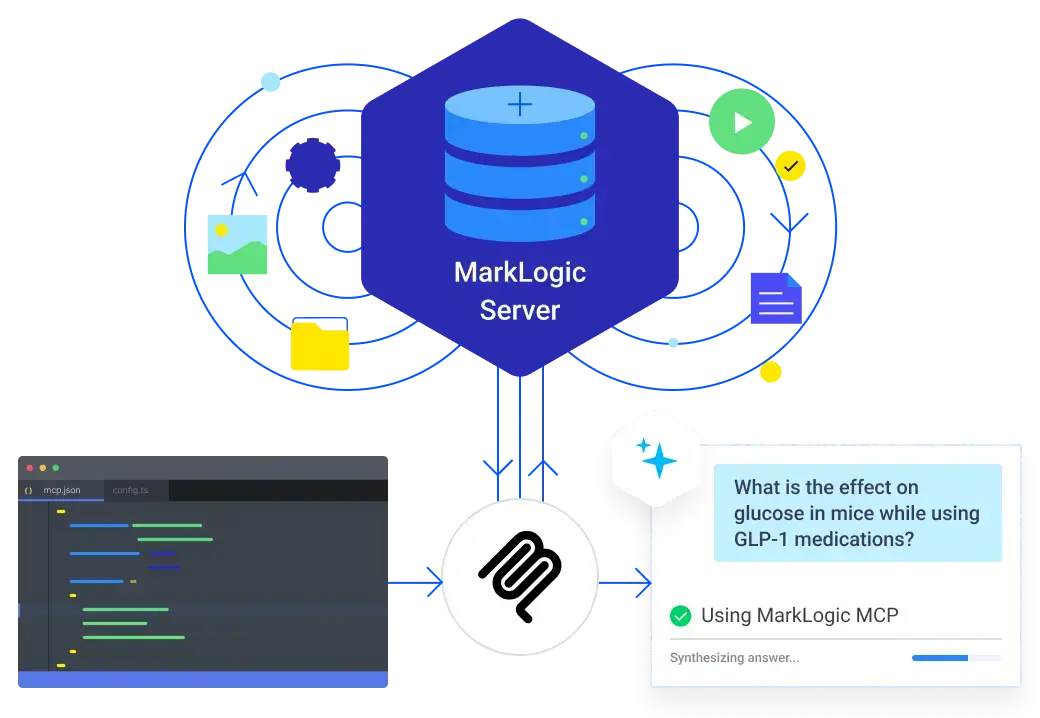
Allow AI agents with secure access to your enterprise data that empower your SMEs with the answers they need in seconds.
Optimize vector storage and indexing costs by choosing the level of retrieval precision your workloads require.
Maximize storage efficiency by indexing the content that delivers search value without compromising relevance.
Improve query and hybrid search performance with more flexible and reusable logic in Optic API.
Reduce infrastructure costs for your MarkLogic AWS Cloud workloads without sacrificing reliability.
Expand storage, scale capacity on demand and maintain high availability in Kubernetes Operator.
Enable secure single sign-on (SSO) across MarkLogic administration tools using OAuth 2.0 and OpenID Connect.
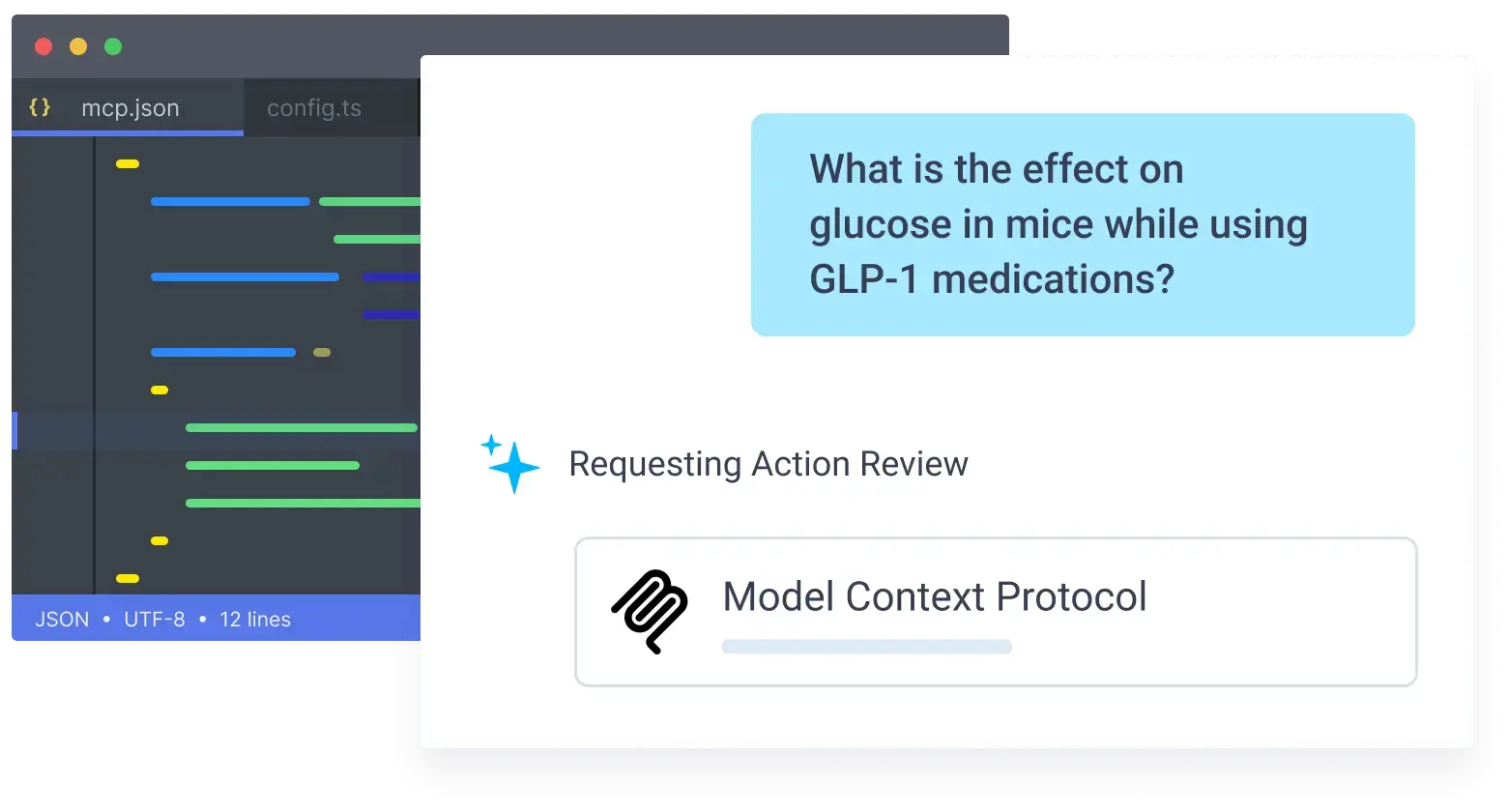
Connect AI assistants like GitHub Copilot, AWS Quick and Claude with MarkLogic Server so they can securely discover, retrieve and reason over enterprise knowledge while preserving the platform’s security, provenance and semantic context.
Scale AI workloads more efficiently by defining the right balance of retrieval accuracy and infrastructure cost. You can now control vector precision at the schema level in a declarative way to reduce storage and index overhead for vector and hybrid searches.
Maximize storage efficiency by indexing only the content that delivers search value. You can now exclude parts of or entire documents from the universal index to scale search and AI applications more cost-effectively.
Build complex hybrid queries with more flexible, reusable query logic in Optic API. Parameterized CTS queries extend Optic parameter binding to lexical and structured query components, making hybrid search pipelines easier to develop and more efficient to run.
Reduce infrastructure costs for your multi‑model data workloads on AWS. You can leverage the AWS Graviton architecture’s price-performance gains to support the same or greater throughput at a lower cost without sacrificing reliability or performance.
Expand storage, scale capacity on demand and maintain availability with support for dynamic host scaling, declarative storage expansion and rolling upgrades in Kubernetes Operator.
Enable secure single sign-on (SSO) across MarkLogic administration tools using OAuth 2.0 and OpenID Connect so administrators can now seamlessly authenticate with existing enterprise identity providers and authorize access to the app servers.

View FastTrack documentation directly in your preferred IDE to maximize your efficiency. Now with support for VS Code, IntelliJ, Atom, Eclipse and more.
Save time developing enterprise-grade applications with feature-rich React components and an AI coding assistant. With built-in design themes, accessibility, localization and a consistent API.
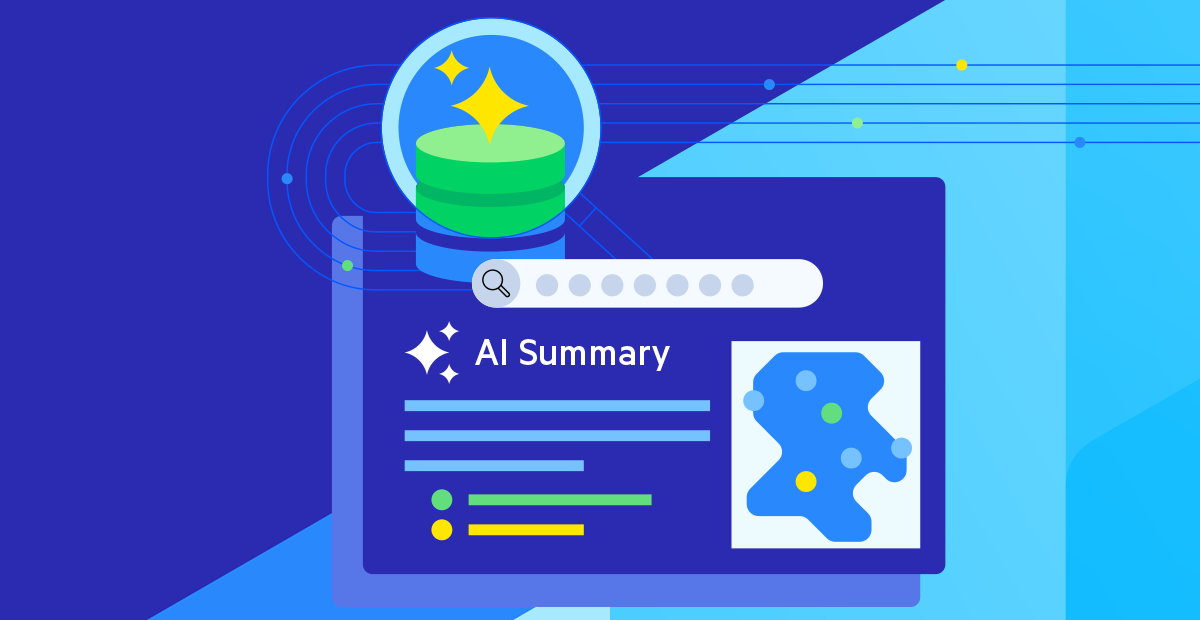
Allow users to leverage natural language and AI to achieve a deeper understanding of large, complex datasets. Works seamlessly with the FastTrack search and an AI provider of your choice.
Ship on-brand apps with a consistent style across all components. The new ThemeBuilder tool allows you to customize the visual appearance of your application without writing CSS.
Give users more control over how they explore and filter information with six new facets and built-in options to apply multiple and complex (AND/OR) facet combinations to refine results.
See how to implement secure, fine-grained access to information stored in MarkLogic Server so users will only see search results they are allowed to.
View documentation directly in your preferred integrated developer environment (IDE) to maximize your efficiency. MarkLogic FastTrack now comes with support for popular IDEs like VS Code, IntelliJ, Atom, Eclipse and WebStorm.
MarkLogic FastTrack now comes with a Progress® KendoReact™ license—the award-winning UI component library. It includes an AI coding assistant trained on the components to help you get production-quality code on the first try.
The new AISummary component works seamlessly with the FastTrack search and an AI service provider of your choice to display a response to a user's query and a list of citations with backlinks to source documents.
The new ThemeBuilder tool allows you to customize the visual appearance of components, so you can ship on-brand apps with a consistent style. With AI-powered generation, real-time visual editing and Figma integration, you can go from concept to production-ready theme in minutes.
The FastTrack components now include: ChartRangeFacet, MultiSelectFacet, RangeFacet, RatingFacet, TagCloudFacet, TimelineFacet and support: multi-selection of search facets, application-wide resetting of facet selections, negative constraints and automatic generation of a faceted UI based on the search response.
The Faceted Search example application now demonstrates JWT-based authentication combined with the MarkLogic element-level security. When viewing search results, users only see properties to which they are authorized based on their assigned roles.

Build and test data and AI workflows with a drag-and-drop interface. Design multi-step, node-based pipelines, validate logic with immediate feedback and iterate quickly.
Extend workflows across the Progress Data Platform and your broader ecosystem. Natively integrate MarkLogic with solutions like Progress Semaphore and Corticon and connect to popular apps.
Avoid the endless back and forth. Maintain full workflow control with concurrent collaboration, track and manage changes and safely revert to previous versions with audit logs and version history.
Accelerate AI use cases with built-in patterns for grounded retrieval, enrichment pipelines and automated task flows. Leverage LangChain and AI agent nodes, MCP support and human-in-the-loop approvals.
Enable teams to build together while restricting access by role, so the right people can safely view, edit or manage workflows without exposing sensitive data or breaking critical automations.
Don’t start from scratch—choose from ready-to-use workflow templates and building blocks you can customize to get a head start and facilitate consistency across projects.
Save time designing workflows with a drag-and-drop interface. Add triggers for ingestion, schedule bulk writes, define transformation & enrichment steps and add custom logic when needed.
Move away from one-off scripts and third-party integrations to multi-step, reusable workflows. Start with a template, adjust it to your needs and standardize across systems.
Accelerate AI use cases with built-in patterns for grounded retrieval, enrichment pipelines and automated task flows that use MarkLogic as the vector store and retrieval layer.
Natively integrate MarkLogic with solutions like Progress Semaphore and Corticon, while connecting to 500+ external systems. Add new sources and export to more systems with minimal effort to support new use cases.
Centrally manage and evolve workflows to improve reliability and eliminate repetitive back and forth. Easy to test, debug and customize steps when requirements evolve.
Gain end-to-end visibility into AI and data workflows as they run. Track how data flows, inspect inputs and outputs at each step and monitor execution with audit trails and role-based access control.

Enrich your documents with semantic relationships and easily build richer knowledge graphs.
Watch Demo
Intelligently update your knowledge repository with new information, skipping over previously loaded documents.
Watch Demo
Reveal new insights on domain knowledge with a user-friendly connected data exploration experience that intuitively follows your process.
Apply uniform provenance, validation and data access rules once and from a single location across all flows and models.
Investigate and troubleshoot current activity in the system when you experience unusual behavior.
Import semantic knowledge models from Progress Semaphore or other sources to the MarkLogic Data Hub and use them to model relationships within your entities. This enables you to enrich your documents with semantic context and quickly build richer knowledge graphs directly in the MarkLogic platform.
Model your data against externally defined schemas, including semantic knowledge models from Progress Semaphore to add and define relationships between entities.
Query the new documents using an SQL view generated based on the uploaded JSON or XML schema, providing detailed information for the relationships between entities.
Enhance your knowledge graph with structured semantic data, enriching your graph’s ability to handle complex relationships, queries and reasoning.
The Smart Collector feature in Data Hub 6.2 hashes documents as they are loaded to identify previously loaded documents and avoid reprocessing them, saving processing time. For example, if you are loading 600 documents into MarkLogic Server, the Smart Collector will successfully identify and skip previously loaded documents, reducing the total number of documents processed in one go.
The Smart Collector hashes documents as they are loaded into the Data Hub. This allows the system to recognize if a document has been previously loaded, preventing duplicate processing.
The Smart Collector saves significant processing time by only processing new documents. This is particularly useful when dealing with large sets of documents where some may overlap.
The Smart Collector can be enabled or disabled globally or for individual steps. This flexibility allows users to tailor the feature to their specific needs and workflows.
A cleaner, crisper presentation of semantic data models helps you intuitively explore extremely large, connected data and draw insight faster. Now you can now zoom in on individual nodes in the Explore Module and the screen will automatically remove the "noise" around your data point of interest so you can focus on the smallest detail. The new entity grouping feature helps you organize your data landscape into data subsets with easy dragging and dropping, while decluttering your view and simplifying the complexity of the graph.
Navigate your knowledge graph and expand individual data points to declutter the view of your hairy graph dataset.
Connect nodes in your knowledge graph with a simple draw motion directly in the graph visualization UI.
Arrange data points in your knowledge graphs in clusters with easy dragging and dropping to organize and simplify your view.
You can now centrally manage Provenance, Entity validation and Target permission settings through the Global Settings menu in the MarkLogic Data Hub. The new Global Settings menu allows you to set and configure properties to apply across the entire application.
You can choose between coarse-grained, fine-grained or no lineage.
Part of the curation flow, the validation setting enables you to decide how strictly you want to force data to conform to the entity definition.
Apply to the output of every step that doesn't have its own target permissions setting. For example, you can give users permission to the mapped data only but not the raw data in the staging database.
You can now perform diagnostics on the MarkLogic Data Hub when it does not behave as expected. The new debug task allows you to initiate a system log displaying all current activity so you can quickly see the most recent jobs, connection status to the application server as well as the latest created user roles and entities.
New Features and Enhancements
New Features and Enhancements
New Features and Enhancements
New Features and Enhancements
Migrating or upgrading to a current software version? Contact Progress Professional Services and get upgrade support from our team of consultants or find a MarkLogic implementation partner.

Get a personalized demo or start a proof of value with our team.