
By progress September 14-16, 2026 | Hyatt Regency Reston, VA
Progress Data Platform Summit 2026
Turning Data into Actionable Intelligence
Event Starts In
Mark Your Calendars for the Premier Data & AI Event of the Year!
At the Progress Data Platform Summit 2026, we'll show you how to turn scattered enterprise data into a trusted AI knowledge engine, build an AI-ready data foundation for decisioning and discovery, and operationalize AI with governance, lineage, and confidence. Learn how to drive repeatable patterns for scaling, from pilot to production, with outcomes leaders can stand behind.
Explore Key Topics and Related Sessions Around:
- Building a Trusted AI Knowledge Engine
- Your AI-Ready Data Foundation for Decisioning & Discovery
- Turning Scattered Data into Trusted Decisions
Featured Keynote Speaker

Jonathan Brill
#1 Ranked Futurist (Forbes) | Futurist-in-Residence, Amazon
Business Futurist, AI Keynote Speaker and Futurist-in-Residence at Amazon, Jonathan Brill helps audiences and executives take advantage of the collision of AI, geopolitical, economic and societal trends, to transform their business, mindsets, and turn ideas into action to Win the Next Five Years.
As Forbes’ #1 Ranked Futurist globally, he leverages decades of business innovation experience across multiple industries to guide organizations through strategic transformation.
Agenda
Start your Summit experience with an evening of dinner, drinks, and connections—plus convenient on-site badge pickup.
Arrival, coffee, light breakfast
Partner & Solutions Pavilion Open
As AI evolves from answering questions to driving decisions and actions, trust has become the defining factor in business success. In this keynote, John Ainsworth, EVP & GM, Application and Data Platform, explores why organizations need more than powerful models. They need trusted data, governed intelligence and confidence in the outcomes AI produces.
Through the lens of Context, Control and Confidence, John will share a vision for how organizations can transform enterprise information into trusted knowledge, apply governance and accountability to AI-driven processes, and empower people to make faster, better decisions. Attendees will learn why a strong data foundation is essential for AI readiness, how businesses can move from insight to action with greater confidence, and what leaders should consider as AI advances toward greater autonomy.
The session will also offer perspectives on the future of the data and AI landscape, including how the announcement to acquire the Domo AI and Data platform could help organizations connect data, analytics and AI to accelerate business outcomes. Join us to explore how trusted intelligence will shape the next generation of enterprise innovation.
Business Futurist, AI Keynote Speaker and Futurist-in-Residence at Amazon, Jonathan Brill helps audiences and executives take advantage of the collision of AI, geopolitical, economic and societal trends, to transform their business, mindsets, and turn ideas into action to Win the Next Five Years.
Read morePartner & Solutions Pavilion Open
For forty years, every data decision meant picking a side: operational or analytical, governed or self-service, relational or unstructured, aggregated or federated. AI did not add a fifth choice. It made all four unavoidable at once, while inference costs quietly crowd out the software budgets that used to fund everything else.
In this session, Matthieu Jonglez argues that the winners of the AI era will not own the biggest model or the largest data lake. They will own the control plane: the semantic, governed, agentic layer that sits above fragmentation instead of replacing it, and turns scattered data into context, and context into decisions a business can trust and afford. The winner will not be the platform with the most data, but the platform that can deliver the right context to both humans and agents alike, on equal footing. Drawing on production systems running at billions of documents and the latest analyst research, he shows why the real question is no longer build or buy, but orchestrate or be orchestrated.
Mississippi Medicaid was facing a familiar challenge: aging systems, fragmented data, looming CMS deadlines, and years of stalled modernization efforts. Instead of treating compliance as a cost of doing business, the agency used it as an opportunity to transform how data, analytics, and AI support Medicaid operations.
Join leaders from Mississippi Medicaid and as they share how a strategic partnership enabled the state to rapidly deliver interoperability capabilities, establish a cloud-native Medicaid data foundation, and unlock new opportunities for analytics, AI, and operational efficiency. Learn how Mississippi "leapfrogged" traditional modernization approaches by building a reusable platform that simultaneously supports compliance, innovation, and future program transformation.
Through real-world examples, lessons learned, and practical guidance, attendees will discover how agencies can move beyond compliance projects and create a foundation for continuous innovation across Medicaid operations.
Organizations are under pressure to anticipate the next layer of the technology stack while still making sense of the systems they already run. In AI programs, that challenge often becomes more difficult when metadata, taxonomies and ontologies are treated as optional documentation rather than core foundations. This session explains why these structures provide the scaffolding and guardrails AI systems need to produce useful, reliable and context-aware outputs.
The session will cover the foundational layers of AI implementation, where they sit within enterprise ecosystems and how they interact with existing data, content and application environments. It will examine different types of metadata, the role of taxonomies in organizing meaning and the value of ontologies in representing concepts, relationships and business context.
Attendees will also learn why AI does not remove the need for metadata discipline. Instead, well-managed semantic foundations help guide AI, reduce ambiguity and improve retrieval, classification and reasoning. The session will close with practical guidance on keeping these guardrails current as business language, systems and AI use cases evolve.
The session will examine how ontologies, knowledge graphs, and world models will enable organizations to aggregate context, accelerate learning, improve decision-making, and continuously evolve their understanding of the business. While building a company brain will require significant investment, it will increasingly become table stakes for organizations seeking to scale AI and maintain competitive advantage in an increasingly complex world.
Partner & Solutions Pavilion Open
Trusted by Design: Combining Knowledge Models and Modern AI
AI initiatives often face a tradeoff between accuracy, transparency, and governance. While knowledge models and taxonomies provide trusted business context and explainability, modern AI offers powerful capabilities for classification, matching, and discovery. This session explores how these approaches can be combined to deliver more trustworthy and effective AI systems.
The Progress Data Platform AI Data team will present exploration in three areas:
Concordance – An evaluation of entity relationship generation using classical OWL/SKOS knowledge models and Semaphore-style extraction techniques. We will share benchmark results, findings, and lessons learned on creating reliable semantic foundations for AI.
Classification – A cross-validation approach that combines client data and OWL/SKOS taxonomies with embeddings and Small Language Models (SLMs) to evaluate how structured knowledge and AI can improve classification quality and confidence.
Matching – An exploration of hybrid matching techniques that combine transparent lexical matching with contextual embeddings. By reinforcing semantic search with deterministic validation, we assess how missing concept and entity relationships can be identified while maintaining traceability and trust.
Attendees will gain insight into emerging approaches that blend symbolic AI and modern AI to improve the accuracy, and governance of future enterprise AI solutions.
Partner & Solutions Pavilion Open
Progress Data Platform Vision and Roadmap
Attendees will learn how PDP Studio represents the next step in the platform's evolution while continuing to build on the strengths of the current PDP portfolio. Our strategy is to support customer AI journeys allowing for adoption of new platform capabilities at their own pace, leveraging existing products, deployments, and expertise while gaining access to emerging AI-native experiences where they create the most value. The roadmap discussion will provide clarity on how these worlds coexist, how Progress plans to evolve the platform over time, and what customers should expect as the strategy unfolds.
Organizations are looking for practical ways to unlock more value from their enterprise data while preparing for an AI-driven future. This session explores how Progress Data Platform makes data more accessible, actionable, and AI-ready through a combination of intelligent automation and AI-powered capabilities.
Using real-world scenarios, the session demonstrates how workflow automation streamlines data-driven processes, orchestrates enrichment and integration across systems, and reduces the effort required to operationalize data at scale. It also introduces the vision for Model Context Protocol (MCP) in MarkLogic, illustrating how AI agents and applications can securely interact with enterprise data using natural language and how these capabilities can be extended through custom tools and integrations.
The session highlights solutions available today alongside a preview of upcoming innovations designed to simplify development, improve operational efficiency, and expand access to data-driven insights. Together, these capabilities showcase how Progress Data Platform is evolving to accelerate AI adoption, enable self-service intelligence, and help organizations turn enterprise data into measurable business outcomes.
Enterprise generative AI investments often stall because adoption metrics are mistaken for business impact. Token spend, seat counts and pilot activity may show usage, but they do not prove value if AI cannot be reliably connected to correctness-critical workflows.
This session examines why many AI initiatives fail to produce measurable returns and argues that the underlying issue is often semantic, not model-related. The session will show how ambiguous retrieval, inconsistent definitions and weak integration patterns can prevent AI from being trusted in operational settings. It will also explain where formalized semantics can make a material difference by clarifying meaning, improving retrieval quality, supporting governance and creating a more reliable foundation for automation.
Attendees will leave with a practical field test for deciding when semantic infrastructure earns its cost and when a lighter approach is sufficient. The session is designed to help leaders avoid overengineering while recognizing the moments when semantics becomes essential to accuracy, trust and business value. Participants will gain a clearer framework for connecting AI investments to outcomes rather than activity.
Partner & Solutions Pavilion Open
From Generative AI to Agentic Systems: Turning Innovation into Intelligence
Artificial intelligence has evolved from a research breakthrough into a transformative force reshaping how organizations operate, compete, and innovate. In this session, Microsoft will explore the evolution of generative AI, the market forces driving adoption, and how we see the next wave of AI innovation unfolding. Attendees will gain insight into Microsoft's perspective on responsible AI, building trust into AI-powered experiences, and the importance of pairing cutting-edge technology with deep domain expertise. The session will also highlight the strategic partnership between Microsoft and Progress, showcasing how Progress combines market-leading data platform capabilities and industry expertise with Microsoft's AI and cloud technologies to deliver practical, business-focused solutions.
From Data to Knowledge: A Close Look at PDP Studio in Action
Every enterprise is under pressure to make better use of their institutional knowledge. Critical information is spread across documents, applications, databases, subject matter experts, operational systems, and years of accumulated experience. Traditional search and standalone AI tools struggle to connect that information, explain where answers came from, or turn knowledge into reliable business outcomes.
PDP Studio delivers a fully integrated experience of the Progress Data Platform capabilities. It provides a governed knowledge foundation for the enterprise by bringing together structured data, unstructured content, semantic models, knowledge graphs, search, analytics, and AI-assisted workflows. It helps organizations move beyond fragmented information and generic AI responses toward trusted, explainable, and reusable enterprise intelligence
Decision automation is entering a new phase, where organizations need decisions that are not only consistent and explainable, but also better informed by trusted enterprise data and easier to evolve as business needs change. Progress Corticon provides deterministic, rules-based decision automation, while the Progress Data Platform supplies the governed data foundation, policy context, knowledge models, semantic enrichment, traceability and secure access patterns needed to support richer and more auditable decision services.
This session will explore how PDP leverages the Progress Corticon technology to strengthen established decisioning use cases such as eligibility, claims, compliance, routing, pricing, case handling and operational prioritization. It will also look at how agentic AI can help accelerate the creation and evolution of decision projects by assisting with rules, tests, documentation and supporting project artifacts. Rather than replacing rules-based systems, AI can reduce the effort required to build, update and maintain them, while business rules continue to provide the governance, repeatability and control required for critical decisions.
Attendees will leave with a practical understanding of how governed data, explainable rules and agentic AI can work together to modernize decision automation. The session will clarify the role of each capability: Corticon remains focused on trusted decision logic, PDP provides the data and knowledge fabric needed to operationalize better decisions, and agentic AI helps make decision automation faster, more approachable and easier to maintain without sacrificing trust, transparency or compliance.
AI adoption is no longer limited to approved platforms or formally sponsored projects. It is appearing across SaaS applications, developer tools, productivity workflows and informal business processes, often faster than security, compliance and governance teams can track.
This session examines the gap between where organizations believe AI is being used and where it is actually influencing work. The session will explore what AI usage looks like in a real enterprise environment, why traditional visibility controls often miss it and how unmanaged adoption can create risks around data exposure, intellectual property, compliance, model dependency and operational accountability. Rather than treating the issue as a reason to slow innovation, the session focuses on practical ways to discover usage, assess exposure and introduce control.
Attendees will learn how to start building an inventory of AI touchpoints, evaluate risk by workflow and data type, and apply governance in a way that supports responsible adoption. The session will provide a pragmatic path for improving visibility and control without blocking the productivity gains that are driving AI use across the business.
Partner & Solutions Pavilion Open
MarkLogic remains a powerful foundation for managing complex enterprise data, but the broader Progress Data Platform extends its value across the full data lifecycle. This session is designed for architects and technical leaders who understand MarkLogic and want to see how complementary PDP capabilities can help connect, enrich, govern and operationalize enterprise data.
The session will examine how Semaphore adds semantic modeling, classification and metadata enrichment to improve search, knowledge graphs and retrieval-augmented generation pipelines. It will also show how DataDirect supports real-time connectivity and cross-system ingestion, and how Corticon brings explainable decision automation and policy enforcement to trusted data-driven workflows.
Attendees will also be introduced to Data Symphony as an orchestration layer for bringing these capabilities together into cohesive, automated data workflows. The session will focus on architectural patterns, integration considerations and practical examples that show how existing MarkLogic deployments can evolve into a more complete, AI-ready data platform. Participants will leave with a clearer understanding of PDP’s end-to-end architecture and the next steps for modernization.
Healthcare and life sciences data is fragmented across clinical records, claims, narrative documentation, social services, environmental data, regulatory filings and systems that were not designed to work together. Yet decisions based on this data must withstand audit, fiscal scrutiny, equity review and litigation discovery.
This session presents an architectural pattern for integrating structured, unstructured and semantic data across high-consequence healthcare domains. The session will examine how the Progress Data Platform can combine document storage, triples, ontology management, semantic enrichment, governed business rules and workflow to support cohort identification, signal detection, outcomes attribution and provenance tracing. Worked examples include a drug safety investigation, a diabetes care measure across a Medicare Advantage population and a housing remediation cohort that spans clinical, eligibility, environmental and social services data.
Attendees will learn how an integrated data foundation can support both analytics and AI workloads that must be accurate, consistent and defensible. The session will close with practical guidance for architects deciding where to start, how to prioritize domains and how to design for governance from the beginning.
A taxonomy cannot be judged only by its structure at launch. Its real value appears when users search, browse and interact with content in production. This session focuses on how to measure whether a taxonomy is genuinely improving findability after it has been deployed.
The session will move beyond coverage and depth metrics to examine runtime signals that reveal how users experience search. Attendees will learn how to use click-through rate, zero-result rate, reformulation rate, ranking position and relevance-judgment benchmarks to assess whether search quality is improving. Query logs will be treated as a diagnostic tool for identifying failing searches and turning them into actionable taxonomy improvements.
The session will also show how explicit and implicit feedback can be interpreted, how root causes can be traced from a failing query to a taxonomy change and how results can be remeasured after each update. Participants will leave with a practical measurement framework, a findability scorecard and a repeatable improvement loop for proving taxonomy value over time.
Bring your questions, your challenges, the ideas you have that matter to you in the platform that can help you solve or realize these.
Partner & Solutions Pavilion Open
Interactive session on key industry topics
Planning a MarkLogic 12 upgrade or looking to accelerate your team’s learning? Join Progress Customer Success/Support and Professional Services leaders for an informal roundtable focused on your questions, priorities, and goals on MarkLogic 12 upgrade support, PDP Academy, and available education resources in a small-group, open conversation.
Data & AI R&D Roundtable
Meet with peers to explore how data and AI is being used to accelerate R&D, manage portfolios, streamline compliance and increase innovation.
Join us for light hors d'oeuvres, drinks, and connections
Arrival, coffee, light breakfast
Partner & Solutions Pavilion Open
Technical recap and lab environment check
Hands-on training will run for two hours with a 30-minute break. No prior product experience is required. Sessions will be offered again in the afternoon.
Read moreData is only as valuable as your ability to understand what it means not just what it says. In this hands-on session, you'll discover how organizations can bring order, meaning, and intelligence to complex enterprise data through the power of semantic modeling.
Whether you're a data architect designing enterprise knowledge structures, a taxonomist building controlled vocabularies, or a business user who simply needs to make sense of how your organization's concepts connect this session is built for you.
We'll start with a plain-language introduction to what semantic modeling is and why it matters in an AI-driven world. No prior knowledge of ontologies, taxonomies, or knowledge graphs required, just a willingness to think about data differently.
From there, you'll get hands-on, working through a guided scenario that takes you inside the process of mapping relationships between concepts, seeing firsthand how Semaphore helps you define not just what your data is, but what it means and how it connects.
By the end of the session, you'll understand how semantic models become the intelligence layer that makes AI applications more accurate, more trustworthy, and more aligned with how your business thinks.
No prior PDP experience required
What does it look like when enterprise-grade data management, semantic enrichment, and modern UI components come together in a single, deployable package? In this session, you're going to find out by building it yourself.
This two-hour hands-on training takes you inside the Progress Data Platform (PDP), designed to get you from zero to working application as fast as possible. No complex pre-configuration, no black-box magic, just a powerful platform you can see, touch, and understand.
We'll start with a guided walkthrough of the PDP package you're about to deploy. Then, working together inside a pre-configured CloudShare environment with VS Code open so you can see exactly what's happening under the hood you'll use the platform's agentic deployer to stand up the full stack. Watch as the components install, connect, and come to life in real time.
Once the environment is running, the platform itself generates a policy document library, ingesting, indexing, and making it immediately queryable. In the first hour, you'll work through this shared scenario together, exploring how PDP handles complex enterprise data, adds semantic intelligence on top of it, and let's you vibe-code a polished application with remarkable speed.
In the second hour, the environment is yours. Iterate further on the policy library, customize your application, or bring in your own documents and watch the platform adapt.
Every attendee leaves with 30 days of free access to keep deploying, keep building, and keep discovering what the Progress Data Platform can do for their organization.
No prior Semaphore experience required
Data is only as valuable as your ability to understand what it means not just what it says. In this hands-on session, you'll discover how organizations can bring order, meaning, and intelligence to complex enterprise data through the power of semantic modeling.
Whether you're a data architect designing enterprise knowledge structures, a taxonomist building controlled vocabularies, or a business user who simply needs to make sense of how your organization's concepts connect this session is built for you.
We'll start with a plain-language introduction to what semantic modeling is and why it matters in an AI-driven world. No prior knowledge of ontologies, taxonomies, or knowledge graphs required, just a willingness to think about data differently.
From there, you'll get hands-on, working through a guided scenario that takes you inside the process of mapping relationships between concepts, seeing firsthand how Semaphore helps you define not just what your data is, but what it means and how it connects.
By the end of the session, you'll understand how semantic models become the intelligence layer that makes AI applications more accurate, more trustworthy, and more aligned with how your business thinks.
Taxonomies, ontologies and knowledge management increasingly overlap as organizations seek better ways to organize, connect and apply enterprise knowledge. This educational session explains how knowledge organization systems support knowledge management, why they remain relevant in the age of AI and how they can help turn scattered information into usable business context. The session will define the roles of taxonomies and ontologies, showing how they relate, differ and extend one another. It will then connect those structures to the core components of knowledge management, including knowledge creation, capture, organization, retrieval, sharing, reuse and governance. Attendees will learn how taxonomies support the knowledge management lifecycle by improving consistency, findability, navigation and content organization. The session will also show how ontologies extend these benefits through richer relationships, enterprise knowledge graphs and semantic layers that can support analytics, discovery and AI-enabled applications. Participants will leave with a practical understanding of where taxonomies and ontologies fit within KM strategy, how they strengthen enterprise knowledge programs and how semantic foundations can improve both human and machine use of organizational knowledge.
Partner & Solutions Pavilion Open
No prior RAG experience required
Data is only as valuable as your ability to understand what it means not just what it says. In this hands-on session, you'll discover how organizations can bring order, meaning, and intelligence to complex enterprise data through the power of semantic modeling.
Whether you're a data architect designing enterprise knowledge structures, a taxonomist building controlled vocabularies, or a business user who simply needs to make sense of how your organization's concepts connect this session is built for you.
We'll start with a plain-language introduction to what semantic modeling is and why it matters in an AI-driven world. No prior knowledge of ontologies, taxonomies, or knowledge graphs required, just a willingness to think about data differently.
From there, you'll get hands-on, working through a guided scenario that takes you inside the process of mapping relationships between concepts, seeing firsthand how Semaphore helps you define not just what your data is, but what it means and how it connects.
By the end of the session, you'll understand how semantic models become the intelligence layer that makes AI applications more accurate, more trustworthy, and more aligned with how your business thinks.
What does it look like when enterprise-grade data management, semantic enrichment, and modern UI components come together in a single, deployable package? In this session, you're going to find out by building it yourself.
This two-hour hands-on training takes you inside the Progress Data Platform (PDP), designed to get you from zero to working application as fast as possible. No complex pre-configuration, no black-box magic, just a powerful platform you can see, touch, and understand.
We'll start with a guided walkthrough of the PDP package you're about to deploy. Then, working together inside a pre-configured CloudShare environment with VS Code open so you can see exactly what's happening under the hood you'll use the platform's agentic deployer to stand up the full stack. Watch as the components install, connect, and come to life in real time.
Once the environment is running, the platform itself generates a policy document library, ingesting, indexing, and making it immediately queryable. In the first hour, you'll work through this shared scenario together, exploring how PDP handles complex enterprise data, adds semantic intelligence on top of it, and let's you vibe-code a polished application with remarkable speed.
In the second hour, the environment is yours. Iterate further on the policy library, customize your application, or bring in your own documents and watch the platform adapt.
Every attendee leaves with 30 days of free access to keep deploying, keep building, and keep discovering what the Progress Data Platform can do for their organization.
Data is only as valuable as your ability to understand what it means not just what it says. In this hands-on session, you'll discover how organizations can bring order, meaning, and intelligence to complex enterprise data through the power of semantic modeling.
Whether you're a data architect designing enterprise knowledge structures, a taxonomist building controlled vocabularies, or a business user who simply needs to make sense of how your organization's concepts connect this session is built for you.
We'll start with a plain-language introduction to what semantic modeling is and why it matters in an AI-driven world. No prior knowledge of ontologies, taxonomies, or knowledge graphs required, just a willingness to think about data differently.
From there, you'll get hands-on, working through a guided scenario that takes you inside the process of mapping relationships between concepts, seeing firsthand how Semaphore helps you define not just what your data is, but what it means and how it connects.
By the end of the session, you'll understand how semantic models become the intelligence layer that makes AI applications more accurate, more trustworthy, and more aligned with how your business thinks.
As organizations race to deploy AI agents across critical business processes, many discover that AI is only as trustworthy as the data and context behind it. In this session, Datavid will explore how organizations can evolve from traditional operational data hubs to a true "Company Brain"—a semantic layer that connects data, knowledge, business rules, and organizational context into a unified foundation for AI.
Attendees will learn how semantic technologies, knowledge graphs, and governed metadata help AI agents move beyond simple data retrieval to deliver explainable, trustworthy, and business-aware outcomes. Through real-world examples, this session will demonstrate how enterprises can reduce hallucinations, improve transparency, and provide the context AI agents need to make informed decisions—turning fragmented information into a strategic advantage for the AI era
Partner & Solutions Pavilion Open
Hands-on training will run for two hours with a 30-minute break. No prior product experience is required.
Read moreNo prior RAG experience required
Data is only as valuable as your ability to understand what it means not just what it says. In this hands-on session, you'll discover how organizations can bring order, meaning, and intelligence to complex enterprise data through the power of semantic modeling.
Whether you're a data architect designing enterprise knowledge structures, a taxonomist building controlled vocabularies, or a business user who simply needs to make sense of how your organization's concepts connect this session is built for you.
We'll start with a plain-language introduction to what semantic modeling is and why it matters in an AI-driven world. No prior knowledge of ontologies, taxonomies, or knowledge graphs required, just a willingness to think about data differently.
From there, you'll get hands-on, working through a guided scenario that takes you inside the process of mapping relationships between concepts, seeing firsthand how Semaphore helps you define not just what your data is, but what it means and how it connects.
By the end of the session, you'll understand how semantic models become the intelligence layer that makes AI applications more accurate, more trustworthy, and more aligned with how your business thinks.
No prior PDP experience required
What does it look like when enterprise-grade data management, semantic enrichment, and modern UI components come together in a single, deployable package? In this session, you're going to find out by building it yourself.
This two-hour hands-on training takes you inside the Progress Data Platform (PDP), designed to get you from zero to working application as fast as possible. No complex pre-configuration, no black-box magic, just a powerful platform you can see, touch, and understand.
We'll start with a guided walkthrough of the PDP package you're about to deploy. Then, working together inside a pre-configured CloudShare environment with VS Code open so you can see exactly what's happening under the hood you'll use the platform's agentic deployer to stand up the full stack. Watch as the components install, connect, and come to life in real time.
Once the environment is running, the platform itself generates a policy document library, ingesting, indexing, and making it immediately queryable. In the first hour, you'll work through this shared scenario together, exploring how PDP handles complex enterprise data, adds semantic intelligence on top of it, and let's you vibe-code a polished application with remarkable speed.
In the second hour, the environment is yours. Iterate further on the policy library, customize your application, or bring in your own documents and watch the platform adapt.
Every attendee leaves with 30 days of free access to keep deploying, keep building, and keep discovering what the Progress Data Platform can do for their organization.
No prior Semaphore experience required
Data is only as valuable as your ability to understand what it means not just what it says. In this hands-on session, you'll discover how organizations can bring order, meaning, and intelligence to complex enterprise data through the power of semantic modeling.
Whether you're a data architect designing enterprise knowledge structures, a taxonomist building controlled vocabularies, or a business user who simply needs to make sense of how your organization's concepts connect this session is built for you.
We'll start with a plain-language introduction to what semantic modeling is and why it matters in an AI-driven world. No prior knowledge of ontologies, taxonomies, or knowledge graphs required, just a willingness to think about data differently.
From there, you'll get hands-on, working through a guided scenario that takes you inside the process of mapping relationships between concepts, seeing firsthand how Semaphore helps you define not just what your data is, but what it means and how it connects.
By the end of the session, you'll understand how semantic models become the intelligence layer that makes AI applications more accurate, more trustworthy, and more aligned with how your business thinks.
Healthcare providers delivering in-home urgent care must make timely, accurate decisions using patient information that is often fragmented across electronic health records, clinical notes, referral documents, operational systems, and real-time field data. Converting this scattered mix of structured and unstructured information into trusted, actionable decisions is critical for improving patient outcomes while maximizing limited clinical resources.
We will present a case-study about a next-generation, AI-powered platform that transforms mobile integrated healthcare by unifying an intelligent human in the loop triage agent, AI-generated clinical notes, accurate volume forecasting, and an automated service-assignment agent. The Triage Agent assists clinicians during patient intake by transcribing phone calls, extracting key information from those calls, analyzing symptoms, patient history, and clinical guidelines to recommend the appropriate level of care with transparent, explainable recommendations. The human in the loop reduces patient care risks and provides the feedback to improve agent’s performance. The Service Provisioning Agent then identifies the most appropriate paramedic based on clinical qualifications, availability, location, workload, and equipment, generates an optimized route, and continuously adapts assignments as conditions such as traffic, emergencies, or resource availability change.
Attendees will see how the solution enables organizations to build trusted and highly accurate AI systems that combine traditional AI, semantic graph intelligence, business rules, and agentic workflows to turn scattered healthcare data into real-time, actionable intelligence, delivering faster response times, improved operational efficiency, and better patient care.
Partner & Solutions Pavilion Open
No prior RAG experience required
Data is only as valuable as your ability to understand what it means not just what it says. In this hands-on session, you'll discover how organizations can bring order, meaning, and intelligence to complex enterprise data through the power of semantic modeling.
Whether you're a data architect designing enterprise knowledge structures, a taxonomist building controlled vocabularies, or a business user who simply needs to make sense of how your organization's concepts connect this session is built for you.
We'll start with a plain-language introduction to what semantic modeling is and why it matters in an AI-driven world. No prior knowledge of ontologies, taxonomies, or knowledge graphs required, just a willingness to think about data differently.
From there, you'll get hands-on, working through a guided scenario that takes you inside the process of mapping relationships between concepts, seeing firsthand how Semaphore helps you define not just what your data is, but what it means and how it connects.
By the end of the session, you'll understand how semantic models become the intelligence layer that makes AI applications more accurate, more trustworthy, and more aligned with how your business thinks.
No prior PDP experience required
What does it look like when enterprise-grade data management, semantic enrichment, and modern UI components come together in a single, deployable package? In this session, you're going to find out by building it yourself.
This two-hour hands-on training takes you inside the Progress Data Platform (PDP), designed to get you from zero to working application as fast as possible. No complex pre-configuration, no black-box magic, just a powerful platform you can see, touch, and understand.
We'll start with a guided walkthrough of the PDP package you're about to deploy. Then, working together inside a pre-configured CloudShare environment with VS Code open so you can see exactly what's happening under the hood you'll use the platform's agentic deployer to stand up the full stack. Watch as the components install, connect, and come to life in real time.
Once the environment is running, the platform itself generates a policy document library, ingesting, indexing, and making it immediately queryable. In the first hour, you'll work through this shared scenario together, exploring how PDP handles complex enterprise data, adds semantic intelligence on top of it, and let's you vibe-code a polished application with remarkable speed.
In the second hour, the environment is yours. Iterate further on the policy library, customize your application, or bring in your own documents and watch the platform adapt.
Every attendee leaves with 30 days of free access to keep deploying, keep building, and keep discovering what the Progress Data Platform can do for their organization.
No prior Semaphore experience required
Data is only as valuable as your ability to understand what it means not just what it says. In this hands-on session, you'll discover how organizations can bring order, meaning, and intelligence to complex enterprise data through the power of semantic modeling.
Whether you're a data architect designing enterprise knowledge structures, a taxonomist building controlled vocabularies, or a business user who simply needs to make sense of how your organization's concepts connect this session is built for you.
We'll start with a plain-language introduction to what semantic modeling is and why it matters in an AI-driven world. No prior knowledge of ontologies, taxonomies, or knowledge graphs required, just a willingness to think about data differently.
From there, you'll get hands-on, working through a guided scenario that takes you inside the process of mapping relationships between concepts, seeing firsthand how Semaphore helps you define not just what your data is, but what it means and how it connects.
By the end of the session, you'll understand how semantic models become the intelligence layer that makes AI applications more accurate, more trustworthy, and more aligned with how your business thinks.
Learn how AWS is helping organizations move AI initiatives from experimentation into scalable production environments. This session will explore Amazon's latest approach to deploying enterprise AI and how Progress Agentic RAG can support the development of grounded, context-aware AI applications. Attendees will also learn how the new AWS AgentCore Harness connector integrates with Progress Agentic RAG to help organizations connect enterprise information with AWS AI services and operationalize agentic AI within production environments. The session will cover practical considerations for integration, scalability, governance, and deployment.
Partner & Solutions Pavilion Open
Securing business buy-in remains one of the most important barriers to successful data, AI and knowledge management initiatives. Technical teams often understand the capability, but struggle to express its value in terms that resonate with finance, operations and executive stakeholders. This session provides a practical framework for translating technical investments into business outcomes that can be understood, funded and sustained.
The session will examine how to connect platform capabilities to measurable value, including efficiency gains, improved decision-making, reduced risk, better customer or citizen outcomes and stronger operational resilience. Attendees will learn how to frame ROI in financial and operational terms, link initiatives to key performance and risk indicators, and anticipate the questions stakeholders are likely to raise before approval.
Drawing on field-tested examples, the session will also explore how to build consensus across functions, manage competing priorities and keep business sponsors engaged after initial approval. Participants will leave with a practical approach for turning technology proposals into business-backed programs with clear ownership, measurable impact and long-term adoption.
Summit Speakers
Connect with our speakers ahead of the Summit!


- Guest Speakers
- Progress Speakers

Chris Smith
Mississippi Division of Medicaid
Enterprise Architect & CMS Compliancy

Akhil Raj
Boston Consulting Group
Global Product Director

Nicole Serafino
Microsoft
Principal Cloud & AI Solution Engineer

John Estep
Appian
Technical Delivery Manager

Heather Hedden
Hedden Information Management
Taxonomy Consultant

Ryan Collins
Boeing
Sr. Manager, Data Governance

Eloragh Espie
Enterprise Knowledge
Ontology Consultant

Ari Lehavi
Moody's
Head of Applied AI

Balvinder Dang
CEO
Datavid

Yonah Levenson
Metadata Taxonomy Strategies
CEO/Strategist

Aijaz Baloch
Techlogix
EVP & Chief Data Scientist

Shaun Bertrand
Astro
VP, Cybersecurity

Alice Augustine
GSK
Director, Scientific Knowledge Engineering

Chris Hoffman
ADM
Senior Research Scientist

Narayan Ramesh
Dow
Senior R&D Director, Global Analytical Sciences

Kenyon Wilker
AWS
Senior Solutions Architect

Nicolas Pineau
Data Insights
Founder & Consultant Data & AI

John Ainsworth
Progress Software
EVP, Application and Data Platform

Cori Moore
Progress Federal Solutions
President

Eudald Camprubi
Progress Software
Software Fellow

Matthieu Jonglez
Progress Software
SVP, Product & Engineering

Sergei Sokolov
Progress Software
Senior Director, Product Management

Tushar Dhaka
Progress Software
Senior Product Manager

James Arsenault
Progress Software
Senior Director, Software Engineering

Michael Doane
Progress Federal Solutions
Health and Human Services Account Executive

David Palmer
Progress Software
Principal Information Developer

James "Clip" Clippinger
Progress Federal Solutions
Senior Principal Consultant

Gerard Rebalsky
Progress Software
Sr. Strategic Account Executive

Michael Marolda
Progress Software
Senior Product Marketing Manager

Drew Lent
Progress Software
Sales Engineer

Quinton Buesching
Progress Software
Sales Engineer

Brian Cross
Progress Software
Professional Services Manager

Rachel Leach
Progress Software
Senior Principal Consultant

James kerr
Progress SoftwareSoftware Fellow

Drew Wanczowski
Progress Software
Principal Solutions Engineer

Michael Duncan
Progress Software
VP, Customer Success

Ramon Navarro
Progress Software
Software Fellow
Progress Data Platform Summit Impressions
Watch highlights from the Progress Data Platform Summit 2025 at the International Spy Museum in Washington, D.C., where data and AI leaders explored practical strategies for turning AI ambition into business outcomes.
Venue
Hyatt Regency Reston, VA
1800 Presidents St, Reston, VA 20190
Book Your Hotel Here Open Bigger Map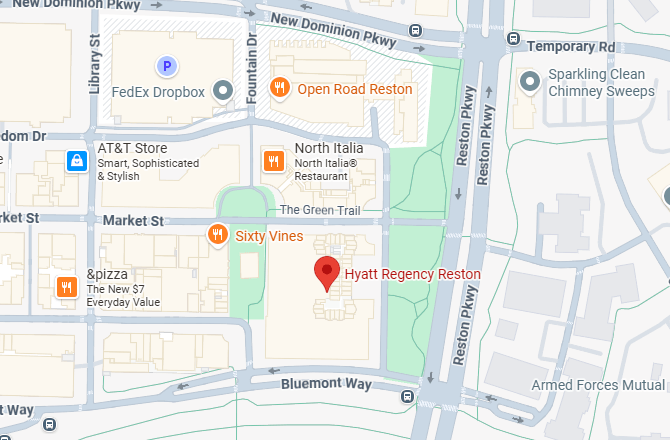



Airfare Options
Nullam leo felis, tempor eu condimentum ac, ultricies in diam. Mauris et magna finibus, pulvinar sem ac, egestas lectus.
Hotel Options
Mauris et magna finibus, pulvinar sem ac, egestas lectus. Nam sollicitudin, mauris eget sodales mollis, magna nibh congue nisl, vel congue enim nunc non ex. Integer sodales quam quis convallis ultricies.
Transportation
Lorem ipsum dolor sit amet, consectetur adipiscing elit. Cras pretium consectetur velit vitae malesuada. Morbi id dapibus sem, sit amet pulvinar metus.
Level Up Your Expertise in One Event!
What's Included?
- Keynotes
- Expert Led Breakout Sessions
- Expo Hall Access
- Networking Receptions
What's Included?
- Keynotes
- Expert Led Breakout Sessions
- Expo Hall Access
- Network Receptions
Lorem ipsum dolor sit amet, consectetur adipiscing elit. Aenean euismod bibendum laoreet.
- Feature one
- Feature two
- Feature three
FEATURED SPONSORS
Interested in Sponsoring? Email kevin.stolarski@progress.com



Testimonials from Attendeess
Empower your apps to improve operational efficiencies and streamline complex decision processes with automated machine learning and business rules.
I've learned that people will forget what you said, people will forget what you did, but people will never forget how you made them feel.
Sophy Nathanail
CEO, Apero Solutions
I've learned that people will forget what you said, people will forget what you did, but people will never forget how you made them feel.
Sophy Nathanail
CEO, Apero Solutions
I've learned that people will forget what you said, people will forget what you did, but people will never forget how you made them feel.
Sophy Nathanail
CEO, Apero Solutions
Highlights From Past Events
Lorem ipsum dolor sit amet, consectetur adipiscing elit. Aenean euismod bibendum laoreet.




Our Partners
Empower your apps to improve operational efficiencies and streamline complex decision processes with automated machine learning and business rules.
FAQs
Contact
Register
Lorem ipsum dolor sit amet, consectetur adipiscing elit. Aenean euismod bibendum laoreet.
Register
Lorem ipsum dolor sit amet, consectetur adipiscing elit. Aenean euismod bibendum laoreet.