
Turns Data into Meaning AI Can Understand
Enriches enterprise data with relationships, classifications and domain meaning so AI understands context—not just keywords or vector similarity. The result: more accurate retrieval, deeper reasoning and higher confidence in AI outcomes at scale.

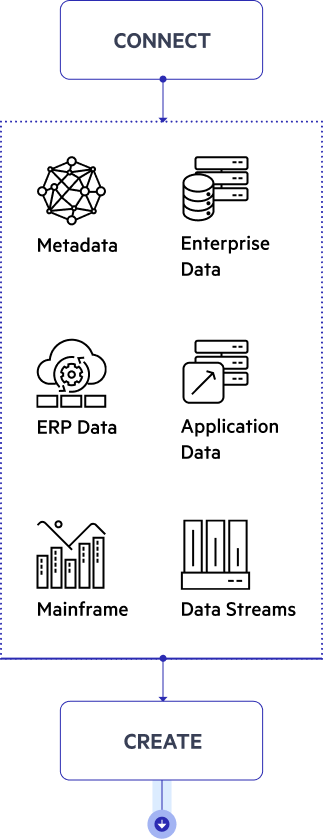
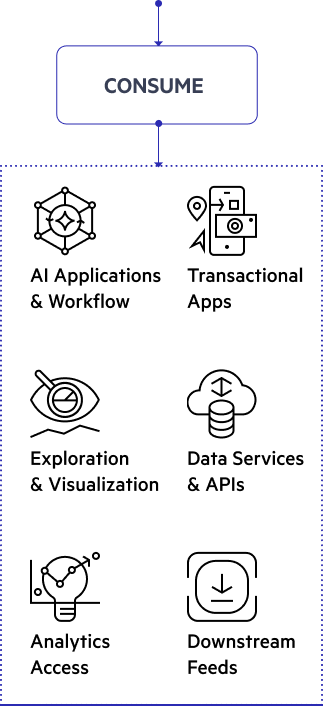
One Trusted Foundation: Connect, Create, Consume
Semantic analysis and enrichment is the meaning-making core of the Create layer—turning the connected data and verified vocabulary beneath it into context AI can actually reason over. Explore the other capabilities in the Create layer below.


Similarity is Not Understanding
Most AI retrieval finds text that looks similar to a query. But similar isn’t the same as relevant, and it certainly isn’t the same as understood. Vector-only retrieval struggles with schema-bound and multi-hop questions, and it can’t explain why a result was returned.
The single largest source of error in enterprise retrieval-augmented generation (RAG) isn’t retrieval volume—it’s semantic mismatch. The system doesn’t grasp what the data means in your domain. And closing that gap takes enrichment of relationships, classifications and domain meaning, not a bigger model.
From Keywords to Domain Meaning
Semantic enrichment adds the layer of meaning that lets AI reason over your data the way a domain expert would.
Classifies Against Governed Meaning
Automatically classifies content against your taxonomies and controlled vocabularies, so every item is understood in the context of your domain.
Extracts Entities and Relationships
Identifies the people, products, concepts and connections inside unstructured content, turning text into a structured web of meaning.
Builds a Knowledge Graph
Connects enriched entities into a knowledge graph that captures how things relate—enabling relationship-based reasoning, not just similarity matching.
Grounds Retrieval in Meaning
Feeds semantic context into retrieval so AI surfaces what’s relevant and explainable, improving answer quality and confidence at scale.
Better Context Beats a Bigger Model
When data carries meaning, AI gets more accurate, more explainable and more trustworthy—the essence of context before capability.
The Key to Higher-Confidence Answers
Semantic enrichment has driven large, measurable accuracy gains in real deployments, turning AI from promising to dependable on the knowledge that matters most.
The Fix for Semantic Mismatch
Semantic analysis addresses the largest single source of RAG error directly, with enrichment and knowledge-graph grounding—instead of hoping a larger model compensates for unclear data.
Explainable Retrieval
Relationship-based, graph-grounded retrieval can show why a result was returned and what evidence supports it, which similarity scores alone cannot.
See the Idea in Action: Similarity vs. Understanding
Same question, two retrieval approaches. Switch between them to see why meaning beats similarity and what it does to answer accuracy.
Query: “What are adverse effects of Compound X in elderly patients?”
- Vector Only
- Semantic + Graph
Compound X Marketing Brochure
High keyword overlap—wrong intent
Compound Y Elderly Care Study
Looks similar, different molecule
General Geriatric Dosing Blog
Topically near, not specific
50%
Vector Similarity Finds Text That Looks Alike
It cannot tell that Compound X and Compound Y are different entities, so it retrieves plausible-but-wrong context.
Compound X Phase III Safety Data
Entity-matched: Compound X
Compound X Geriatric Contraindications
Relationship: affects elderly cohort
Adverse-Event Registry, Compound X
Classified & provenance-traced
90%
Semantic Enrichment Knows What Compound X Is
It knows how it relates to the elderly cohort. Retrieval is relevant, explainable and traceable and accuracy climbs.
Connect Data. Reveal Insights.
Unlock deeper insights by connecting, enriching and contextualizing enterprise data.
The Evidence That Meaning Moves the Needle
Across published benchmarks and real customer deployments, adding semantic structure—like ontology grounding and graph retrieval—results in accuracy gains that vector similarity alone cannot reach. Real-world examples of this include:
50% → 90%
Correct answers after adding semantic RAG, at a leading crop science company
+102%
Additional accuracy improvement from semantic refinement, at a global pharma R&D org
Where Semantic Enrichment Pays Off
Semantic Content Discovery
Surfaces relevant knowledge across large content estates by meaning and relationship, not just keyword match.
Research Acceleration
Helps R&D and analyst teams find prior work and hidden relationships with explainable, traceable results.
Higher-Accuracy RAG
Grounds retrieval-augmented AI in enriched, graph-connected context to lift answer quality and confidence.
Domain-Aware Knowledge Assistants
Understands the vocabulary and relationships specific to your industry.
Part of One Trusted Foundation
Semantic analysis and enrichment is the meaning-making core of the Create layer—turning the connected data and verified vocabulary beneath it into context AI can actually reason over.
FAQs
Give Your AI the Context to Understand
See how semantic analysis and enrichment turn enterprise data into meaning for more accurate, explainable, higher-confidence AI.