
A Trusted Semantic Backbone for Your Data
Establishes a foundation of verified reference data, taxonomies and metadata that standardizes meaning across systems while aligning business language with machine interpretation so AI stays consistent everywhere it’s used.

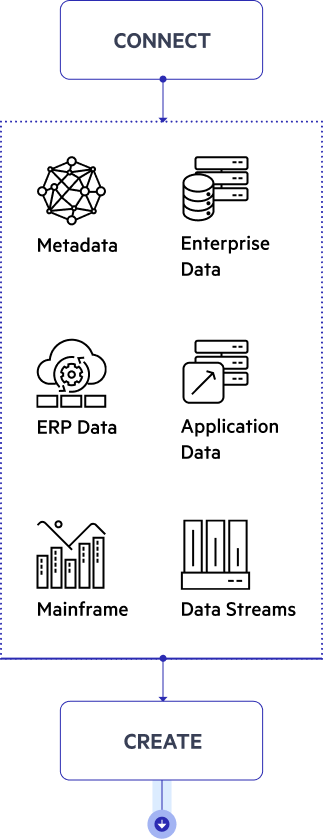
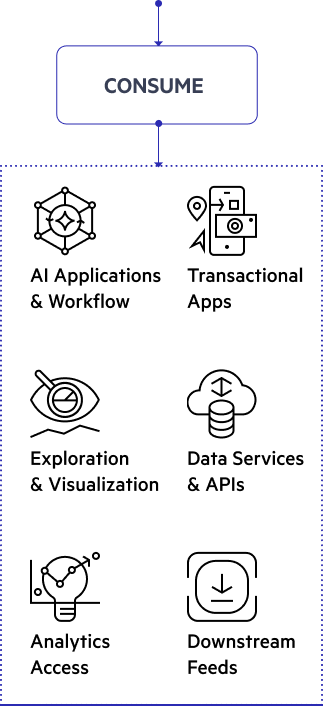
One Trusted Foundation: Connect, Create, Consume
Verified reference data and metadata sit at the start of the Create layer—the trusted vocabulary that semantic enrichment, security and rules all rely on to mean the same thing everywhere. Explore the other capabilities in the Create layer below.


AI Inherits Your Inconsistencies
When every system defines products, customers, policies and concepts a little differently, AI built on that data inherits the inconsistency—and answers drift depending on which source was retrieved. Metadata is patchy, vocabularies conflict and the same term means different things in different places.
Without a verified, shared backbone of reference data and metadata, you can’t get consistent AI outcomes or reuse the work across teams. The market increasingly treats the semantic layer as critical AI infrastructure, and that backbone has to be governed to be trusted.
Standardized Meaning, Governed and Reused
Verified reference data and metadata create one trusted vocabulary that every system, team and AI workflow can share.
Establishes Trusted Reference Data
Defines authoritative reference data and controlled vocabularies so core concepts mean the same thing across every system that uses them.
Standardizes Meaning with Taxonomies
Maps how the business defines products, policies and concepts, creating a shared semantic backbone rather than scattered, conflicting tags.
Aligns Business Language to Machine Interpretation
Connects the words people use to the structures machines need, so retrieval and reasoning reflect how your organization actually thinks.
Governs for Consistency and Reuse
Manages the semantic model as governed infrastructure so it stays consistent as adoption spreads across departments, and every team builds on the same foundation.
Consistency You Can Build On
A verified semantic backbone makes AI outcomes consistent, reusable and aligned to the business—across every use case.
One Source of Meaning
Standardized definitions mean AI gives consistent answers across departments and use cases, and the investment compounds as each new taxonomy becomes a reusable knowledge asset.
Reusable Semantic Infrastructure
The semantic infrastructure builds the vocabulary once and applies it across search, retrieval-augmented generation (RAG), analytics and agents—instead of re-solving meaning for every project.
Semantic Layer the Market Is Investing In
Reference data, taxonomy and metadata management have moved from back-office hygiene to recognized AI infrastructure—the backbone that makes context trustworthy at scale.
See the Idea in Action: From Conflicting Labels to One Shared Meaning
Three systems, with three names for the same thing. Apply the semantic backbone and watch them align to one governed definition that AI and people can share.
- Before · Three Labels
- Apply Semantic Backbone
Client
Means anyone with an active deal
Account Holder
Means whoever pays the invoice
Contact
Means any person on a ticket
Same Record, Three Meanings
Each system means something slightly different by the same record—so AI answers drift depending on which source it retrieved.
Customer
Was “Client”
Customer
Was “Account Holder”
Customer
Was “Contact”
One Canonical Concept: Customer
Every system and AI workflow now interprets the record the same way. Build the vocabulary once, reuse it everywhere.
Power Better Decisions with Trusted Data
Improve trust in business-critical information with verified reference data and enriched metadata management.
Recognized Leadership in Metadata Management
Reference data, taxonomy and metadata management are no longer hygiene—they’re the semantic foundation analysts now name as the differentiator for enterprise AI. The market is moving to where this capability already lives.
59%
of enterprises now investing in semantic layers as critical AI infrastructure
Named by ISG
for semantic controls and knowledge lifecycle automation as RAG-vendor differentiators
What a Semantic Backbone Enables
Consistent Enterprise Search
Search and discovery that understand your organization’s vocabulary, returning consistent results no matter which system holds the content.
Reusable AI Across Departments
Shared semantic model that multiple teams and use cases build on, so meaning isn’t reinvented for each project.
Regulatory and Reference Alignment
Standardized reference data for regulated domains, where consistent definitions and controlled vocabularies are essential.
Content Classification at Scale
Consistent metadata and classification across large content estates, from publishing to compliance.
Part of One Trusted Foundation
Verified reference data and metadata sit at the start of the Create layer—the trusted vocabulary that semantic enrichment, security and rules all rely on to mean the same thing everywhere.
FAQs
Give your AI a Vocabulary It Can Trust
See how verified reference data, taxonomies and metadata create the shared semantic backbone for consistent, reusable enterprise AI.