
Govern AI Decisions with Explicit Business Rules
Codify business logic and policy as deterministic rules that guide AI-driven decisions and workflows. By combining AI insight with explicit rules, you can automate decisions responsibly, with transparency, compliance and control.

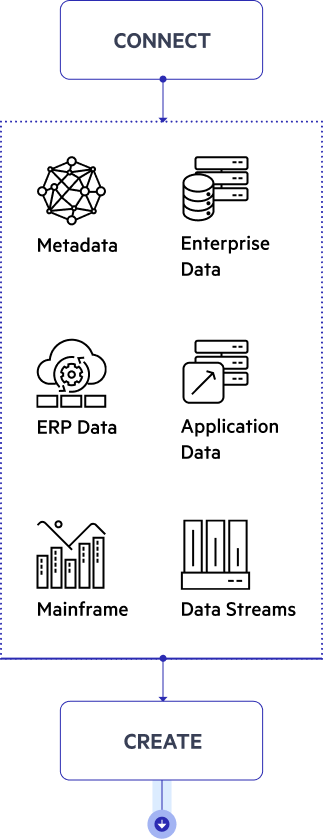
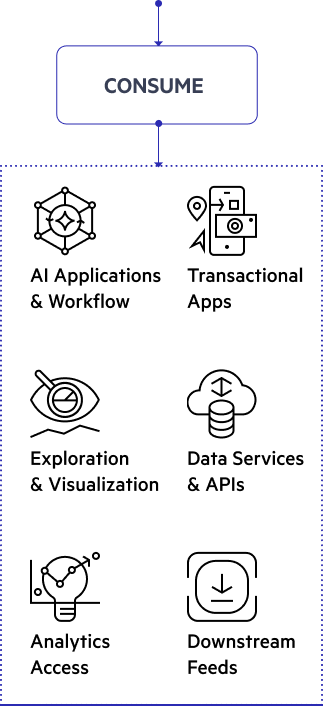
One Trusted Foundation:
Connect, Create, Consume
Business rules management is the control point of the Create layer of the Progress® Data Platform where AI insight—grounded in governed context—becomes a decision the organization can stand behind before anything is consumed. Explore the other capabilities in the Create layer below.


Non-deterministic AI Alone Can’t Be
Held Accountable
Generative and agentic AI are non-deterministic by nature: ask the same question twice and you may get two answers. That’s fine for brainstorming, but unacceptable for decisions that must be consistent, compliant and defensible.
Model guardrails and prompt instructions are not policy; they can’t reliably enforce the rules a regulator or auditor expects. As high-risk AI obligations take effect, organizations need a way to make decisions explainable and repeatable and to govern not just what AI says, but what it’s allowed to do.
AI Proposes, Rules Govern
Business rules management externalizes policy into an explicit, deterministic layer that sits alongside your AI—so decisions follow the rules every time.
Codify Policy as Explicit Rules
Capture business logic and compliance policy as deterministic rules, separate from application code and model prompts, so policy is visible, versioned and owned by the business.
Constrain AI Outputs Against Policy
Check AI insights against explicit rules before they become decisions or actions, so outputs align with operational and regulatory requirements.
Decide Consistently and Repeatably
Deterministic rules produce the same decision under the same conditions every time; the consistency probabilistic models can’t promise on their own.
Make Every Decision Auditable
Record which rules and policies applied to each decision so you can show what happened, why it happened and under which policy.
Automate Decisions You Can Defend
Combining AI insight with deterministic rules is what makes automation responsible, fast and flexible, while remaining governed and explainable.
Responsible Automation at Scale
Automates more decisions without giving up control, transparency or the ability to defend an outcome—the foundation of trusted, governed autonomy.
Policy As a Managed Layer
Externalizes rules from code and prompts into a managed engine, so policy changes don’t require reengineering applications or retraining models.
Decision Governance, Not Just
Access Control
Governs what AI is allowed to decide and do with auditable records of the rules applied. This is the layer most AI stacks simply don’t have.
See the Idea in Action:
AI Proposes, Rules Govern
Pick a case: The model offers a suggestion, then the deterministic rules layer applies policy and returns a decision you can explain and audit.
- Loan $8k · Score 720
- Loan $40k · Score 610
- Loan $15k · Flagged Region
Approve
Model: low risk, strong history
Approve
Policy AUTO-01: amount <$10k and score ≥700 → auto-approve
Model and policy agree
The decision is still logged, explainable and replayable. Deterministic rules decide what is acceptable, on the record.
Approve
Model: low risk, strong history
Refer to Underwriter
Policy RISK-04: score <660 on amounts ≥$25k → mandatory
human review
Model and policy agree
The decision is still logged, explainable, and replayable. Deterministic rules decide what is acceptable, on the record.
Approve
Model: low risk, strong history
Decline
Policy COMP-09: counterparties in restricted regions → block pending screening
Model and policy agree
The decision is still logged, explainable and replayable. Deterministic rules decide what is acceptable, on the record.
Simplify Rules. Accelerate Innovation.
Empower business and IT teams to adapt rules, policies and decisions without slowing application development.
The Control Layer Most AI Stacks Are Missing
Access governance controls who can reach data. Decision governance controls what AI is allowed to do with it, and an integrated rules engine governing AI outputs is whitespace most competitors haven’t filled. As high-risk AI rules take effect, it becomes a buying trigger, as in these examples:
Aug 2026
EU AI Act high-risk obligations make explainable, governed decisions a requirement
Deterministic
Same conditions, same decision, every time—with an auditable record
Whitespace
Integrated rules engine governing AI outputs that most competitors lack
Where Business Rules Management Matters
Compliance-heavy Decisioning
Decisions in finance, insurance, healthcare and the public sector that must follow explicit, auditable policy.
Agent Guardrails
Deterministic boundaries on what autonomous agents are permitted to do, with human-in-the-loop review where risk is high.
Eligibility and Policy Automation
Automation of rules-based determinations like eligibility, pricing and routing consistently and transparently.
Responsible AI Operations
Operationalization of responsible AI policy so decisions stay aligned to regulatory and internal requirements as you scale.
Part of One Trusted Foundation
Business rules management is the control point of the Create layer where AI insight, grounded in governed context, becomes a decision the organization can stand behind before anything is consumed.
FAQs
Make AI Decisions You Can Defend
See how codifying policy as deterministic rules lets you automate decisions responsibly—with transparency, compliance and control.