What Agentic RAG Means for Marketers Using a DXP
You’ve got the data. Agentic RAG could help you apply insights from that data to create actually personalized campaigns.
The most significant competitive advantage you need in your marketing campaign right now is already in your workflow. And that’s the data sitting quietly in your CMS or DXP.
Every email a customer opens, every page they click, every interaction saved in the backend is a clue to what they actually want.
However, the problem most marketers face is turning this data into actionable insights.
This data issue is why many marketers turn to popular AI tools to expedite their data mining process and retrieve data from the internet with ease. But that information is the same one your competitors are using, and it cannot create the kind of hyper-personalized experience your customers expect.
Thanks to Agentic RAG, you can now bridge the gap between your data and its effective use in powerful campaigns whenever you need it.
In this post, we’ll explain what Agentic RAG means, how Progress Agentic RAG works and how it fits into your marketing workflow.
First of All, What Is Agentic RAG?
Agentic RAG is the next step in using AI with your internal data rather than relying on third-party data to inform internal processes. To understand how this works, let’s break down some of its terminology.
- Retrieval Augmented Generation (RAG): This enables you to connect generative AI tools to your company’s private data, such as the information stored in your CMS, DXP or email lists.
Instead of relying solely on general internet knowledge, which public models like ChatGPT or Gemini use, RAG empowers your team to extract accurate insights directly from your own sources while keeping data secure and private.
- AI Agents: These are software programs powered by language models that can carry out specific tasks.
Agentic RAG combines these two elements (AI agents and RAG) to function. This means Agentic RAG uses AI agents on top of your private data to not only retrieve answers but also act on them.
Although this may sound technical, here’s what it looks like in marketing. For example, imagine drafting an email campaign and you need to review the previous month’s customers’ purchase history to identify patterns.
With Agentic RAG, the system can pull customer purchase history from your DXP or any other designated source and instantly suggest the right product recommendations for each segment.
This simple suggestion could boost your conversion rate, as it allows you to create a targeted email campaign based on your customers’ interests, rather than relying on guesswork. It also saves you tons of hours of manual research.
How Does Agentic RAG Work?
So, if Agentic RAG is about building your internal AI system, how does it work and what’s its working principle?
Firstly, Agentic RAG is composed of different types of AI agents, each with its own distinct role in retrieving, organizing, and applying data. For example, according to IBM, Agentic RAG agents could include:
- Routing agents: Choose the right data source or tool to answer a query
- Query planning agents: Break complex questions into smaller, manageable steps
- ReAct agents: Combine reasoning and action, adjusting as new information is uncovered
- Plan-and-execute agents: Map out a task fully and then carry it out independently for greater efficiency
By working together, these agents give Agentic RAG systems the flexibility to manage both simple and complex requests.
Benefits of Agentic RAG in Your Marketing Workflow
Now that we’ve covered what Agentic RAG is, let’s bring it closer to home and see what it actually means for you as a marketer.
Traditional RAG can pull answers from your private data, but Agentic RAG takes it a step further with agents that can plan, organize and act on that data as it’s being retrieved.
Instead of static answers, you get insights you can act on right away.
Here are some of the benefits you’ll notice in your workflow:
1. Hyper-Personalized Campaigns
If you’ve ever tried building one-to-one campaigns, you know the pain. Even when you use AI, it often sounds generic, and you end up spending hours tweaking it to reflect your brand’s voice.
And if you choose to use some personalization tools on the market, they are expensive or designed for teams running dozens of accounts. That leaves many marketers like you at a standstill. But settling for surface-level swaps like [FirstName] tags and logos isn’t the kind of personalization today’s customers want.
Agentic RAG can change this scenario by quickly activating the customer data you already collect inside your CMS, DXP or CRM. Think of engagement history, content downloads or past interactions. Instead of sitting unused, this data is pulled into your workflow and enriched with agents that make it easier to act on.
That means you can create landing pages, emails and campaigns that reference what your audience actually cares about, not just their name, logo or a strategy you copied from competitors.
As a result, the campaign feels genuine, scales without bloat and earns attention because it’s rooted in a raw and unique context.
2. Faster Access to Your Internal Data Insights
The primary purpose of a RAG system, including Agentic RAG, is to enable you to query your own private data. This matters because tools like ChatGPT or Gemini only rely on the knowledge they were trained on. They don’t see the details inside your systems, so they can’t give you answers that are specific to your customers or campaigns.
With Agentic RAG, your company data becomes instantly accessible. You can pull up insights in seconds instead of days, whether that’s seeing which content themes a segment engaged with last quarter or finding accounts that downloaded a key resource.
This speed gives you the power to make decisions when they matter most and launch campaigns at the right time.
3. More Trust in Your Outputs
One of the biggest frustrations with AI is its frequent errors and hallucinations. Standard AI tools can produce polished copy, but they also invent details or miss the context that matters to your audience. That leaves your team spending hours fact-checking and rewriting.
Agentic RAG helps solve this by grounding every response in your verified company data. Instead of pulling from random internet sources, it uses the content stored in your CMS, DXP or CRM to generate outputs that align with your business and reflect your customers more accurately.
4. Smarter Problem-Solving
Marketers deal with questions that rarely have a simple answer. Which campaigns performed best with returning customers? What themes are driving the most engagement in a specific segment? How do you turn a 50-page research report into insights you can use for the next campaign?
Once you have all this data in your custom-built AI system (your Agentic RAG), it becomes easier to manage and use effectively. Agents can break complex queries into smaller steps and return clear, actionable answers. They can also condense long reports into digestible takeaways, providing you with the highlights without requiring hours of manual work.
And because it all runs inside your own systems, you don’t have to paste sensitive, proprietary data into external tools like ChatGPT.
5. A Stronger Competitive Edge
When everyone is using the same AI tools as their data source, it’s easy for campaigns to start blending together. Customers can tell when messaging feels generic, and they quickly tune it out.
Agentic RAG gives you an edge by making your own data the foundation of your campaigns. Every message is informed by customer interactions, behaviors and insights that are unique to your brand. That makes your marketing messages/campaign harder to copy and more meaningful to the people you want to reach.
Over time, this consistency builds trust and loyalty. So, instead of chasing people’s attention, your campaigns earn it because they reflect your audience’s actual needs, not a competitor’s strategy.
Practical Ways Marketers Put Agentic RAG to Work
Agentic RAG is a tool that your team can use to solve everyday marketing challenges. Here are some practical ways it fits right into your workflow:
1. Account-Based Marketing (ABM) Personalization
It’s all about turning the data you have into valuable insights. You can pull insights from your CMS and CRM to instantly surface what a target account has engaged with, such as a webinar, white paper or product page, and use that context to generate landing page copy and outreach emails that speak directly to their situation.
2. Content Repurposing and Research
You can no longer run out of content ideas with this. Upload a 40-page industry report into your system and let Agentic RAG break it down into key themes, statistics and talking points that align with your audience’s needs.
Then you can quickly turn those into blog posts, social snippets or campaign messaging without hours of manual review.
3. Faster Campaign Analysis
You can ask Agentic RAG, “Which campaign performed best with repeat customers in Q3?” and get an instant, data-backed answer to inform the next strategy.
4. Customer Journey Mapping
Customers feel seen when a marketing campaign speaks to their actual reality. That’s where understanding their journey becomes critical. However, this isn’t possible without the right data.
You can use Agentic RAG to connect data from emails, support tickets and CMS content. The system can highlight common paths customers take, helping your marketing team identify gaps and create campaigns that guide people smoothly from interest to conversion.
5. Sales Enablement Content
Sales teams often need custom decks, one-pagers or case studies tailored to a specific client or industry. Agentic RAG can retrieve relevant materials from your company’s knowledge base and empower you to draft versions tailored for different accounts, saving time and aligning strategies.
These examples show what’s possible when Agentic RAG becomes part of a marketer’s toolkit.
But how do you actually bring it into your own workflow? That’s where Progress Agentic RAG comes in.
How Progress Agentic RAG Works for Marketing Teams
No two marketing teams work the same way, and Progress Agentic RAG is built with that in mind. Its modular design lets you shape how data is retrieved and used, instead of forcing you into a one-size-fits-all pipeline.
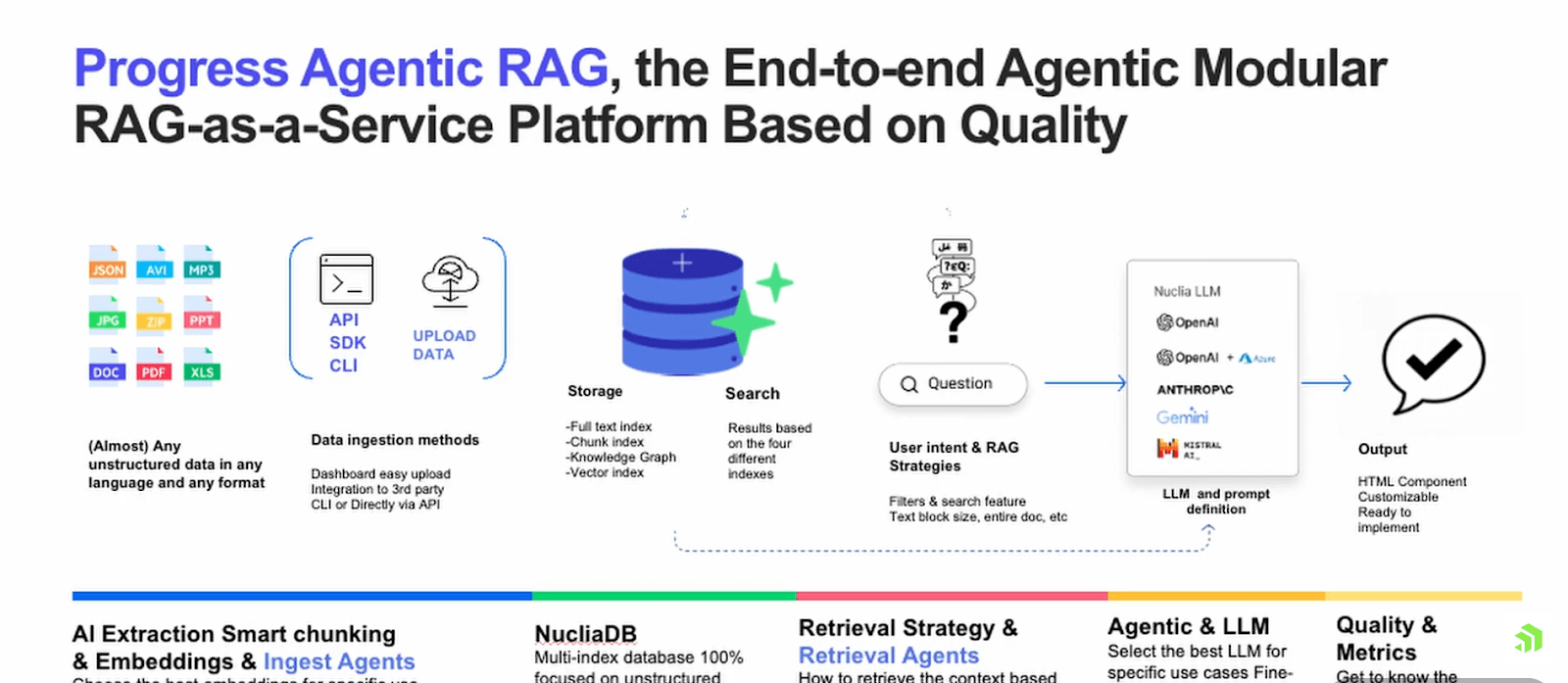
This means the answers you get are accurate and tailored to the way your team runs campaigns and measures success.
Here’s how its core features connect directly to your marketing needs:
1. Designed to Handle Different Content Types
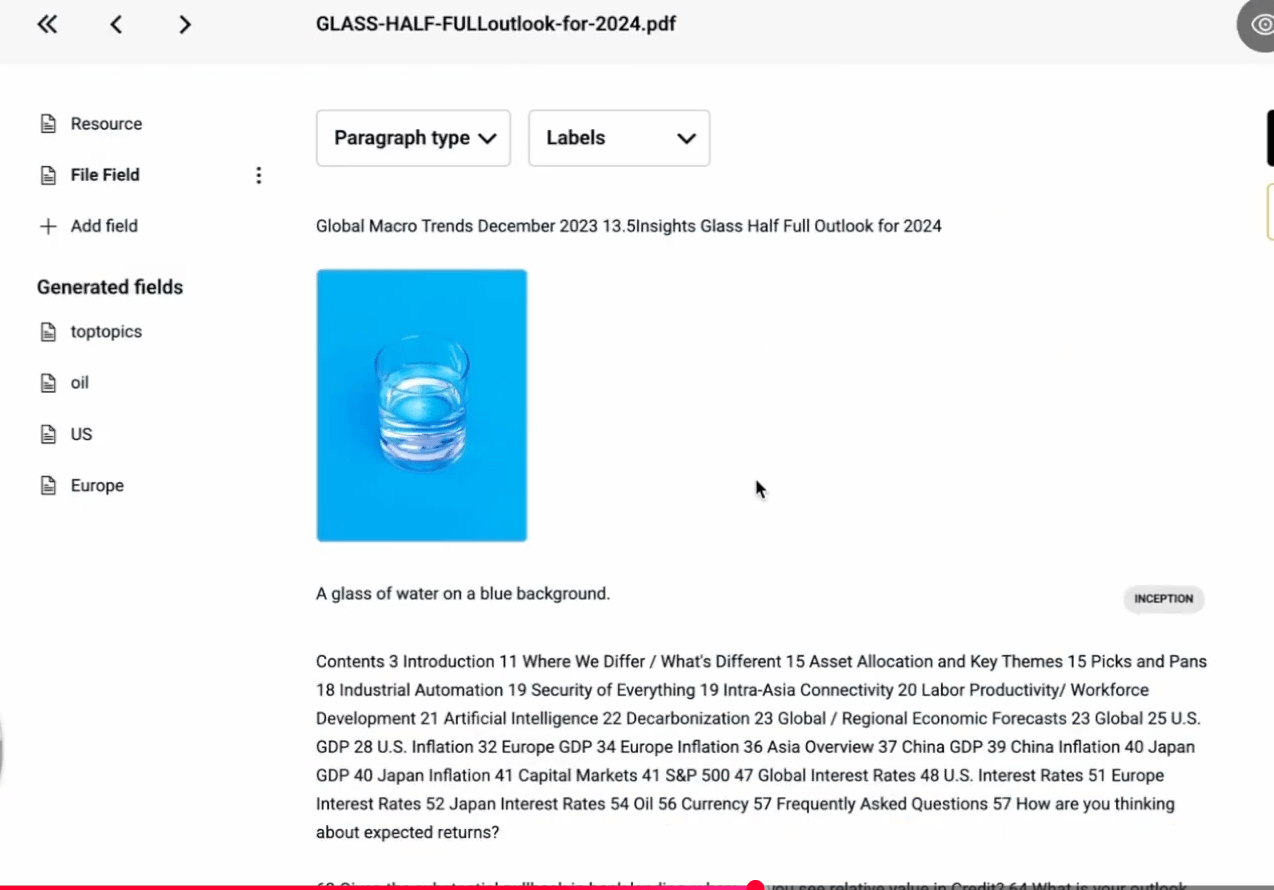
Marketing teams don’t just work with spreadsheets. You manage PDFs, slide decks, reports, video and even audio files. Progress Agentic RAG can ingest almost any format, making it easier to surface insights across all the content your team already produces and stores.
2. Custom Retrieval Strategies
With up to 30 retrieval methods and filtering options, you can ask highly specific questions, such as pulling customer feedback about a product launch or finding content tagged to a specific region. This level of targeting makes campaign planning sharper and more data-driven.
3. Enrichment Through AI Agents
The Progress Agentic RAG Platform currently offers six different agents. These agents are applied at ingestion time and are used to enrich the data that you upload to the platform. These agents include:
- Labeler
- Generator
- Graph Extraction
- Q&A Agent
- Content Safety Agent
- LLM Security Agent
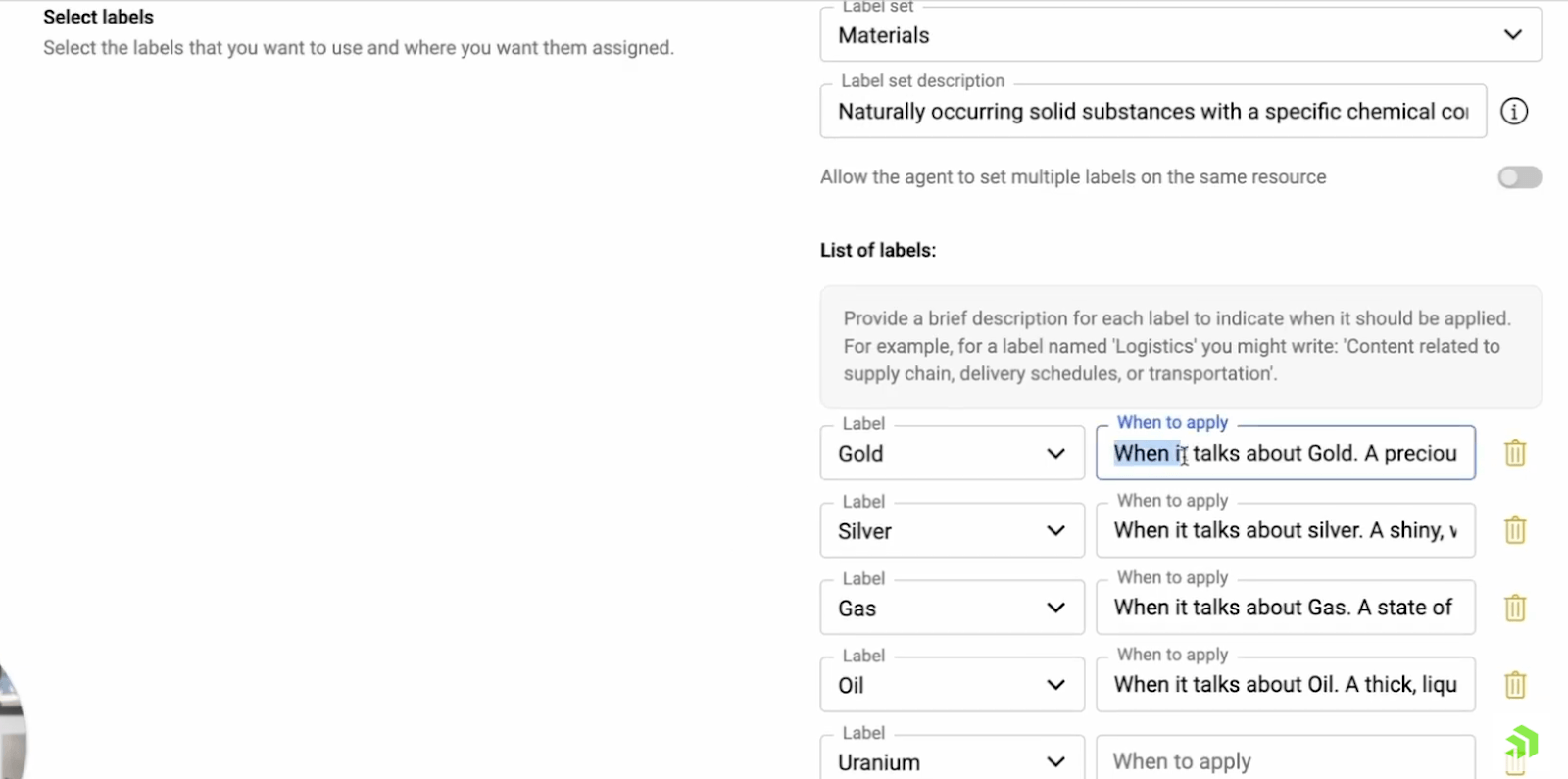
For example, a Labeler Agent can automatically classify sections of reports or customer feedback by theme or sentiment, allowing you to spot trends at a glance. A Generator Agent can answer predefined marketing questions across thousands of documents, saving hours of manual analysis.
4. Optimization with RAG Lab
Not every retrieval method delivers the same quality. With RAG Lab, you can test and compare strategies until you find the one that produces the most relevant insights for your campaigns.
Progress Agentic RAG makes your data usable. It organizes the assets you already have and puts them to work in your campaigns, so your marketing is always powered by insights no one else can copy.
Put Agentic RAG to Work in Your Marketing
Agentic RAG is a specially designed system that helps marketing teams work more effectively with the data they already own. It takes what’s locked away in your CMS, DXP, CRM or content libraries and makes it usable in real time for planning, personalization and decision-making.
Progress Agentic RAG makes this possible with a modular and customizable platform built for various business use cases. It adapts to the way your department works, supports almost any content type and gives you the trust and speed you need to deliver campaigns that stand out.
And now, you can use the insights of Progress Agentic RAG inside your website: Progress unveiled the first Generative CMS. Progress Sitefinity CMS powered by Progress Agentic RAG transforms enterprise knowledge into adaptive experiences—each assembled in real time by AI that understands your users, your brand and your goals.
Request a demo for Sitefinity Generative CMS and get started with your own innovations.

John Iwuozor
Content Lead