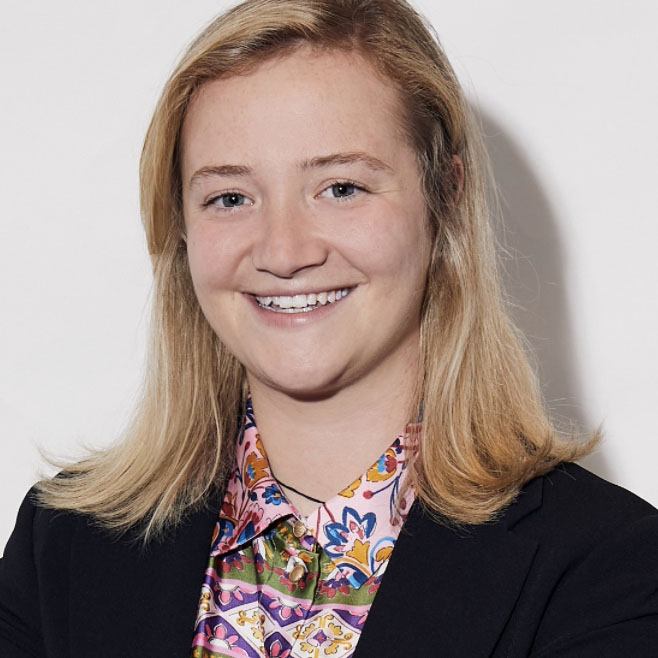
Reed Hansen on Authenticity, Critical Thinking & Human Touch
ICYMI: Reed Hansen talks humanities majors, AI-driven marketing & why marketers must stay human in the age of AI.
“Humanities majors of all varieties are going to be ultimately the most empowered by AI.”
Reed Hansen, Chief Growth Officer at MarketSurge, makes one thing clear: the marketers who will thrive in an AI-first world aren’t necessarily the most technical. They’re the ones who can think.
Reed brings a refreshing, grounded perspective on how AI is reshaping marketing roles, creativity and customer engagement to Episode 14 of 10 Minute Martech.
While many conversations focus on tools, automations and speed, Reed argues that the true differentiators moving forward will be:
- Critical thinking
- Language skills
- Authenticity
- The courage to stay human in a world of automation
He shares personal lessons from his own shift back toward in-person, relationship-first marketing and why he believes we’re in a “back to the ’90s” moment where face-to-face connection once again stands out.
Whether you’re looking to future-proof your career, update your martech stack or simply understand how AI is reshaping professional identity, this episode is equal parts actionable and affirming.
Reed’s Big Idea: AI Doesn’t Replace Thinkers, It Elevates Them
Reed’s hot take is simple but powerful: AI will disproportionately empower humanities majors.
Why? Because the ability to:
- Interpret
- Question
- Analyze
- Communicate
- Reason about meaning
becomes more valuable, not less, when AI generates the raw material.
“With the ability to think critically and the language skills we’ve developed, humanities majors are back in the game.” In other words: Those who know how to think will thrive in a world where AI helps everyone do.
Reed’s 10 Most Memorable Moments on 10 Minute Martech
1. Staying Ahead of AI Is the Job Now
Reed worries about where his value will come from whether it be his knowledge or his execution, because AI is accelerating everything. But he sees opportunity, not fear.
2. Authenticity Is Becoming a Superpower
He flipped his own strategy this year: less automation, more in-person marketing and networking. And it worked. There’s novelty in showing up human.
3. We’re Returning to Our 1990s Roots
Handshakes, conversations, live engagement, the old playbook is becoming the differentiator again. AI is the accelerant, not the replacement.
4. AI Is Already Shaping Human Speech
Reed cites a study showing people are adopting verbal quirks and slang from AI outputs. Human + AI language is blending. And yes, that’s wild.
5. Start With Conversational AI, Not Pre-Built Tools
Before jumping into role-specific platforms, Reed recommends learning directly from agentic interfaces like ChatGPT. Ask follow-up questions. Ask it how to improve its own performance. Learn the underlying logic.
6. Composable Stacks Win
Forget monolithic platforms. Reed is a strong advocate for flexible, plug-and-play architectures:
- Zapier
- Make
- Lightweight AI-powered integrations
Small teams can now orchestrate what once required full dev departments.
7. The Real Power Is Connecting Systems
Your web traffic might live in one platform and your sales data in another, but AI can synthesize across both. Modern marketers must become orchestrators.
8. Product Hunt Is His Daily Inspiration
Reed connects directly with founders from water-filtration AI creators in Lebanon to indie designers to stay close to the ground floor of innovation.
9. AI Might Make Humanities Majors the New Technical Talent
Critical thinkers who understand language may outpace technical specialists who lack those skills. Plain English, as Andrej Karpathy said, really might be “the new programming language.”
10. Humanities Majors Are Back in the Game
Reed’s final point: AI brings analytical, language-oriented thinkers back into competitive advantage. English majors, Italian majors, philosophy majors all suddenly have superpowers.
Reed’s Martech Hot Take
AI is accelerating everything, but the skills that matter most are the human ones: judgment, language and critical thinking.
The more AI-generated content floods the world, the more valuable authentic, thoughtful marketers become. This isn’t the end of marketing. It’s a reset.
Who Reed Follows
Reed’s inspiration comes from:
- Product Hunt founders
- Indie makers
- Computer science grads building niche tools
- Designers inventing new interfaces
- Ground-level innovators pushing the boundaries of applied AI
He invests time daily in deliberate networking, not scrolling.
Listen to the 10 Minute Martech Episode Now
Next Up in the 10 Minute Martech ICYMI Series!
Mariam Tariq, SVP of Digital Experience Marketing and Strategy at Progress, breaks down a fundamental shift in how organizations need to think about their websites: they’re no longer static brochures, they’re the structured source of truth that powers everything.
Full Transcript: Reed Hansen
Want to keep reading? Here’s the full transcript to keep you transfixed. Every insight, every quote, unedited and unforgettable.
Sara Faatz: I’m Sara Faatz, and I lead community and awareness at Progress. This is 10-Minute Martech.
Reed Hansen: Humanities majors of all varieties are going to be ultimately the most empowered by AI with their ability to think and think critically. Think that the humanities majors were back in the game.
Sara Faatz: That’s Reed Hansen, Chief Growth Officer at MarketSurge. Let’s get started. Thanks for being here today, Reed. Let’s start off by just talking about what is keeping you up at night.
Reed Hansen: Well, what’s keeping me up at night is trying to stay ahead of AI. In my role as a marketing consultant, I worry about where I can continue to offer value and whether it’s my knowledge that’s going to be valuable or my execution that will be valuable. I just don’t know. Everything’s happening so fast.
Sara Faatz: When you and I were talking earlier, we talked about authenticity and the importance of that in marketing today and in marketing, particularly with AI at the helm. Talk to me a little bit about your thoughts on that and how people can bring that authenticity out even when AI is in the picture.
Reed Hansen: I really believe that every sales process, every marketing process should include points of human touch, points where we’re talking face-to-face or I just pick up the phone and call to complete a step. And then I can definitely speak from personal experience. I fell into the trap of thinking that I could just automate everything for a long period running this business. And this year I’ve made a concerted effort to be more of an in-person marketer and networking and it has really paid off. I think there’s some novelty to it in 2025.
Sara Faatz: Isn’t that funny? It’s kind of going, the evolution of marketing is bringing us back a little bit to some of our roots where the things that stand out are the things that were part of the playbook maybe in the late '90s, right? Where you actually engaged with people in a different way and things like that. So I think to me, it’s really exciting to see how AI can augment that and allow us to have more interactions, more meaningful interactions.
Reed Hansen: Yeah. And I’ll throw out too, I think attaching a face and like live presentations, public speaking, those kinds of things do a lot for your brand.
Sara Faatz: Right, right. Yeah, the AI output and human language are starting to merge a little bit. And so one’s starting to sound a little bit like the other, which is really interesting. How the impact that AI could be having even on the way we speak and function, which will eventually make it harder to understand and to know where did that come from, right?
Reed Hansen: Yeah, and it is interesting how much we’re reading from that’s generated by AI. Yeah. And exactly to your point, I think I cited a study and I forget where it’s from, but that people are actually taking social cues and including slamming and verbal quirks that you recognize from the AI engines.
Sara Faatz: Yeah, it’ll be interesting to see what happens to language and human interaction there over time. When it comes to AI, how can people today be future-proofing? And I know that word gets a lot of… it’s overplayed a little bit, but how can they be thinking about their marketing technology stacks so that they can continue to evolve at the same pace that technology is?
Reed Hansen: Yeah, that’s a great question. For one, I would recommend that everybody get access to one of the conversational interfaces with the AI tools and get familiar, practice that. And this can be free. There are freemium models for almost all the engines. Practice conversing with the agent and see what generates the quality of response that you want. And I’d say do that before you adopt the tools that are more specific to your role because they will be structured and limited. Like if you go straight to a blog creation tool or logistics management tool powered by AI, those already have some parameters. When you start with the conversational AIs, you can better understand how it works and potential. Ask follow-up questions, ask it to refine its answers, and even ask it for recommendations on how you can improve the outputs, which is very surreal. Like say, how can I get better work out of you? It’s hard to envision that like in a human setting, but with the AI engines, that is definitely possible.
Sara Faatz: Yeah, that’s great. And when you’re thinking about the marketing technology stack all up, are you thinking that people should be buying like a monolithic stack, or, is your head more around composability and the architecture that allows you to kind of rip and replace as needed?
Reed Hansen: Yeah, great point. And that’s definitely the latter is my recommendation, that there are apps that may not require AI, and they may need to be connected to others that are. There are great technologies that are very consumer accessible, like Make, Zapier, that allow you to make these connections, filter the flow of data that’s going back and forth, and allow it to synthesize data that’s coming from different places. Like, how does my web traffic affect my sales? Those are in two different systems. The great thing, though, is that between all these things, and now powered by AI, it does not require a full stack development team to build everything from scratch and the time and expense that that takes. You can build lightweight apps that deploy quickly and can be swapped in and out as needed and as you adopt new apps.
Sara Faatz: Can you tell me right now, who are you following for inspiration or information?
Reed Hansen: I’ve been using Product Hunt quite a bit. And what I have found is that I reach out to the individual founders. So, by the way, it’s a website where people can promote their startup or their startup project. And these founders, they’ll put their information, and so I’ll backtrack on to LinkedIn and reach out and make connections. Now, this has been really helpful for meeting people to interview, but also I get a lot of great ideas and some fresh perspectives. Water filtration AI app creator from Lebanon, who is just a fascinating individual. And I’ve met other computer science grads that are doing some very interesting things and designers. And so I try to keep it at the ground level, and I just a lot time every day to do some deliberate networking.
Sara Faatz: Yeah, no, that’s great. That’s really cool. So tell me, what is your hot take right now?
Reed Hansen: Yeah, that’s a great question. So I speak from personal experience as a Italian major, and I haven’t actually encountered any other Italian members, Italian majors, other than those that I graduated with. But I loved my studies and thought at one point I’d go into international law. Didn’t end up executing and ended up in sales and marketing. But years later, I finally find the medium AI that really empowers me to do some wonderful technical things. And my hot take is that humanities majors of all varieties are going to be ultimately the most empowered by AI with their ability to think and think critically and the language skills that we’ve developed in our studies and just our ability to question things. And I think that the humanities majors were back in the game.
Sara Faatz: There you go. I love that. Yeah, as an English major, I have to say, one of the things I love is to look at the sentence structure and I love playing with the different tools to say, hey, rephrase this for me or change it. And interestingly enough, seeing how sometimes it just restructures the words in a way that actually changes the entire meaning of the sentence. So it’s really interesting to play with that. So I am right there with you. I think it was actually Andre Karpathy, one of the co-founders of OpenAI in 2023, he said, “The hottest new programming language is plain English.” So I think that that plays exactly into what you’re saying. I think understanding of language and structure and meaning and how to communicate, I think is going to be super, super important when you start spending more time with the agents and LLM outputs and bots and all of those kinds of things. Well, Reed, it’s been wonderful talking to you today. Thank you so much for spending the time with us.
Reed Hansen: Thank you so much, Sara. It was a real treat. I appreciate it.
Sara Faatz: Listeners, thanks for tuning in. Make sure you like and subscribe wherever you get your podcasts. Until next time, I’m Sara Faatz, and this is 10 Minute Martech.
Next up: Mariam Tariq on Why Your Website Is the Control Center for AI