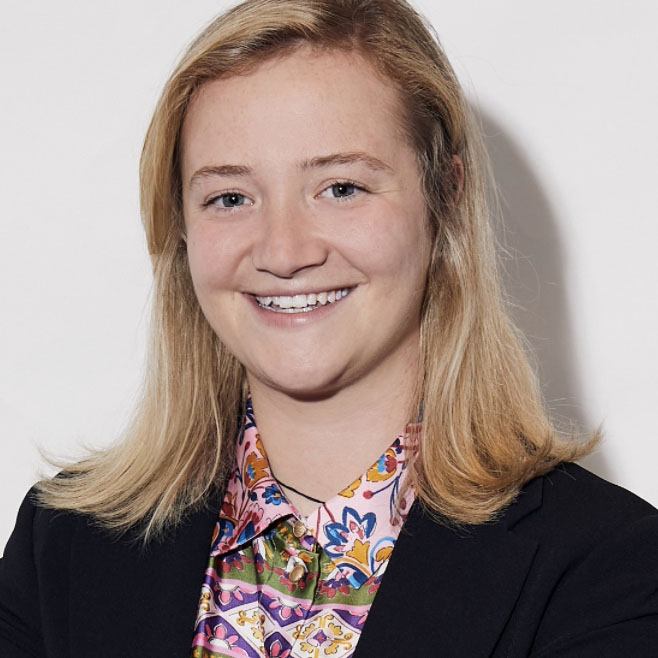
Mariam Tariq on Why Your Website Is the Control Center for AI
ICYMI: Mariam Tariq joins 10 Minute Martech to talk about how your website shapes your entire AI strategy.
“Websites are the brand’s control center … a clean, structured source of truth for AI systems to consume.”
In this episode of 10 Minute Martech, Mariam Tariq, Senior Vice President of Digital Experience Marketing & Strategy at Progress, reframes the website for the AI era. It’s not a brochure. It’s not a digital filing cabinet. It’s the structured knowledge base that powers your AI agents, headless experiences, personalization engines and every channel that depends on high-quality, reusable content.
Mariam brings a crystal-clear perspective on where CMS strategy is heading and why content structure, governance and freshness matter more than ever. From the explosion of martech tools to the accelerating demands of AI systems, she explains exactly how marketers must evolve to keep pace.
If you’re trying to understand how AI is reshaping the role of the CMS, or what “content readiness” looks like for agentic experiences, this episode is foundational.
Mariam’s Big Idea: The Website Is Your AI Engine
Mariam argues that, far from becoming obsolete, the website is now the single most important asset for AI-driven experiences.
Why?
Because AI agents, LLMs, and headless channels need:
- Clean content
- Structured content
- Up-to-date content
- Semantically meaningful content
- Content designed for reuse
“Your website must become the structured knowledge base that powers AI agents and headless interfaces. Voice, chat, agentic AI, everything.”
In short: No structured content. No AI excellence.
Mariam’s 10 Most Memorable Moments on 10 Minute Martech
1. There’s Too Much Martech
Mariam tracks the explosion from 150 tools to 150,000 in Scott Brinker’s landscape. The volume is overwhelming and staying current is a job in itself.
2. The Real CMS Challenge: Content Everywhere
Web, mobile, chatbots, AI assistants, agentic interfaces, every experience needs structured, reusable, personalized content. CMS strategy is now mission critical.
3. Websites Aren’t Dead. They’re Evolving
The website isn’t a destination; it’s a data layer. It must feed AI agents with reliable, structured knowledge—much like a company’s internal API.
4. The Website Is the Brand’s Control Center
Owned, controlled and authoritative, unlike social or third-party platforms. Mariam believes this “one owned channel” is becoming even more strategically powerful.
5. CMS Requirements Are Changing
A modern CMS must:
- Support structured and unstructured content
- Integrate via APIs
- Operate inside composable architectures
- Fuel headless and AI-driven experiences. Anything less is outdated.
6. AI Doesn’t Replace Humans. It Elevates Them
Repetitive tasks go to AI. Strategic thinking, creativity, empathy and context remain fundamentally human. Humans are the drivers; AI is the accelerator.
7. The Ahmed Dattu Framework
Hire domain experts first. Let them become productive. Then identify the repetitive tasks and automate those with AI, not the human judgment at the core. A simple, powerful model.
8. Competitive Intelligence Is the AI Superpower Marketers Needed
Gathering, synthesizing, visualizing and distributing competitive intel used to be slow and painful. Now AI tools make it fast, real-time and scalable. Mariam calls this one of the biggest practical wins.
9. Personal Use of AI Builds Professional Skill
Vacation planning. Recipes. Daily tasks. Mariam uses AI in small, meaningful ways that build prompting intuition which directly benefits her team’s work. “You get better by using it everywhere.”
10. LLM Discoverability Starts with Your Content
If you want LLMs to surface your brand, your site must remain structured, current and AI-readable. People may not visit the website, but the AI systems shaping their decisions will.
Mariam’s Martech Hot Take
“Content management is alive and more important than ever … CMS is becoming even more relevant than in the early days of the web.”
CMS has been around for 25 years, but Mariam argues it’s entering its most critical phase yet. In an AI-driven world, your CMS isn’t just a publishing tool, it’s the structured engine that feeds your AI agents, headless channels, and every experience that relies on clean, reusable content.
If your CMS is weak, your AI will be weak. If your content isn’t structured, your agents won’t be intelligent. And if your website isn’t maintained as a real source of truth, nothing downstream will work the way you expect.
Mariam’s Recommended Reading List
Mariam draws inspiration from a mix of leadership thinkers, AI educators and the real-world insights shared by her professional community. Her go-to sources include:
- Simon Sinek – for human-first leadership and purpose-driven thinking
- Andrew Ng – for accessible, foundational education on AI and machine learning
- Her LinkedIn community – an ongoing feed of practical ideas, shared experiences, and everyday innovation across marketing, AI and digital strategy
Mariam values perspectives that blend strategic clarity, technical depth and collective learning. A combination she believes marketers need to stay ahead in an AI-driven world.
Listen to the 10 Minute Martech Episode Now
Next Up in the 10 Minute Martech ICYMI Series!
Amanda Cole, Chief Marketing Officer at Bloomreach, joins the show to explore how AI is reshaping marketing roles, data strategy, and the customer experience.
Full Transcript: Mariam Tariq
Here’s the full transcript to keep you transfixed. Every insight, every quote, unedited and unforgettable.
Sara Faatz: I’m Sara Faatz, and I lead community and awareness at Progress. This is 10 Minute Martech.
Mariam Tariq: Websites I see as the brand’s control center, the one-owned channel, and in the AI world, you need that to power headless use cases, whether it’s voice or chat or agentic AI interfaces, and we need to continue to think about it that way, not just as a website, but really about the strategic importance that it plays and how to keep content fresh.
Sara Faatz: That’s Maraim Tariq Senior Vice President, Digital Experience Marketing and Strategy at Progress. Let’s get started. Well, thank you for joining me, Maraim. I’m really excited to talk to you today. Why don’t we start with talking about what’s keeping you up at night, both from a Martech perspective, but also from a CMS perspective?
Mariam Tariq: The volume of technology that’s out there is very overwhelming, and that I’m thinking about it all the time. What am I missing? What other technology, new technology is out there that I need to consume? I follow Scott Brinker, who heads up the Chief Martech site, and he’s been tracking marketing technology for the last 15 or so years. He’s had this report on his site. I remember when he first… Because I’ve been following him for a long time, it started with 150 marketing technologies. And now, I just checked it the other day, it’s 150,000. I mean, it’s crazy the amount of growth in that span of time from 150,000 to 150,000. There is a lot of technology to consume.
Sara Faatz: That is crazy. Yeah, and we actually, we were fortunate enough to have Scott on the show earlier. We’ll add his link to this interview on the show notes because he talks about that as well. I guess one other question is from a CMS perspective, what’s keeping you up at night?
Mariam Tariq: Content is everywhere. I mean, there is the need for content in web and mobile, in AI assistants and chat. It’s really ensuring that the content is structured, it’s reusable, you can personalize it at scale. I feel that the content management system is really critical and that making sure that you’re strategically thinking about your content management system is something that’s really key. And we need to continue to think about it that way, not just as a website, but really about how the strategic importance that it plays and how to keep content fresh.
Sara Faatz: Well, that’s a great point too. I mean, from a website perspective, with AI eating the world, do you think the role of the website changes? Are websites dead?
Mariam Tariq: I’d say the website is no longer just a digital brochure, a place to do transactions. I really see the website as a structured knowledge base for your AI agents to pull from. for AI agents in general to pull from. So it’s not just about putting out content anymore, but it is really a source. So websites I see as the brand’s control center, the one owned channel. And in the AI world, you need that to power headless use cases, whether it’s voice or chat or agentic AI interfaces. So the site really has to serve as a really clean, structured source of truth for AI systems to be able to consume that. So the website is relevant. And I think about it sometimes like the social channel, where people thought social was going to disrupt everything, but I see the website is very relevant.
Sara Faatz: And does that… in your opinion, does that change either the kind of CMS you need or the role of CMS?
Mariam Tariq: In the sense that you need to ensure that the CMS is staying relevant in the new world that we’re living in and that it does have the ability to manage structured and unstructured content and have APIs and is able to fit into a composable infrastructure. So yes, definitely.
Sara Faatz: So speaking of AI, what is the role of the human then in all of this. I think you said, hey, websites aren’t dead, but they are changing. They’re evolving. AI is eating the world. But, there still is a need, I’m assuming, for a human. Where do you think that human fits?
Mariam Tariq: Very important role for humans. I mean, there is a lot of conversation, as you know, about agents taking over and what’s going to happen to the workforce. But I really see AI as an accelerator, but humans are the real drivers. And so it’s not about being fearful of the future, but it’s really how do we empower humans to do more where they’re better utilized. AI can handle the kind of repetitive work, but humans really bring in the judgment, the creativity, the empathy, the context that AI can’t. And I think marrying these things together is really critical. I was reading a LinkedIn post from a former manager of mine, a gentleman named Ahmed Dattu. He calls himself a recovering CMO, but he is CEO of a company called All Good. And he had put this really quick thing online last night, and it said he was posed the question about hiring humans versus deploying agents. And then he framed it really well. And he said that you hire humans that have that domain expert first, and then you look at what are they doing. Once they’re productive, really identify those repetitive tasks and then bring in AI to handle that execution while the humans focus on strategy and creativity.
Mariam Tariq: So that really sent it to me really well.
Sara Faatz: How are you seeing right now in either your day-to-day or the team’s day-to-day, what have you seen as the most interesting or useful use of AI, whether it’s agents or anything else?
Mariam Tariq: For us, it’s basic ground-level things that were tedious and even things we weren’t able to do. So, for example, competitive intel, I think, is a huge one. The time to go and do the research and put it together and not just read, but consume it and then disseminate it into different formats for your sales teams, for your different teams. That took a lot of time, and we often couldn’t do it or we couldn’t do it often enough. And so there are great tools out there that can do that for you, but also can do it in real time and keep those things updated. So that was kind of a basic one aside from messaging and other things that you would typically associate with productivity.
Sara Faatz: Yeah. Do you have a favorite go-to?
Mariam Tariq: Genspark has been one that was introduced to me that I like. We’re planning to try that out. But we did some prototypes on it. And the thing that was nice is it not only assimilated the information in a way that’s go-to-market friendly from a consumption perspective, but the visuals were amazing. So it really looks like a battle card. It’s really cool.
Sara Faatz: That’s awesome. That’s awesome. You’ve mentioned Scott Grinker, you’ve mentioned LinkedIn. Who do you follow for inspiration or information?
Mariam Tariq: Well, from a non-technical general leadership and that type of perspective, I’m a big fan of Sun and Cynic. There’s a lot of people, you know, the start with why. He really brings that dimension of… And I think in the world where there’s so much technology and terminology, you always have to think about why you’re doing things, the people behind it, and why things are important so you can communicate your message in a way that really resonates with people. So I’m a big fan of him. And then on the technical side, Andrew Ng, who’s one of the famous people, he’s a Stanford professor, but he’s been in the ML, AI space for a really long time and he’s done great courses in Coursera. So I follow him as well. But, the thing that I find most interesting from a consumption standpoint is I just follow my LinkedIn. I go into LinkedIn and there’s so many people sharing and new people that I just find that I’m learning through other people. And it may not be one or two people, but everyone is sharing experiences and ideas that I find very, very inspirational.
Sara Faatz: If you were talking, if somebody who’s listening to this podcast right now is still a little bit either AI skeptical or even just overwhelmed, don’t know where to start, what would you say to them? Like where from both a personal, from a business, and then from a Martech perspective, what three tips would you give them?
Mariam Tariq: That’s a great question. If you’re not in it yet, it’s going to become necessary. This is just not something that can be avoided. But I think like most of us, we just started playing around with ChatGPT and just testing the waters and asking it questions. And I think it’s as simple as that. Like getting used to prompting, how can you get more pertinent results from the interactions that you’re having? I’ll give you a really simple example early on. We were going to Greece for a summer vacation and I just didn’t have time to go research and build an itinerary. So I went into my ChatGPT, which has gotten to know me very well over the last kind of months or so. It definitely is my personal assistant. But I went in and I gave it all the parameters. We’re coming on this day, we’re leaving on this day. So-and-so doesn’t like beef and this person likes fish. I put all the parameters of what we want. I want to go to the beach on this day and this person wants to go to the museum.
Mariam Tariq: It built this beautiful itinerary for me. And then I went in and I tweaked it. Can I want to go to the beach on Tuesday? But I ended up with this beautiful itinerary. But I’ve just been injecting it in my daily life in ways that I could just figure out how to be more helpful. I’ve just gotten better and better at it.
Mariam Tariq: From cooking recipes to traveling, booking vacations, and then just using it in day-to-day thing. I’m like, okay, can I automate that? Do I really need to do that work? Trying to think about how to use it in my daily work and what repetitive things could be done with AI.
Sara Faatz: The other interesting thing that I’ve used when I’ve done it… I use it for research quite a bit. And when it shares something with me, then I go and read the article. And it’s an article that maybe I never would have sourced and I probably wouldn’t have gone to before. And that makes me think of two things. One, it makes me think, okay, I dig deeper into that source, I learn more about that. But then I think for our own content strategies, are we thinking about content creation the right way? How do we make sure that we’re discoverable in those LLMs and by those agents? That’s been a fun one to play with and try different things just to see, okay, if we tweak this or if we do this or if we write this way, are we going to show up differently?
Mariam Tariq: And I think to your earlier point about what that means for content management systems in particular, yes, how you present your content, structure it, your website is still relevant. These are sources for these engines. And so you have to keep that up to date. Even if people aren’t coming directly to the website, you still have to keep these information sources fresh, usable by LLMs.
Sara Faatz: Yeah, that’s great. Well, one last question for you. Do you have a Martech hot take?
Mariam Tariq: I think very much so that content management is alive and more important than ever. It’s been a technology that’s been around for 25 years. So it’s one of those sort of constants in a foundation. It’s not necessarily the shiny penny, but it’s becoming more relevant, in my opinion, even more critical in the way it was in the beginning of web content management. So one is that CMS isn’t dead. It’s here to stay. It’s even more important and more relevant than ever. And then maybe the other one, just given all of the conversation about generative AI and agents and what that means in the workforce, I’m very certain that generative AI is not going to replace marketing. It’s going to put more emphasis on marketers to be very savvy on the strategy side and shift. And I think it’s a good shift to becoming more strategic thinkers so that we can apply technology in ways that can accelerate us even faster. So I don’t think there’s risk, at least in the marketing area, for replacement of humans, to your earlier point. But I think that strategic thinking is going to become more and more important. And marketers can really play a strong role and need to be thinking that way.
Sara Faatz: Yeah, great points. Wonderful. Well, thank you so much, Mariam. I really enjoyed our time today. Great.
Mariam Tariq: It’s great to talk to you, Sara.
Sara Faatz: Listeners, thanks for tuning in. Make sure you like and subscribe wherever you get your podcasts. Until next time, I’m Sara Faatz, and this is 10 Minute Martech.
Next up: Amanda Cole, Bloomreach CMO: AI, Data Hygiene & ‘Rethink Everything’
Enjoyed this article?
Add Progress as a preferred source to see more of our content in Google search.
Add Progress as a preferred source on Google