Integrating AI into Your Omnichannel User Experience

AI has leveled up omnichannel marketing experiences. But how do you keep from going overboard? Weigh these four things.
I recently saw a post talking about Home Depot’s new suite of AI tools for shoppers. It got me thinking:
We already have AI powering much of our omnichannel marketing capabilities behind the scenes. Are we taking things too far by incorporating user-facing AI features into the omnichannel experience?
In other words, are we adding AI on the frontend because we assume it’ll be just as beneficial to them as it is to us? Or are there real advantages to equipping users with their own set of AI technologies throughout their journey?
This post is going to be an exploration of omnichannel marketing, the invaluable role AI has played in the background and suggestions on how and when to add AI features as another layer to the frontend experience.
What Is Omnichannel Marketing?
Omnichannel marketing is a strategy that unifies a brand’s experience across various platforms. This allows for a more consistent and seamless user experience.
Here’s an example of what it looks like and the difference between multichannel and omnichannel UX:
Multichannel User Experience
The local grocery store I shop at is called Publix. I have the ability to buy my groceries using a number of methods:
- I can drive to the store and shop in person.
- I can order special items ahead of time, pay online and pick them up.
- I can use an app like Instacart to have my groceries delivered to me.
These three channels or experiences are, for the most part, pretty consistent. The inventory is the same from channel to channel.
The main difference has to do with pricing. For starters, shopping in-store can cost less thanks to sales and member deals. On the flip side, third-party delivery apps increase the cost of everything, from per-product prices to delivery fees. But customers are aware of the tradeoffs and are able to make that decision for themselves.
Omnichannel marketing was never just about being present on as many channels as possible. Sure, it’s great that shoppers have a plethora of options to choose from when shopping or engaging with a brand like Publix. But the true value in doing omnichannel marketing lies in data collection. Arguably, this wouldn’t be possible without the advancements of AI in recent years.
Omnichannel User Experience
Using the Publix example, the experience I have with this store is far different than the one I had with them 10 years ago. And it’s because we now have powerful tools that take customer data, unify it and use it to streamline and enhance all their experiences.
For example, my membership perks and discounts are auto-applied for me the second I enter my phone number at checkout. I can use them online as well as in person. No need to cut out coupons from a flyer or to remember to bring my membership card to the store like in the past.
The emails I get from Publix are also hyper-targeted to me, my shopping habits and even the frequency at which I shop.
This is what omnichannel marketing does. It gives brands the power to really know their users and then to use that data to create an enhanced experience for them.
Where Does AI Fit into the Omnichannel Customer Experience?
As businesses grow bigger and more complex, it takes a lot more manpower and oversight to keep things running smoothly. Not to mention trying to also scale those efforts and enhance business outcomes.
Thanks to AI-powered data processing capabilities, we can achieve so much more these days. For example, AI can do the following:
- Create a single customer profile that’s accessible across all your brand’s channels (e.g., website, app, social media, email and even POS systems).
- Retrieve and reference previous engagement data, so that users don’t have to repeat themselves every time they engage with a brand.
- Show dynamic content and personalized recommendations for products, services and more based on the user’s preferences, behaviors and shopping history.
- Handle incoming calls, texts or chats and provide fast resolution. Or hand the user off to a human representative, passing along the info they need.
- Make predictions about what a user needs (like running out of a product they bought) and delivering automated reminders at the right time.
Users already reap the benefits of all the AI we use behind the scenes to aggregate, process and utilize data throughout the omnichannel user experience.
Just like all good marketing, AI-powered experiences should be invisible to them. If they feel as though they’re being influenced or managed artificially, then it defeats the purpose of what we’re doing in the first place.
Which is why I wonder if more obvious customer-facing AI features may disrupt the omnichannel user experience.
Let’s have a look at the Home Depot example I mentioned at the top of this post. The company released a suite of AI tools called Magic Apron.
In a post by Retail Dive, CIO Angie Brown was quoted as saying this about the new tools:
“It’s creating the experience that works for a variety of different customers, across a variety of different journeys, and meeting them in the moment for what they need.”
If you go to the website, you’ll find one of one of the Magic Apron tools sitting in the bottom-right corner as a chatbot:
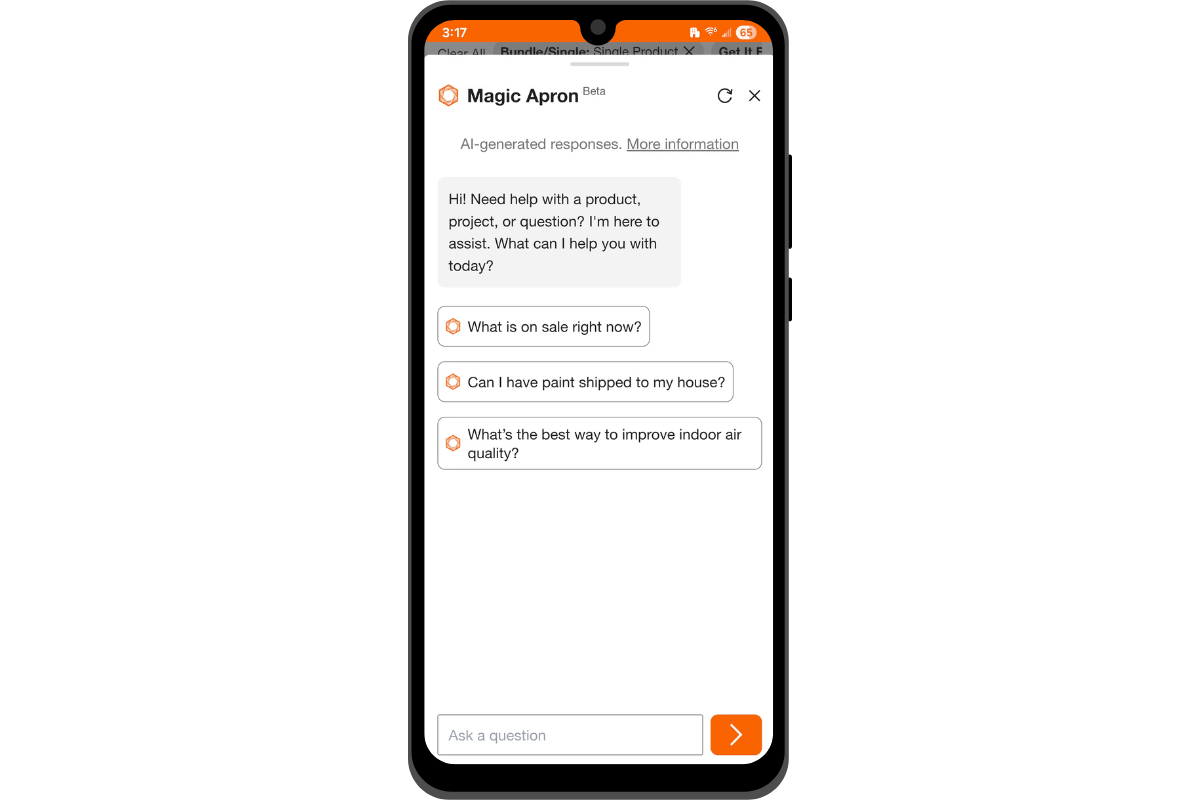
You’ll also find Magic Apron under a new section called “Ask about this product” on individual product pages.
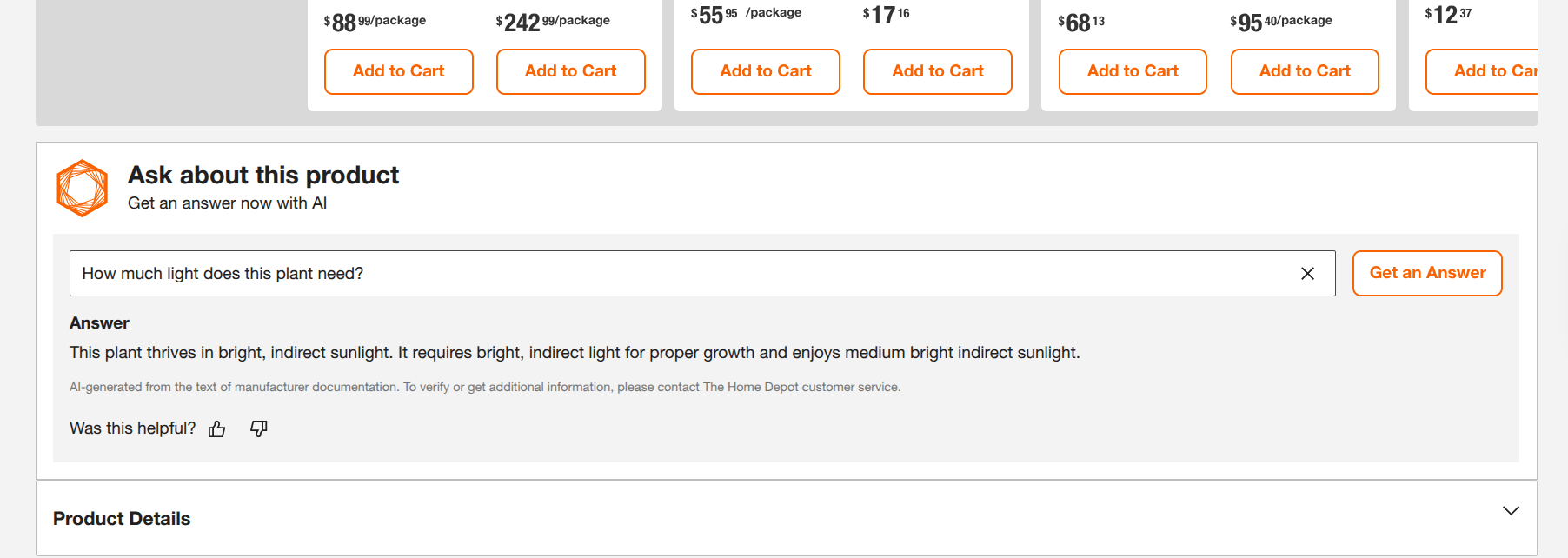
Both are helpful features, whether the shopper is sitting at home and perusing the website or walking the aisles and wanting more help. What’s more, neither of these tools distract from the otherwise invisible omnichannel experience. You have to trigger the chatbot to open and you have to actively query MagicApron in order to get an answer.
So, does this mean that AI features like these are only OK because they’re not being pushy or intrusive? What if the agentic AI tool was more in-your-face?
I think it depends on the context.
For instance, users might not be happy about an AI-powered suggestion appearing when they’re knee-deep in building a budget in a fintech app. If it’s unprompted and disrupts their flow, it could create a lot of friction.
I think it also depends on who your target users are.
For instance, I’ve been using Priceline a lot lately to research travel for a client. Priceline’s Penny acts similarly to Magic Apron. It’s a chatbot that needs to be opened by the user in order to start talking to them.
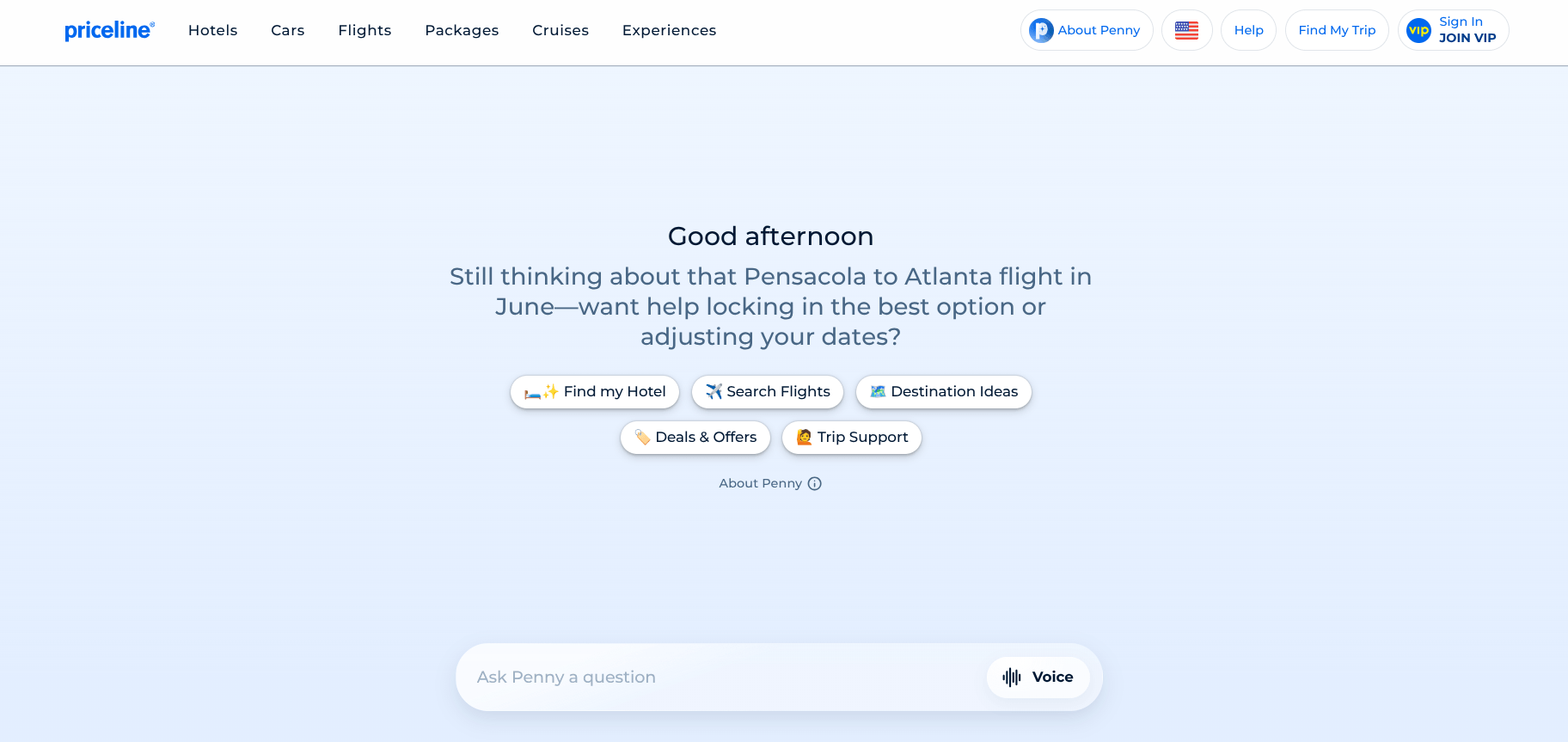
When I opened Penny, it immediately referenced a flight I had researched about a month ago, asking if I needed help adjusting dates. It also gave me options for finding a hotel, exploring destinations, checking for deals and accessing trip support.
For jetsetters who book lots of trips, this tool and its predictive prompts might be right up their alley. But imagine this sort of prompt showing up when someone logged into their bank account:
“Good morning! You spent $2,257 at the mechanic last week. Do you want me to help you find deals on a new car that won’t break down as much?”
Granted, this is an exaggeration. But it does make you wonder how far is too far when it comes to using data we collect from users to “enhance” their omnichannel experience.
Wrapping Up
Omnichannel marketing has really leveled up the experiences we have with brands—and it’s happened in a relatively short timeframe, too, thanks to advancements in AI.
AI as a disruptor has been a good thing in this respect. But how do you keep from going overboard? Consider the following:
- Really understand your customers: Who are they? What kinds of digital experiences do they prefer? How do they feel about AI?
- Re-evaluate your business objectives: Are you falling short on providing an optimal user experience? Or are you just looking at AI features as a way to stay relevant or buzzworthy?
- Consider the costs: Do you have a sustainable system for unifying and processing all the data you’re receiving? Can you afford to invest in additional AI features?
- Analyze the user journey: Are there areas of the user journey where more AI makes sense? If so, can you implement it in a way so that users opt-in and it doesn’t become disruptive?
And if there’s any doubt about how AI will be received, ask your users about it. There are plenty of ways to solicit their input, from online surveys to user research groups.
Flip the switch from generic messaging to AI-powered, intent-driven personalization.
When AI is the right answer for more personalized service, learn how Progress Sitefinity CMS can help you deliver dynamically generated digital experiences.

Suzanne Scacca
Freelance Writer & Consultant