Everyone Wants to Personalize. Almost Nobody Does.
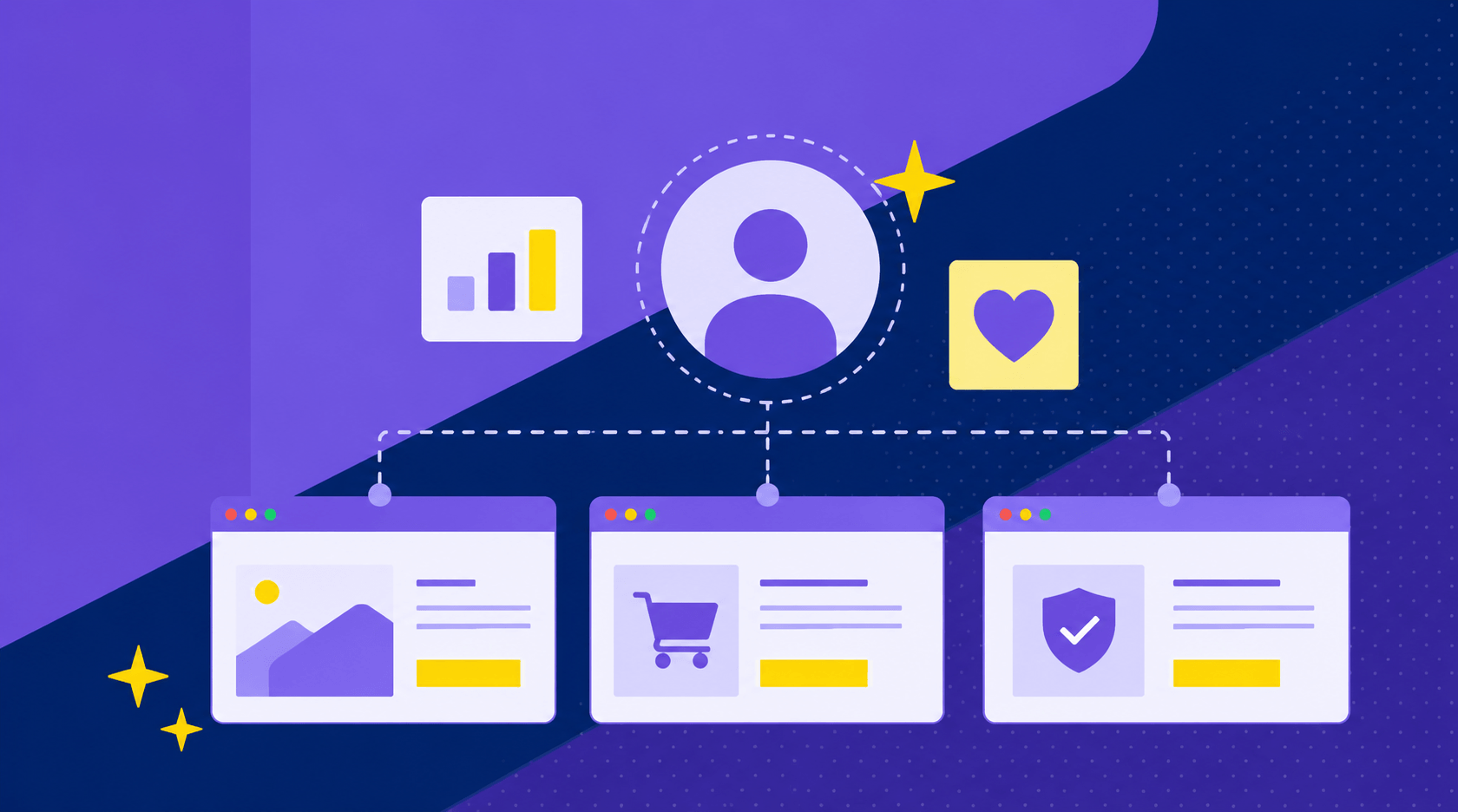
Your homepage is a broadcast.
It talks at every visitor the same way, whether they're landing for the first time or returning for the eighth. Whether they came from a specific ad campaign or found you through Google. Whether they clicked the "pricing" tab first thing or spent five minutes reading your case studies.
This is fine if your goal is reaching the most people. It's catastrophic if your goal is converting the people who are actually ready.
Personalization has become the marketing version of eating your vegetables. Everyone agrees it's good for you. The research backs it up. The software vendors keep showing you proof. And yet most of us are still here, eating the same stale salad, because we never quite figured out how to cook.
The Good Morning Problem
Here's what actual personalization usually looks like in the wild: "Good afternoon, visitor!" or a time-of-day message that changes your headline based on whether someone's browsing at 9 a.m. or 3 p.m.
It feels smart. It feels personal.
It tells you almost nothing.
You know what's worse than showing everyone the same thing? Showing everyone a different thing based on data so thin it might as well be noise. Time of day is a signal, sure. But it's the weakest signal available. It's the marketing equivalent of knowing someone's shoe size and deciding that's enough to recommend them a car.
Meanwhile, you're sitting on much better data. Right in front of you. Mostly ignored.
- Visit number
- Traffic source
- Which pages they actually looked at
- How far down they scrolled
- What they've clicked on before
You already have permission to see this. You already have the tools to capture it. You're just not using it.
The companies that are winning on personalization didn't start with fancy AI. They started by asking a simple question: What does this person's actual behavior tell me about what they're looking for?
That question lands you on the signal ladder. Time of day is at the bottom. Everything else is on the rungs above it.
Why This Matters to Your Revenue
Here's the number that should make you sit up: a 30 to 35% relative lift in conversion rate on returning visitors.
Think about that for a second. You're not buying more traffic. You're not running more campaigns. You're taking the same people who already came back and converting them at a meaningfully higher rate.
Do that every quarter, and the math compounds fast. Same ad spend. Different revenue.
And yet most companies treat personalization like a feature release. Something to bolt on when there's budget. Something to fiddle with once and move on.
The companies treating it like a strategy are the ones building momentum.
The Broadcast Model Doesn't Work
Your homepage should be a gateway, not a megaphone.
It should let people self-select into the experience that matters to them. The returning visitor who's already read three case studies shouldn't see the same thing as the person who landed from a cold search. The person from your highest-intent traffic source shouldn't get the same message as someone scrolling through a general industry article.
This isn't manipulation. This is respect. You're showing people the part of your story that's relevant to their moment.
Most homepages fail this test. They optimize for the audience that doesn't exist, some mythical average visitor, instead of the actual people showing up.
Two Risks Worth Knowing About
Personalization isn't a silver bullet. There are two ways to get it wrong.
The first is confirmation bias: showing people only what they already believe. If you're personalizing toward someone's past behavior, you can accidentally trap them in a narrower view. This works against you if your product solves a problem they didn't know they had.
The second is creepy. Amazon's recommendation engine works. Target's prediction algorithm made headlines for exactly the wrong reasons. There's a line between helpful personalization and the "how did they know that about me?" feeling that makes people leave.
The webinar gets into how to thread that needle.
One Thing to Build This Week
Here's what actually matters: personalization isn't a big-bang release. It's a ladder you climb.
You're not going to overhaul your entire web experience because someone told you to. You're going to pick one test. One workflow. One returning-visitor moment where you can do something better than "good afternoon."
- Maybe it's showing a different call-to-action based on traffic source
- Maybe it's letting repeat visitors skip a section they've already seen
- Maybe it's showing social proof that's relevant to their industry
One test. Measure it. Compound the win.
Register for "From Manual Rules to AI-Driven Experiences: How to Build Effective Personalization in Progress Sitefinity "
May 28 at 11 a.m. ET | 10 a.m. CT | 8 a.m. PT | 60 minutes | Live demos + real questions from practitioners
Walk in knowing where most companies stumble. Walk out with one specific test to run this week.
Spots are limited. Register now.