
Universal Data Connectivity Made Easier With Hybrid Data Pipeline
Hybrid Data Pipeline is the platform of choice for organizations that recognize that data access, and what you do with that data, is the competitive differentiator of our time.
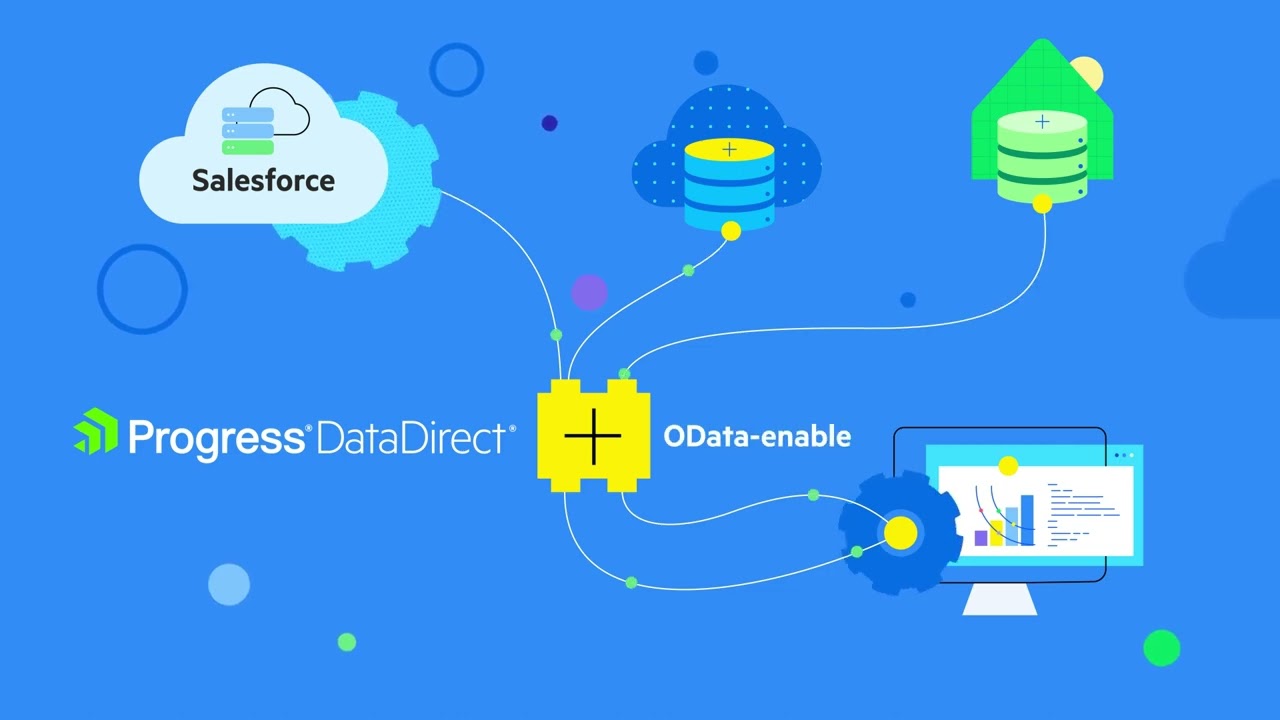
With a full library of data connectors, Hybrid Data Pipeline brings manageability to your data with single sign-on identity based access controls for teams or individuals, universal client connectivity (ODBC, JDBC, OData, REST) and much more.
 Video
Video
The Progress DataDirect Dedication to Security:
Progress DataDirect has defined a stringent set of policies and practices around product development and distribution. This ensures there is transparency with regard to third party dependencies, proactive policies, and practices to meet the highest security standards when releasing products. In addition, Progress DataDirect is dedicated to finding a timely and effective resolution to any serious security concerns that arise.
Overcome Challenges with Hybrid Data Pipeline
Data fuels today’s most successful businesses, but accessing that data from the growing library of popular enterprise applications is tremendously difficult. This is especially true in a hybrid data world, where the operational and analytical data needed by these applications can reside anywhere and can be consumed by anything.
Progress DataDirect Hybrid Data Pipeline provides access to mission-critical data across today’s complex data landscape. And it does it all while keeping things simple, secure and scalable.
- Manage Salesforce Data
- Access Controls and Manageability
Salesforce is one of the most popular customer relationship management applications in the world, enabling businesses to personalize every experience along the customer journey. However, storing data in Salesforce can be costly and may also introduce data compliance concerns. That’s where Hybrid Data Pipeline can help. By connecting to Salesforce External Objects, organizations can:
- Minimize Salesforce licensing costs by connecting from a single endpoint
- Enrich Salesforce with data from any external cloud or on-premises source, without jeopardizing security
- Reduce data integration complexity and custom development time by using Salesforce Connect’s API-based integration to Hybrid Data Pipeline via OData

Your data gateway to better access controls and manageability
Corporate policies may require businesses to operate in complex hybrid data environments. This obscures visibility into who has access to what data and increases costs associated with data administration, compliance and security. With Hybrid Data Pipeline, DataDirect enables a single gateway to quickly provide access control without needing to share database credentials, or managing desktop installation.
Hybrid Data Pipeline provides:
- Identity management. Provision data sources to manage user and role-based access to data, ensuring better security and governance.
- Universal clients for all BI Tools using ODBC, JDBC and OData that eliminate the need to deploy and update numerous drivers
- Operational visibility into data source utilization to see not only who accessed your data, but what they accessed
HDP eliminates common roadblocks to data connectivity while ensuring trusted security.
- Addresses security lapses that cause internal vulnerabilities
- Provides the ability to meet and define compliance standards across the organization
- Eliminate productivity roadblocks, like setting up VPNs, whitelisting IP addresses and reconfiguring corporate firewalls
- Control access to sensitive data and comply with strict data privacy laws
- Consistently apply corporate authentication models to any data source regardless of native support

- Amazon EMR Hive
- Apache Hadoop (Apache Hive)
- Cloudera CDH Hive
- Hortonworks
- IBM BigInsights Hive
- MapR Hive
- Pivotal HD Hive
- Google BigQuery
- REST API
- Amazon RedShift
- IBM dashDB
- IBM DB2
- IBM Informix
- Microsoft Azure SQL Database
- Microsoft SQL Server
- MySQL Community
- MySQL Enterprise
- Oracle
- Pivotal Greenplum
- PostgreSQL
- Progress® OpenEdge®
- SAP Sybase
- FinancialForce
- Force.com Applications
- Google Analytics
- Microsoft Dynamics 365
- Oracle Marketing Cloud
- Oracle Sales Cloud
- Oracle Service Cloud
- Snowflake
- Salesforce.com
- ServiceMAX
- Veeva CRM
- Google AlloyDB
- Yellowbrick
- Azure CosmosDB for MongoDB
- MongoDB
- MongoDB Atlas
- SAP BW/4HANA
- SAP S/4HANA
- SAP HANA
- SAP NetWeaver
- Microsoft Azure Synapse Analytics
Top Reasons to Choose Hybrid Data Pipeline
Data Gateway for Better Manageability and Control
Single gateway to quickly provide access control without needing to share database credentials or even a driver, single ODBC or JDBC driver to deploy to BI Server farm or desktops, and access new data sources without the need to re-deploy HDP clients
Embed and White-Label
ISVs can host Hybrid Data Pipeline in their SaaS platform to share hosted data with their customers for secure reporting, or to easily integrate with customer on-premises data without a VPN.
Horizontal Scalability
Hybrid Data Pipeline service can be deployed on multiple nodes behind a load balancer. HDP has been architected to seamlessly integrate with Progress Kemp LoadMaster as well as AWS Application Load balancer and the Azure Application Gateway.
Peace of Mind With Top Level Security
Centralized point of control regardless of backend security, SSO identity-based access, and centralized authentication... provide uncompromised security for your organization.
Simplified Deployment with Helm Charts
With the new deployment option using Helm Charts, setting up Hybrid Data Pipeline has never been easier. Helm Charts streamline the installation process, allowing you to deploy the product quickly and efficiently in your Kubernetes environment. This ensures a consistent and repeatable deployment process, reducing the time and effort required to get started.
Throttling
Limits API allows administrators to set limits on how many rows can be returned for ODBC, JDBC, and OData requests. An error is returned if an application fetches rows beyond the specified limit.
Universal Connectivity
Take the ease of universal connectivity even further. With the DataDirect JDBC driver feature, your organization will have the ability to plug in your own JDBC driver into HDP, as well as get real-time connectivity to the data sources that help run your business.
OAuth and Beyond
Hybrid Data Pipeline supports OAuth 2.0 and Basic Authentication. It also supports external authentication mechanisms so that enterprises can verify users against their in-house authentication systems that may be using LDAP system, Windows (Kerberos), SAML/ADFS or any other authentication service.
Federal Compliance
Our encryption algorithms can be made FIPS-140 compliant using the FIPS Compliance mode (leverages Bouncy Castle as the security provider). Account lockout policy is enabled by default in accordance with Federal Risk and Authorization Management Program (FedRAMP) low- and medium-risk guidelines.

"Hybrid Data Pipeline is very exciting because it is taking the ability to expose a common OData protocol over a variety of sources and allowing customers to host that themselves."
Mike Pizzo
Microsoft

"MHC makes every effort to meet the strict data security standards our customers require. It is with that in mind, we have chosen Progress Hybrid Data Pipeline to work within our NorthStar Intelligent Content & Workflow Automation platform. The Progress HDP ability to securely connect customer on-premise ERP data from our SaaS platform will be key to ensuring security is still priority #1."
MHC
Recent Awards

Winner
“Best use of Tech – Big Data award”

Winner
“Best Cloud Integration”

Winner
“Software - Big Data”

Listed in
"Companies that Matter Most in Data"
Learning & Support
Blogs

 Todd Wright


 Aaron Burg


 Jenna Baron
Videos
Success Stories




Tutorials






Webinars






Let Us Help
As a leader in data connectivity, keeping up with the evolving trends in the space is our mission. But if we haven’t built the connector you need yet, reach out and we’ll help you develop the right solution.