Which Team Owns AI Discovery? Content, SEO, Search, Data, IT?
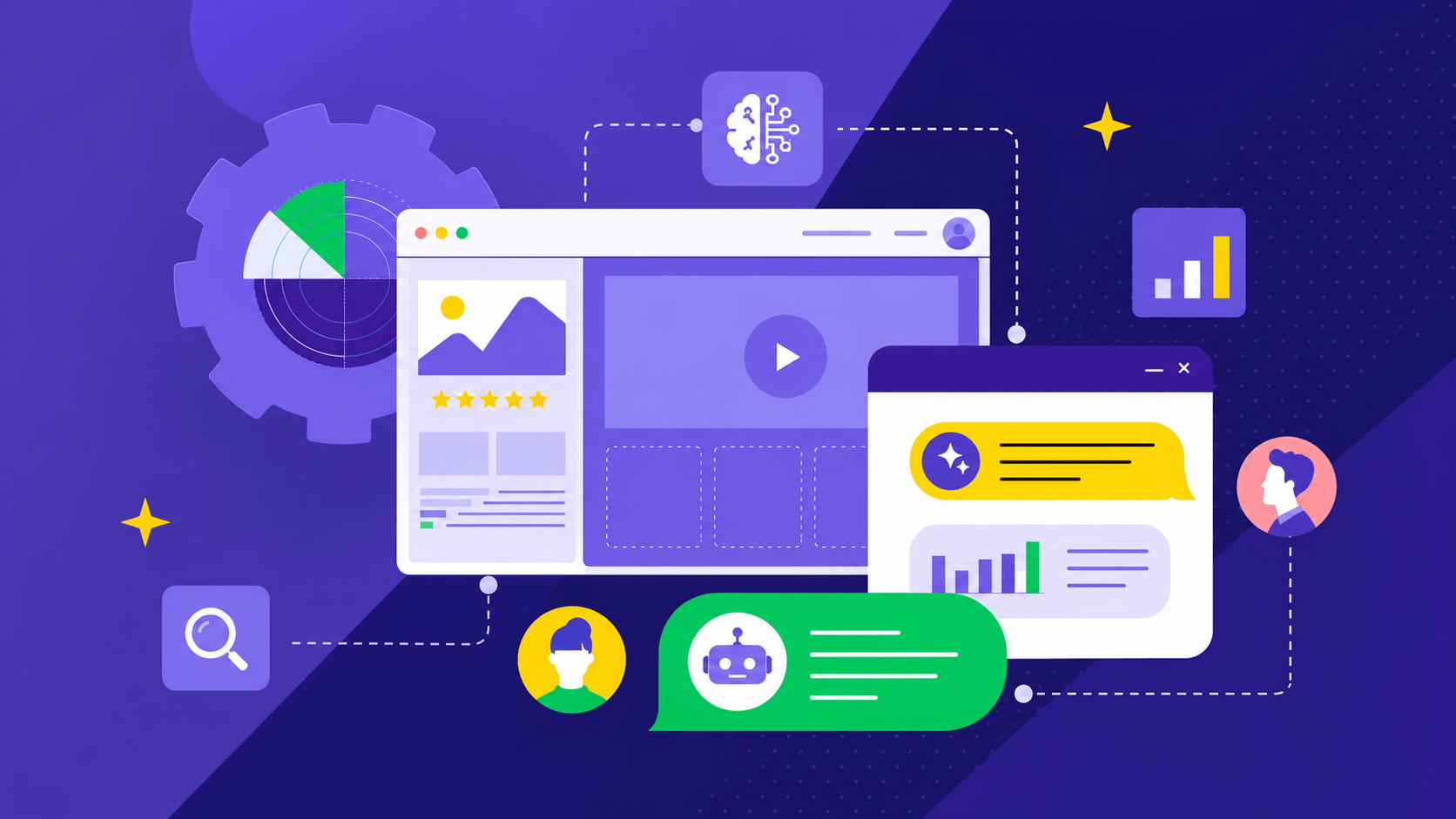
With a governed foundation, teams can collaborate on an AI-powered discovery experience with clear ownership that helps all teams.
When an AI-powered search experience gives someone the wrong answer, the obvious place to look is the search system itself.
But AI discovery rarely works in isolation. The answer a user sees depends on the content that exists, how that content is structured (and classified), what the system retrieves and even what that particular user is allowed to access.
That changes the ownership question quite a bit. Content, search, data and IT may all influence the same answer, even though each function is responsible for a very different part of how it gets produced.
So rather than asking which single team “owns AI discovery,” it’s more useful to break down the responsibilities that sit underneath it.
This piece looks at the main areas of AI discovery that need clear ownership, and how a RACI framework can keep shared responsibility from turning into unclear accountability.
Why AI Search Creates a Different Ownership Problem
Think about how traditional website search usually works.
You type something in, get a page of results and decide what looks useful. If the first result is old, you might notice the date and choose another. If a page seems irrelevant, you go back. A lot of the judgment still sits with the person doing the searching.
AI search changes that. Instead of leaving users to sort through the results themselves, it can pull information together and give them an answer directly.
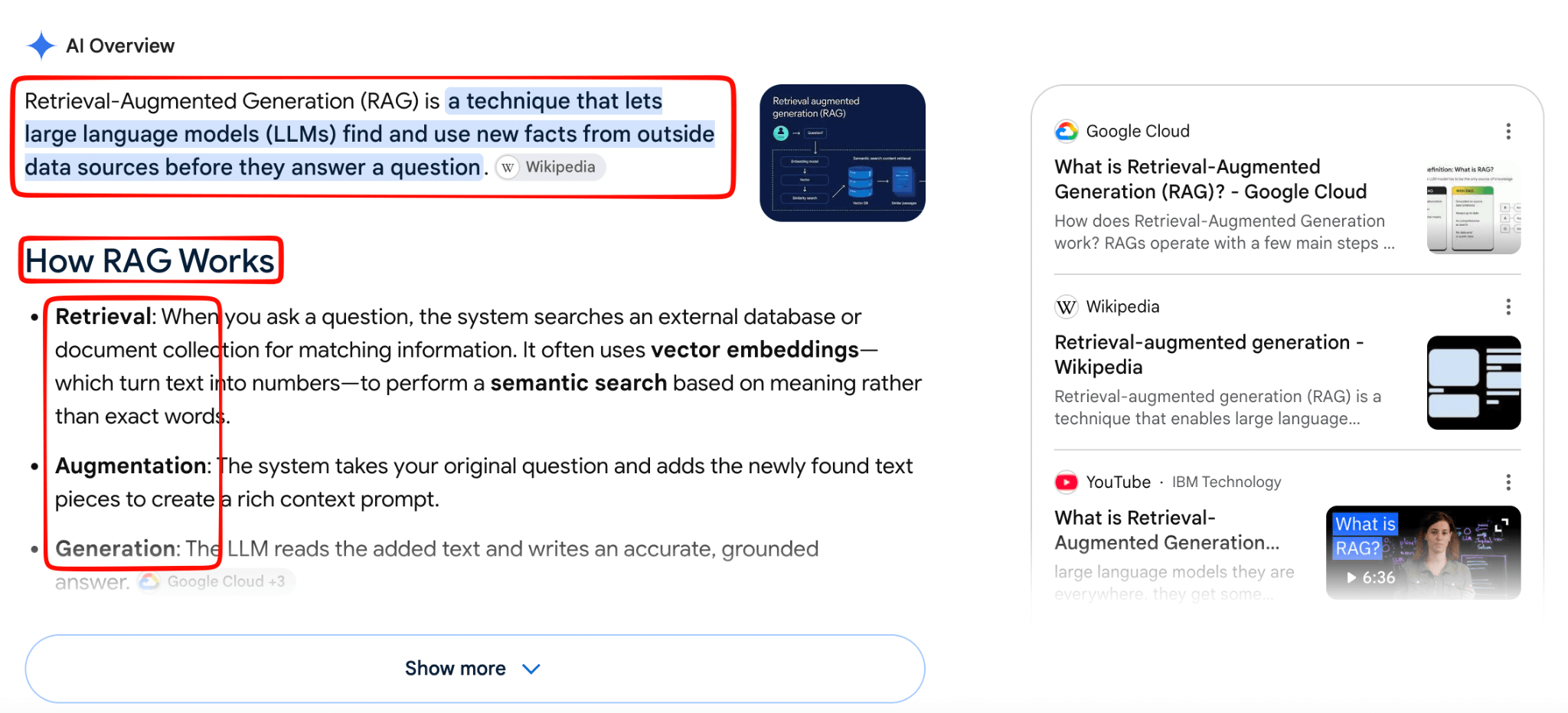
So issues with the underlying content, retrieval, metadata or permissions can affect what the user is actually told.
That shared responsibility is already showing up more broadly in how companies manage AI. McKinsey found that organizations using AI had, on average, two leaders responsible for AI governance.
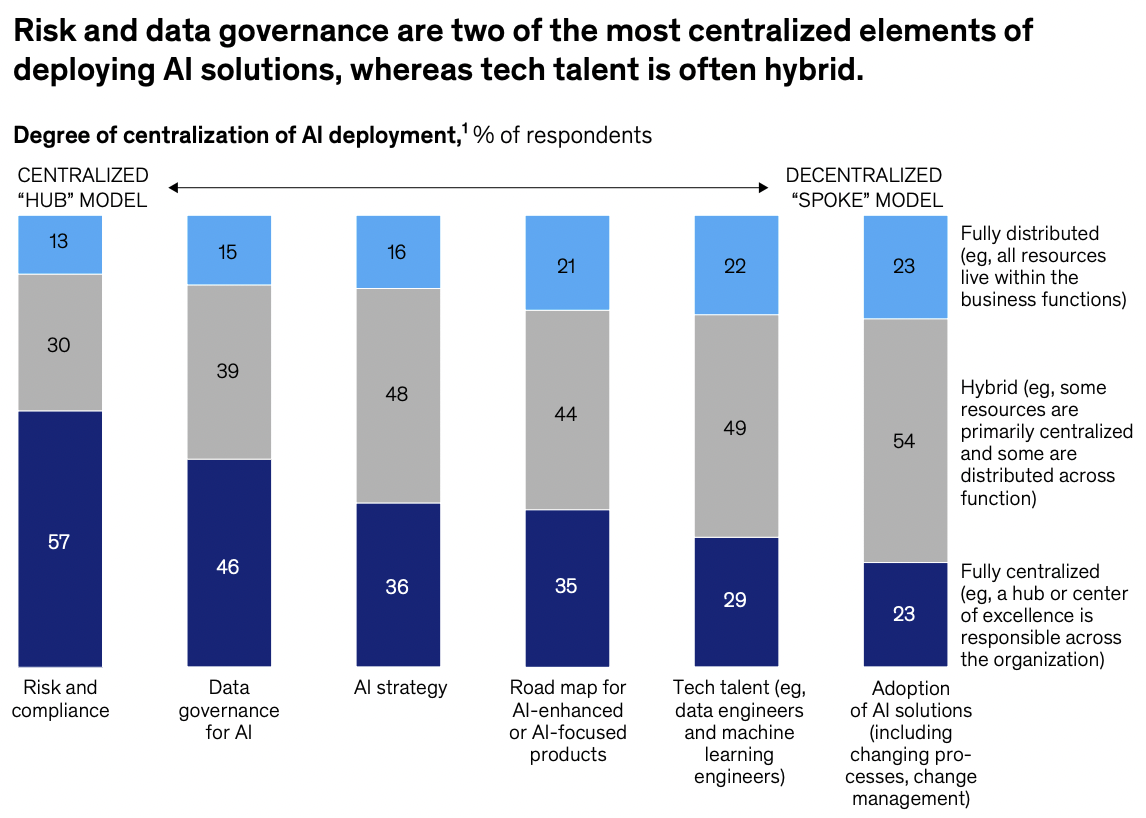
Source: McKinsey
I’m not saying five departments need to investigate every time an AI answer misses the mark. The point is much simpler: AI discovery has several places where things can go wrong, and each one needs a clear owner.
What Needs to Be Owned
The exact team responsible will vary by organization, but these are the main areas that need a clear owner:
1. Content Structure and Taxonomy
AI systems don’t just need accurate content. They also need that content to be organized in a way that makes sense.
Headings, categories, tags and relationships between pages all help systems understand what information is about and how it connects to everything else. If those structures are inconsistent, retrieval gets harder.
This is usually led by content, but search and data teams may need input too, especially when changes to structure or taxonomy affect how information is found.
2. Content Freshness and Lifecycle
Outdated content becomes a bigger problem when an AI system can retrieve it and present it as a current answer.
That means someone needs to own what gets reviewed, updated, archived or removed, along with how quickly those changes make their way into the AI experience.
3. Metadata Standards
Metadata looks small until you have thousands of pages using it differently.
If one team uses “Product,” another uses “Products,” and another uses “Product Information,” people can usually work out that they mean roughly the same thing. A retrieval system, on the other hand, has to reconcile all three.
Someone needs to define those standards and keep them consistent as more content gets added.
4. Permissions and Access
Returning an irrelevant document is a search problem. Returning information a user was never supposed to see is a security problem.
That makes permissions such a core part of the retrieval process, especially in enterprise settings where different users may have access to very different information.
5. Retrieval and Ranking
Even perfect content is useless if the system doesn’t retrieve it when it should.
Different queries may depend on semantic similarity, exact terms, metadata or relationships between information.
So someone needs to understand not only whether retrieval works, but why certain sources appear, why others don’t and what changes when the retrieval setup is adjusted.
6. Chunking and Content Preparation
RAG adds another wrinkle: the right document can still produce a bad answer if it’s prepared poorly.
For RAG systems, content preparation matters just as much as having the right source material. Chunking, classification, metadata and vectorization can all affect what the system eventually retrieves.
7. Evaluation and Quality
Finally, someone has to decide whether the system is actually performing well. That means testing retrieval and answer quality over time, not just before launch.
The exact metrics will vary, but every organization needs to know what “good” looks like, how it’s measured and who is responsible when performance starts slipping.
Use RACI to Make Ownership Explicit
Once you start laying all these responsibilities out, it becomes pretty obvious why saying “the AI team owns it” isn’t especially useful.
This is where a RACI can help by separating four kinds of involvement:
- Responsible: Who actually does the work?
- Accountable: Who ultimately answers for the outcome?
- Consulted: Whose expertise is needed?
- Informed: Who needs to know what’s happening?
For AI discovery, a starting point might look like this:
| Area | Content | SEO | Search | Data | IT | Accountable |
|---|---|---|---|---|---|---|
| Content structure & taxonomy | R | C | C | I | I | Content Lead |
| Content freshness & lifecycle | R | I | C | I | I | Content Lead |
| Metadata standards | R | C | C | R | I | Data Lead |
| Permissions & access | C | I | C | C | R | IT Lead |
| Retrieval & ranking | C | C | R | C | I | Search Lead |
| Chunking & content preparation | C | I | R | C | I | Search Lead |
| Evaluation & testing | C | C | R | C | I | Search Lead |
| Shared KPIs & escalation | C | C | C | C | C | Product/AI Lead |
Your version may look completely different, and that’s fine.
If everyone can explain what they contribute but nobody can say who owns the outcome when something goes wrong, the ownership problem is still there.
Turn the RACI into a Working Process
A RACI only helps if those responsibilities show up in how teams actually work. That could mean a regular review of things like stale content, retrieval issues, permission changes and evaluation results that have started to slip.
The exact cadence will depend on the organization. Some teams may need a monthly check-in, while others can review things quarterly.
Shared KPIs can help here too. If every team only measures its own part of the system, everyone can look successful while the overall AI experience is getting worse. A shared view makes those gaps much easier to spot and gives teams a clearer way to decide what needs attention first.
Build AI Discovery on a Governed Foundation
Clear ownership matters, but teams still need the right infrastructure underneath it.
With Progress Sitefinity AI Search, organizations can bring content into an AI-powered discovery experience while keeping retrieval grounded in the source material and tied to the permissions already in place.
That does not replace the need for ownership; instead, it gives those teams a governed foundation to work from, so the rules they agree on can actually carry through into the experience users see.
As AI discovery becomes a bigger part of how people find information, that combination matters more: clear ownership on the organizational side, and technology that can support it on the operational side.

John Iwuozor
Content Lead