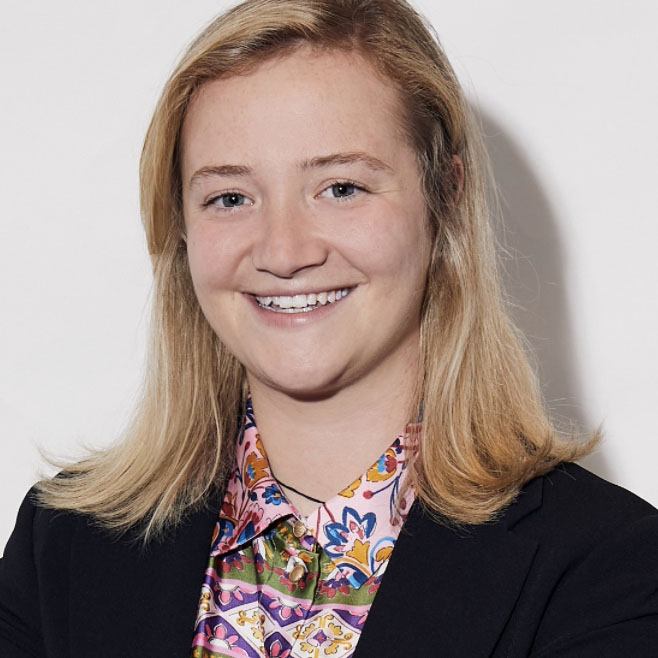
Simplify the Stack, Amplify the Story: Suzanne Reed on Human-Centered Marketing & Integrated Growth
ICYMI: Suzanne Reed on reclaiming strategy, streamlining martech and keeping marketing human.
“Marketing is not just about throwing stuff out there. Marketing is about being methodical.”
In this episode of 10 Minute Martech, Suzanne Reed, CMO at LBMC, challenges one of the biggest assumptions in modern marketing: that progress means adding more tools.
Instead, she makes the case for something far more powerful: simplifying the stack to strengthen the story.
In an era of AI acceleration, fragmented journeys and bloated tech ecosystems, Suzanne argues that real growth comes from clarity, integration and human understanding.
Her message is simple, but not easy:
- Less complexity.
- More coherence.
- Better outcomes.
Suzanne’s Big Idea: HEO (Human Engine Optimization)
While much of today’s martech conversation revolves around SEO, SEM and automation, Suzanne reframes the discussion around what she calls HEO—Human Engine Optimization.
HEO focuses on one core principle:
How do you stay present in your buyer’s minds when decisions are being made?
In professional services, buying journeys are rarely linear. They involve committees, influencers, budget holders and operational leaders. Technology can support this complexity, but it cannot replace empathy, context or judgement.
AI can accelerate execution. Data can surface patterns. Humans still create meaning.
That’s why Suzanne believes marketers are becoming more essential, not less, in the AI era.
10 Memorable Moments with Suzanne Reed
1. Fewer Tools, Better Outcomes
Suzanne has deliberately reduced the size of LBMC’s martech stack.
Rather than layering new platforms on top of existing ones, her team focuses on tools that integrate deeply and work cohesively.
Disconnected systems waste time. Integrated systems tell stories.
2. Integration Is the Real Innovation
True innovation isn’t about adopting the latest platform.
It’s about connecting data, content and customer journeys into a single, coherent narrative, from first touch to long-term relationship.
When systems aren’t aligned, marketers spend more time fixing problems than creating value.
3. AI Should Simplify, Not Complicate
Suzanne’s team prioritizes platforms with embedded AI capabilities rather than standalone tools.
The goal is not “more AI.” It’s smarter workflows with fewer moving parts.
When AI reduces friction, it adds value. When it adds complexity, it fails.
4. Learning from Consumer Brands
Suzanne regularly studies consumer-facing brands to inform her professional services strategy.
Why?
Because consumer companies experiment faster, test more aggressively and adapt more quickly.
Their agility offers valuable lessons in experience design, storytelling and audience engagement.
5. The Human Remains the Hub
Despite automation advances, Suzanne insists that buyers still want to feel understood.
Trust isn’t built by algorithms. It’s built through relevance, consistency and empathy.
HEO keeps human needs at the center of digital strategy.
6. Future-Proofing Means Understanding Buyers
For early-career marketers, Suzanne offers clear guidance:
- Learn your buyers before you learn your tools.
- Technology will change.
- Platforms will evolve.
- Human motivation remains remarkably stable.
- Marketers who master buyer psychology will always stay relevant.
7. Insight Without Action Is Just Noise
Modern marketing teams have access to more data than ever. But insight only matters if it leads to better decisions.
Suzanne emphasizes the importance of translating analytics into strategy and strategy into execution.
Without action, data is just decoration.
8. Old Tactics, Reimagined
Some “outdated” tactics are quietly returning, with modern twists.
Direct mail is one example.
Today’s version isn’t mass mailers and coupons. It’s curated, thoughtful, experience driven outreach designed to earn attention.
The medium matters less than the meaning.
9. Real Personalization Goes Beyond Names
True personalization isn’t inserting “Dear [First name]” into emails.
It’s understanding life stages, business pressures and decision drivers, especially in complex markets like family offices and advisory services.
Relevance beats recognition.
10. AI Is Making Brands Sound Alike
One of Suzanne’s most eye-opening experiments involved comparing how AI models described competing firms. Many appeared indistinguishable.
Her takeaway? Brands must be intentional about language, positioning and messaging, because AI is learning from everything we publish.
Without clarity, differentiation disappears.
Suzanne’s Martech Hot Take
Marketing is becoming more strategic, not more automated.
As AI expands, marketers must act as:
- Experience architects
- Ethical gatekeeps
- Narrative stewards
- Business translators
Without strong human leadership, automation leads to commoditization.
Who Suzanne Follows
Suzanne looks beyond professional services for inspiration.
Southwest Airlines
She admires their proactive, transparent and highly segmented communication approach.Four Seasons
She highlights their relentless focus on “the little things” that define exceptional experiences.
Both demonstrate the consistency and care still outperform flashy technology.
The Takeaway
Suzanne’s perspective is a reminder that most martech problems aren’t technology problems. They’re strategy problems.
- More tools won’t fix broken journeys.
- More automation won’t fix shallow understanding.
- More data won’t fix unclear priorities.
Better foundations will.
Listen to the 10 Minute Martech Episode
→ Listen on Spotify
→ Find it on Apple Podcasts
Next Up in the 10 Minute Martech ICYMI Series
Eudald Camprubí breaks down agentic RAG and how it enables secure, accurate, context-driven personalization, helping marketers use their own data without the risks of generic LLMs.
Full Transcript: Suzanne Reed
Here’s the full transcript to keep you transfixed. Every insight, every quote, unedited and unforgettable.
Sara Faatz: I’m Sara Faatz and I lead community and awareness at Progress. This is 10 Minute Martech.
Suzanne Reed: You really have to put the marketing hat on of the old days, right? What is marketing really about? And I think we’ve gotten away from that with social media and the promo aspect. And marketing is not just about throwing stuff out there. Marketing is about really being methodical and thinking about what you’re trying to do.
Sara Faatz: That’s Suzanne Reed, CMO at LBMC. Let’s get started. Suzanne, thank you so much for joining us today. It’s lovely to have a conversation with you. I just want to start by asking you, what is keeping you up at night right now?
Suzanne Reed: I think anyone in the marketing field these days, everything that’s keeping us up, it’s technology and how fast everything is moving. I won’t even say the two letters that everybody talks about, right? But pretty much everything because the whole trajectory, I think, of marketing is changing. Personally, I’m very excited about it. I think it’s some necessary changes, but it does keep us challenged.
Sara Faatz: Yeah, absolutely. Are there anything… Is there anything in particular that you’re thinking about or anything that you’ve implemented over the last year maybe in relation to that that has really been instrumental in the success of LBMC?
Suzanne Reed: And what I have found and what we are seeing at LBMC is really having a strong Martech that’s simple but connected and integrated. The struggles we really have are when your Martech is so disjointed that you’re spending all your time putting it back together, and your story is a little distorted, right? And so what we have found has been successful is really working with our Martech stack and making sure it is really showcasing the full, whether prospect journey, client journey, and really working hard on that, not just putting Martech in for the sake of I need something for intention or I need something for content or I need something for brand. We try to look at all of that together as an integrated story, both for prospects and for clients. And I think it makes a big difference. There’s so many options out there today.
Sara Faatz: Absolutely. Do you believe that you actually have more technology in your Martech stack today or less because of AI?
Suzanne Reed: Actually less.
Sara Faatz: Interesting. Yeah.
Suzanne Reed: Yeah, we try to take a stance of any of the tools we do use for Martech, if they have elements of AI within them, we really try to leverage those. And I think these are the days when I somewhat longingly look to the consumer goods world because I think they’re even closer than those of us in the professional services. And it’s kind of exciting to watch that. And I try to watch what they’re doing to play into what we’re doing in professional services. It is all about brand interest at the end of the day, but they can do things a little quicker and a little differently that we can in professional services. Yeah.
Sara Faatz: Yeah. Vane of the future. And how do you see, what role do you see the human playing today and even moving forward in that new world?
Suzanne Reed: To me, we talk about SEO, SEM, but it’s really, I like to call it the HEO. It’s human.
Sara Faatz: I love that.
Suzanne Reed: It’s really the human engine optimization. How do we get where our clients are when they’re thinking about us and how they’re thinking about us? And so to me, the human is the hub of all of this, right? How do you make sure we are thinking like our buyers? And in our professional services world, that varies depending on your services, right? And sometimes it’s not just one human, it’s a buying community. And some are influencers and some are decision makers. And so we really work hard to kind of address all of those audiences. And that takes some finessing and some human critical thinking. AI bots can help spur things along and AI can help us be, again, smarter, better, faster. But the AI cannot help us address a lot of those things. So it’svery exciting. I think a lot of people think, not going to need marketing or we don’t need as many marketers or, I’ve heard that. And I think my peers and I all agree, and I work in a lot of peer groups across the country, in many of us kind of chuckle about that. And really, we’re probably needed now more than ever, because marketing has taken on a new tone and a new place. And I think in this new world, we’re going to have to be the gatekeepers and the guards, make sure the humans stay involved.
Sara Faatz: Yeah, I love the HEO concept. That’s amazing. I mean, it’s the human in the loop. And just what you’re saying having that human touch, that human element is critical. Do you believe though, if somebody’s starting fresh in their career, what advice would you give them? Because so much of that human in the loop right now seems to be subject matter expertise. How can somebody who’s just starting their career or relatively junior, how can they future proof their role?
Suzanne Reed: That’s a great question. And I get asked that quite a bit. I’ve actually taught some classes at the collegiate level. And one of the things I tell the up and coming marketers is one is an exciting time because marketing is at the forefront of it. Marketing is all in technology now. And because of that, and because of AI, we’re also being asked, which is something I’ve felt like I’ve done my whole career to step into the business acumen too. And so to me, where marketers can really future proof and the young ones coming up can think about it is how can I impact my audiences, my client base and knowing the buyer, not just, ideal client profiles are great, but really getting back to the crux of marketing, understanding your segments, understanding what motivates, what moves them, what creates the need. And in consumer marketing, that’s very different than it is in professional services. But the expertise, the knowledge, what triggers that intent, all those things are great, but that’s all data. If you don’t know how to take that data to action.
Sara Faatz: 100%.
Suzanne Reed: Marketing has always been a big part about the psychology of the buyer. Well, that is now becoming a known. The buyer may say one thing, but what they do is something different. And now you’re able to match those up. So they say they want low price, but yet what they’re out there looking for is quality and accuracy and relationship, right? You really have to put the marketing hat on of the old days, right? What is marketing really about? And I think we’ve gotten away from that with social media and the promo aspect. And marketing is not just about throwing stuff out there. Marketing is about really being methodical and thinking about what you’re trying to do.
Sara Faatz: 100%. Yeah. And that actually goes to kind of my next question, the marketing playbook, right? It’s changed and evolved. And do we throw away the one from five years ago? Do we modify the one? And what are the tactics, some of those tactics from maybe 25, 30 years ago that we should be bringing back? What are your thoughts on that?
Suzanne Reed: Yeah, I think that’s great. I’m an advocate for playbooks. I love them. But I also think the world’s changing so fast. You’ve got to be flexible. You’ve got to be agile. And I think you also have to rethink and reimagine. And so in a perfect example, direct mail, direct mail went out of vogue. I think in the beginning of my career, I’m embarrassed to say 35 years ago, direct mail was it, right? Email is still the number one prompt, but direct mail is coming back in vogue. And I think some of these younger generations have brought it back in with the box and the subscription models. But now it’s taking on a little different essence. And I think we’re going to see that change. And I think people get excited about mail now. And so there’s ways to really engage your buying groups and your audiences. And so I think that’s a perfect example of it’s not back to old days of let’s send them the letter with the coupon at the bottom. It’s more about how can I put something in their box that they’re going to open and pay attention to.
Sara Faatz: I’ve been in this industry, seems probably the same length of time you have. Personalization is something that we have been promised for a long time. And there are elements of it, right? You had the vision and then you have reality. Now we’re talking hyper personalization in an era of AI. And I do believe that we’re closer to that. What are you seeing right now? What are your thoughts on that?
Suzanne Reed: To me, I think everybody thinks it’s going to say, Dear Suzanne, that’s not what we mean when we say hyper-personalization, right? And so truly knowing your audience and leveraging that knowledge, if you know we do quite a bit with family offices. If you know a family office is something that you’re really wanting to promote and look at and think about and get to newer audiences, you’ve got to understand the family office and what drives those dynamics and those decisions. And how do you hyper-personalize that? Well, you talk about generational, you talk about how we can help you with the wealth aspect, with the tax aspect, with the overall planning. And those are the… To me, those are the hyper-personalizations. I hear a lot of people say, well, we can now address an email. And I just don’t think people care if an email says Dear Suzanne.
Sara Faatz: Do you have any experiment that you’ve tried this year that you’re willing to share that was different, something exciting?
Suzanne Reed: We actually… I think I can share this. We actually did some comparisons with competitors with our AI LLMs, just trying to check to see from a differentiation perspective and a little eye opening, right? We think we control our brands. And what we found was that many of us are all in the same bucket. We’re commoditizing ourselves. And so, I think it kind of reminded us that while we get really excited about what we say and how we say it, if our competitors are saying it the same way, we really are commoditizing all of us. And so, I think it taught us that we need to be very thoughtful about what we’re saying as we feed these AI models for the future. And that we probably have to be a little more critical of what we’re saying and how we say it and much more diligent and consistent.
Sara Faatz: Yeah. Yeah, that’s great. So, who do you follow for inspiration or information right now?
Suzanne Reed: I have several I follow and for different reasons, but Southwest is one of mine. And I purposely go outside my industry because I feel like there’s some of the better examples to bring into my industry for us to stand out. And Southwest is one that I feel like their communications are so transparent, timely. They’re proactive instead of reactive. If they know something is going to happen, they typically try to get ahead of it. And then they segment their client base really, really well. So, they’re ones that I really try to watch. They’ve had to make some difficult decisions this year for profitability.
Sara Faatz: 100%, yeah.
Suzanne Reed: But I feel like they’ve done a really good job of segmenting and communicating those. Another one is Four Seasons. I feel like they really do a nice job. And I know they’ve been around for a long time and there’s books that have been written. But I think when you talk about experience these days, I think sometimes the little things are what we’re missing. And Four Seasons focuses on the little things.
Sara Faatz: Yeah, that’s great. Wonderful. Well, thank you so much, Suzanne. It’s been a pleasure talking to you today.
Suzanne Reed: Thank you, Sara. Great to talk to you, too.
Sara Faatz: Listeners, thanks for tuning in. Make sure you like and subscribe wherever you get your podcasts. Until next time, I’m Sara Faatz, and this is 10 Minute Martech.