Why Manufacturing Websites Fail Their Buyers: A Lesson from the Giro d'Italia

I tried to buy a road bike. Six major brand websites later, I understood exactly why B2B and manufacturing companies are losing customers online.
The Giro d'Italia is on. I got inspired. I decided to buy my first road bike and what followed was one of the most instructive digital experiences of my career.
I come from mountain biking. Fast, technical, rooted in trail feel. Road cycling was foreign territory. Naturally, I did what any modern buyer does: I researched. I asked AI. I read forums. Then I went to validate everything directly on manufacturer websites. Six major brands. Dozens of pages. An hour of my time that should have taken ten minutes.
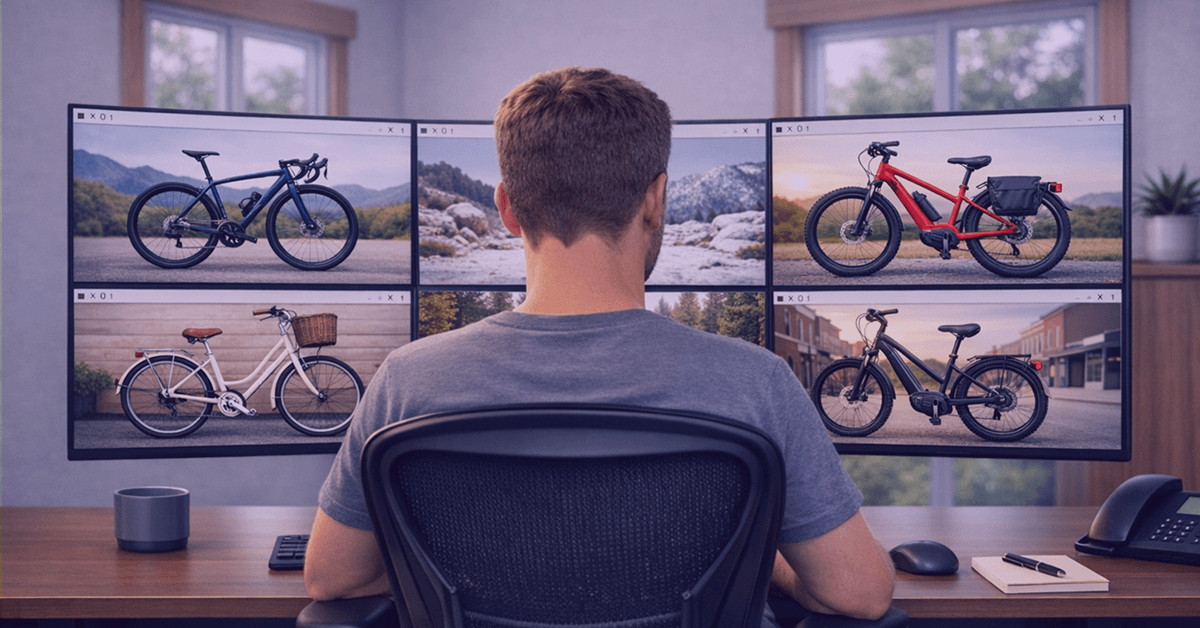
None of them could help me find a bike.
Not because the bikes weren't there. They were. Every model, every colorway, every spec sheet, all present. But not a single site was built to guide a real buyer through a real decision. I was lost and these were the best brands in the world.
That experience is not just a consumer UX problem. It is the same problem I see every week looking at B2B and manufacturing websites. The symptoms are identical. The causes are identical. And the cost in leads, in reseller confidence and in search visibility is enormous.
Here is what I founds and what needs to change.
The Homepage That Inspires No One
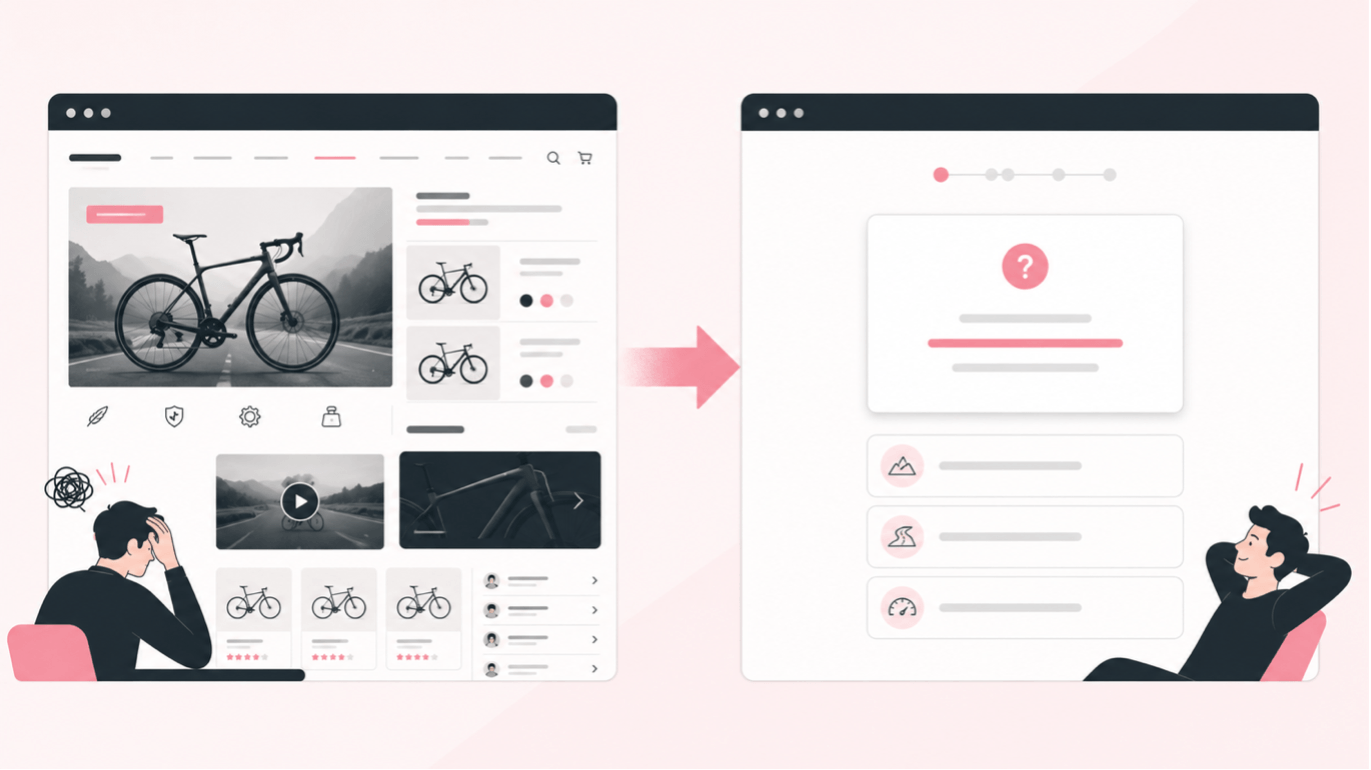
Every site started the same way. A full-screen hero. A powerful image. A tagline. Then nothing, no direction, no signal about where a first-time buyer should go next.
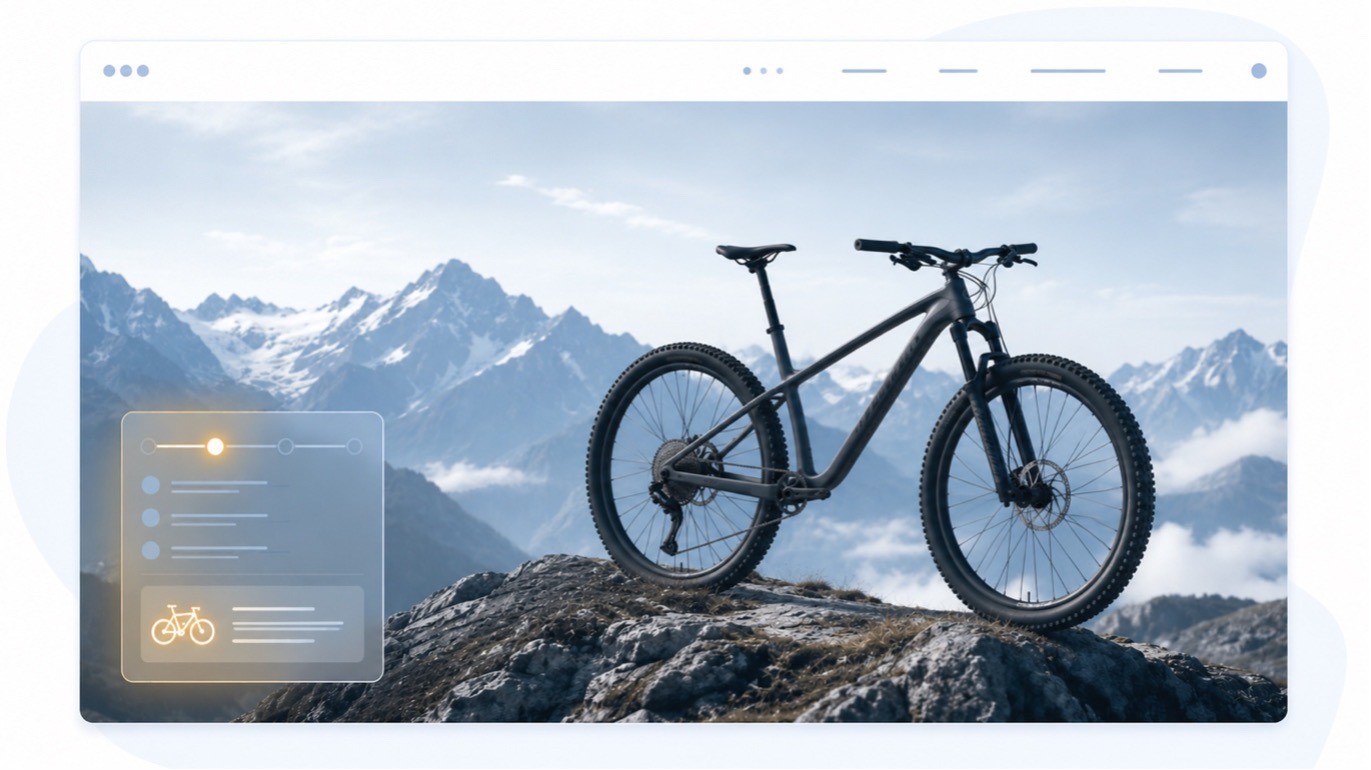
This is the classic manufacturing homepage trap. It was designed to inspire. It assumes you already know what you want. You don't know the model names. You don't know the product families. You arrive as a curious buyer and leave as a confused one.
- 80% of manufacturer sites offered no guided buying experience
- 0 sites recognized me as a returning visitor across sessions
- 6+ tabs open simultaneously to piece together a decision
CORE GAP
Manufacturer homepages are built for brand, not for buyers. There is no product advisory flow, no progressive information discovery and no personalization for returning visitors. The site assumes the visitor already knows the catalog.
Think about what a good in-store salesperson does. They ask what you ride now. They ask how far you want to go. They ask your budget. Then they walk you to three options, explain the difference and let you choose. That entire conversation can live on a website. Most manufacturing sites don't attempt it.
"Heavy on visuals, light on guidance. Designed to impress, not to convert."
What to Build Instead
- A guided product advisory flow that asks 3 questions and recommends 3 options
- Personalization for returning visitors that recognizes where they left off
- Progressive disclosure that surfaces technical specs only when the buyer is ready
- Clear entry points segmented by buyer type: new to the category, upgrading or professional
Search That Cannot Understand Intent
After the homepage confused me, I went to search. It made things worse.
I typed "fast bike for long rides with friends." Every site returned results for the word "fast" or the word "bike." Keyword matching, not intent matching. The search engine found documents. It could not find solutions.
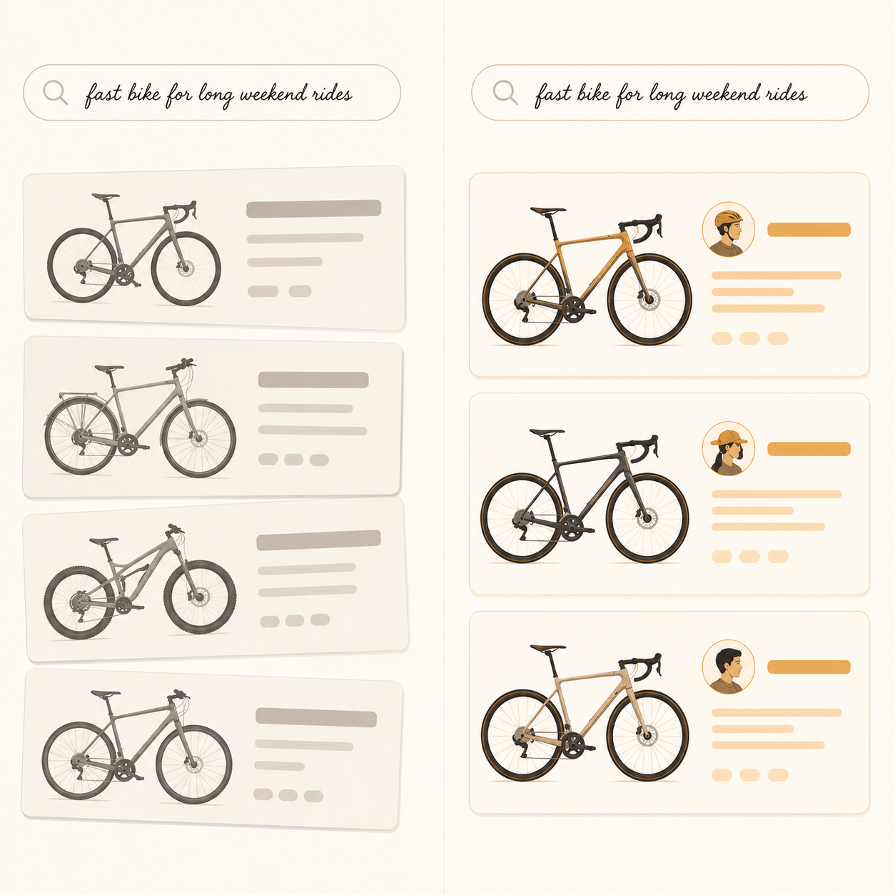
This is a well-understood problem in e-commerce. It is still an unsolved problem in manufacturing. The catalog is too complex, the terminology too specialized and the investment in search infrastructure too low. A buyer who cannot find what they need in search does not ask for help. They leave.
SEO IMPLICATION
Poor internal search signals to Google that users are not finding relevant content. High bounce rates from search pages suppress organic rankings. Fixing intent-based search improves both user experience and search visibility simultaneously.
Modern AI-powered search can map natural language queries to product attributes. It exists, it is affordable at scale and the ROI in reduced bounce rates and improved conversion is measurable within a quarter. There is no excuse for keyword-only search on a catalog of this complexity.
Product Pages That Compare Specs, Not Decisions
I found comparison tools. Good ones, technically. Side-by-side columns, every specification listed. Frame weight. Number of gears. Brake type. Component groupset.
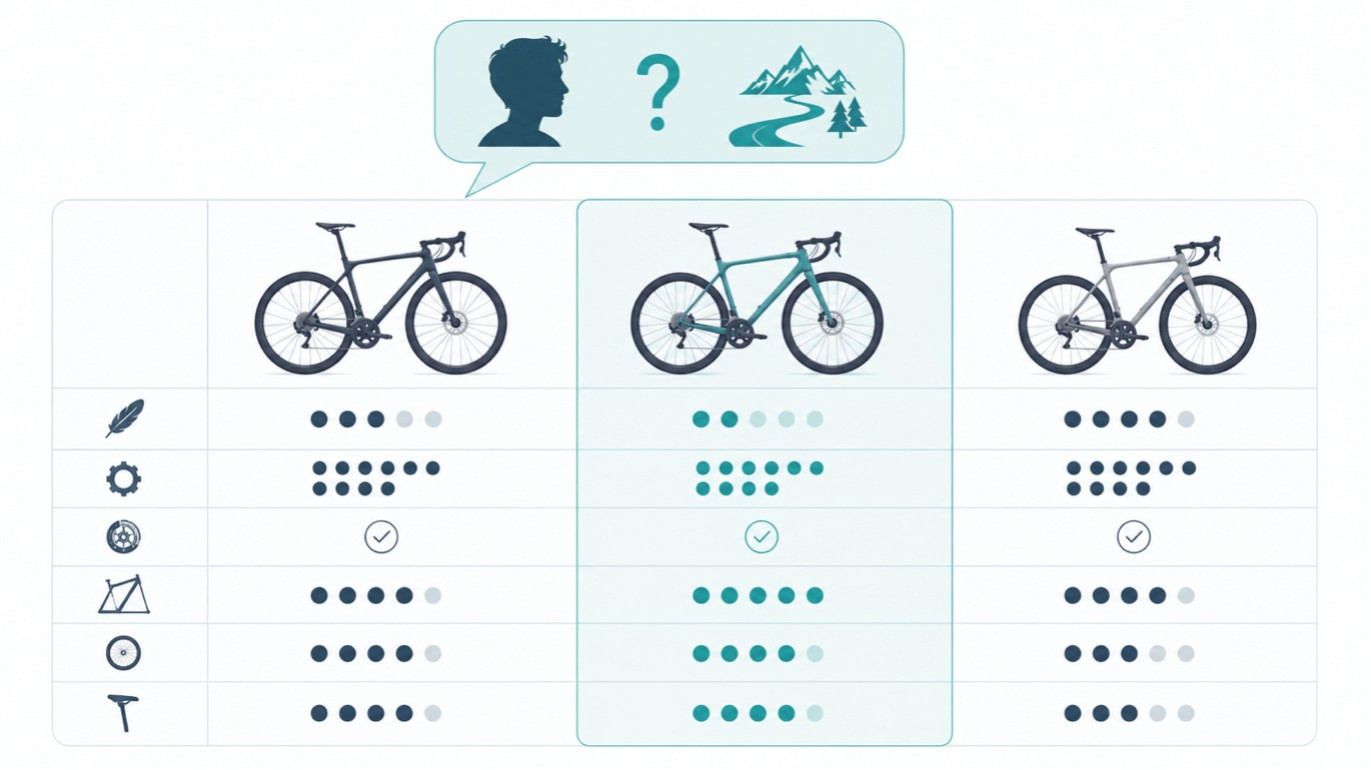
What I needed to know: which of these bikes is right for someone who rides 60km on weekends with friends, is moving from MTB and has a budget of €3,000? That question appeared nowhere. No comparison tool could answer it.
Technical specifications exist to confirm a decision, not to make one. The best product pages in the world lead with use cases and finish with specs. Manufacturing sites almost universally do the opposite.
Additional Product Page Failures
- Translation quality: machine-translated product descriptions that lose meaning, erode trust and hurt local SEO
- Asset management: missing images, broken PDF links and file names like "IMG_4392.jpg" with no SEO value whatsoever
- Missing schema markup: product data not structured for rich search results, costing click-through rate on every organic impression
A DAM integration is not a luxury for manufacturers selling complex products. It is infrastructure. When your product images are inconsistent, your SEO file names are wrong and your spec PDFs are broken, you are losing ground to competitors who got this right.
Localization: The Invisible Conversion Killer
I visited several sites in multiple languages. The problems compounded fast.
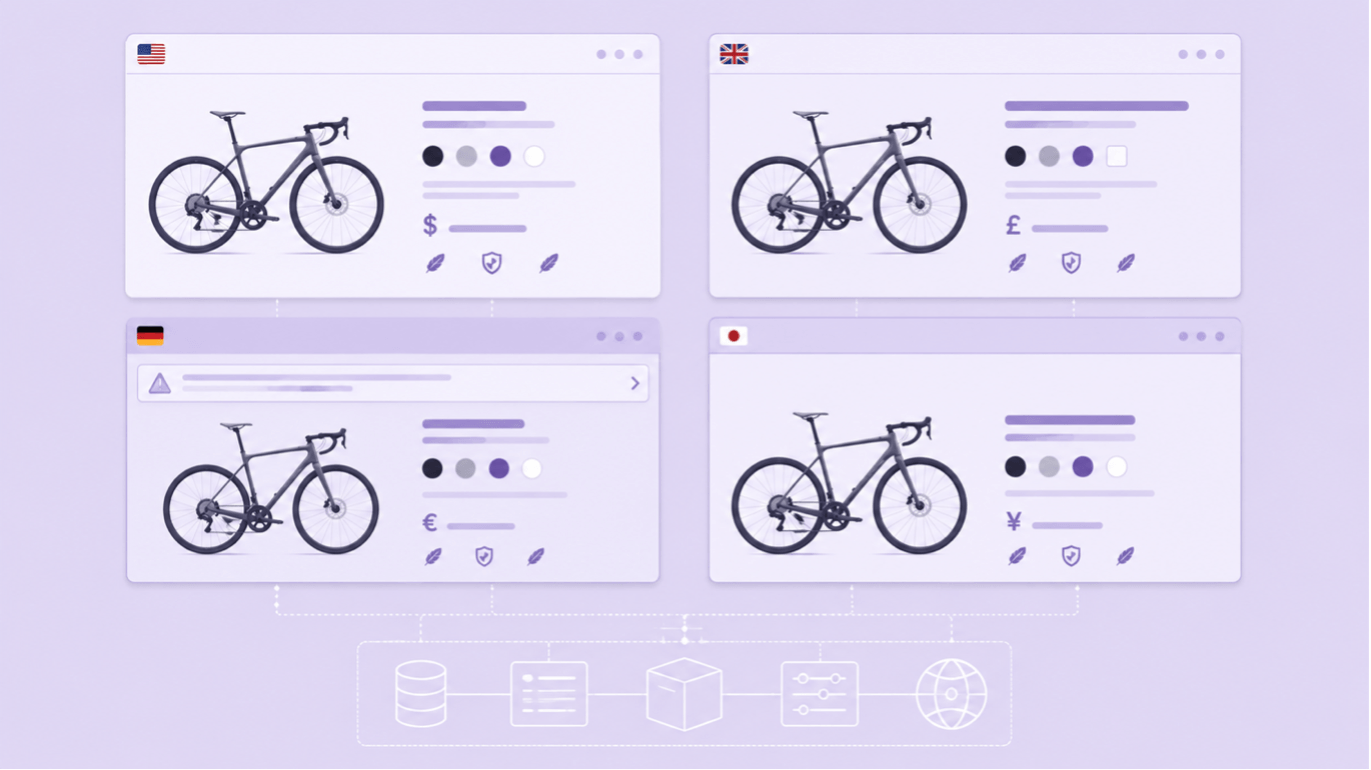
The same model had a different name in each market. Colors that existed in one catalog were absent in another. I was auto-redirected to a country site that was not mine, with no clear way to switch. One site defaulted to English regardless of my browser language. Another showed me prices in a currency I don't use, from a region I don't live in.
WHY THIS MATTERS FOR SEO
Incorrect hreflang implementation, missing local sitemaps, wrong redirect logic and duplicate content across language variants are among the most damaging technical SEO errors a manufacturing site can make. They do not just hurt rankings in one market. They create cannibalization across all markets.
Localization is not translation. It is a full-stack problem. Different model naming conventions per market. Different regulatory product descriptions. Different color availability. Different dealer networks. Each of these requires deliberate architecture, not a find-and-replace of language strings.
Localization Failures by Frequency
- Wrong redirect to an incorrect country site on first visit
- Default language ignoring browser settings and geolocation
- Model names that do not match local market naming conventions
- Color variants shown in catalog but unavailable in that region
- Missing local SEO signals with no local schema and no geo-targeted metadata
Dealer Finders That Cannot Find Dealers
Manufacturing is not direct-to-consumer. It runs through distributors and local representatives. Every site I visited had a dealer locator. None of them worked well enough to be useful.
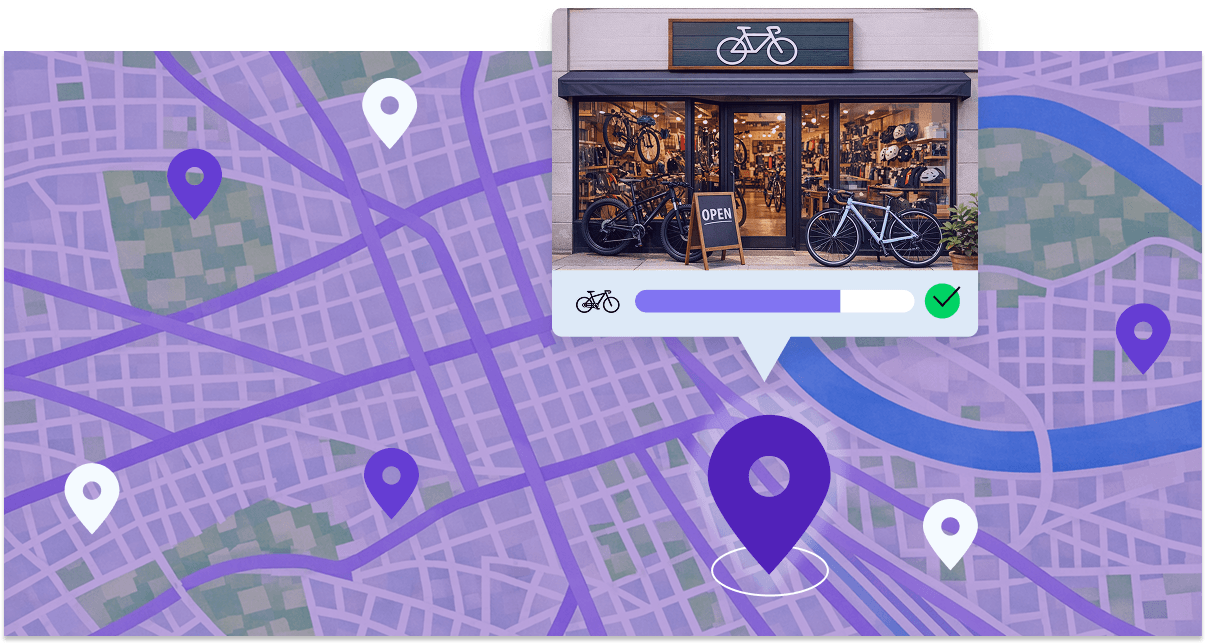
Geolocation failed silently. Search returned stale data. Several dealers listed were out of business. One site linked to a national trade association instead of actual retail shops. Another showed dealers with no stock information, useless if you want to see the bike before buying it.
This is not a minor UX failure. For a manufacturer whose entire revenue model depends on the reseller network, a broken dealer finder is broken revenue. Every visitor who cannot find a local dealer is a lost sale that never appears in your analytics.
THE FIX IS INTEGRATION, NOT DESIGN
Dealer locators fail because they are disconnected from real inventory systems and CRM data. The design is often fine. The data is stale or incomplete. Connecting the locator to live dealer inventory transforms it from a liability into a conversion tool.
The B2B layer: Where the Real Money Moves
Consumer experience matters. But for manufacturers, the reseller network is the revenue engine. Most manufacturer sites I reviewed had some B2B portal functionality. But did they work well? Well, I could not check.
Resellers need stock visibility. They need enablement materials including product documentation, sales brochures and technical guides available without calling a rep. They need to place orders without a phone call. The best manufacturers have built this.
There is a larger opportunity here that most are missing entirely.
AI-POWERED RESELLER KNOWLEDGE BASE
A retrieval-augmented generation (RAG) search layer on top of your product documentation lets resellers and their in-store customers ask real questions and get accurate answers immediately. "Does this model fit a rider with a 32-inch inseam and a history of knee problems?" The answer is in your documentation. Surface it. Reduce contact center load. Help resellers close more sales on the floor.
Product and localization data feeds are the other underused tool. If your resellers could embed your live catalog on their own websites with accurate, up-to-date and correctly priced local data, your brand presence expands without additional content production. The technology exists. The business case is clear. Most manufacturers are not offering it at the level needed for today’s customer expectations.
What This Means for Your Website Strategy
I eventually found a bike. It took me three days of research that should have taken an afternoon. I bought it from the brand whose website made me feel least lost, not the best bike, not the best price, but the clearest path to a decision.
That is the real competitive advantage at stake. Not features. Not pricing. Clarity.
For B2B and manufacturing companies, the website is not a brochure. It serves buyers in early research, resellers in daily operations and search engines as the foundation of organic visibility. Each of those audiences has specific, measurable needs. Most manufacturer sites are built for none of them.
The Priority Roadmap
- Guided homepage experience with product advisory flow and buyer segmentation
- Intent-based search replacing keyword-only matching
- Product pages restructured around use cases with technical specs as supporting detail
- Localization architecture covering hreflang, redirects, local SEO and market-specific model mapping
- Dealer locator connected to live inventory and verified address data
- B2B portal with stock, enablement and an AI-powered knowledge base for resellers
- Product data feeds so resellers can embed accurate catalog data on their own sites
"The brand that wins is not the one with the best product page. It is the one that makes the decision easiest."
The Giro d'Italia will be back next year. More people will watch it, get inspired and go looking for a road bike. The question is whether your website will be ready to help them, or send them to a competitor who is.
Is Your Manufacturing Website Losing Buyers It Should Be Converting?
Share your biggest digital experience challenge in the comments, or reach out directly. We can help you audit, prioritize and rebuild your B2B and manufacturing website and improve the buyer journey from homepage to dealer handoff.