Chapter 4: The Data Integration Dialogues (Part 1) is Now Available

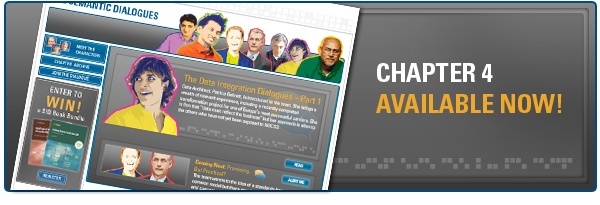
Chapter 4 of The Semantic Dialogues, The Data Integration Dialogues (Part I), is available now. Here's an excerpt: "There's a new kid on the block, and Patrice is shaking things up. She wants to write off National Networks' investment in an enterprise data model she hasn't even seen, and replace it with an industry standard that most of the team is unfamiliar with. Cliff is openly skeptical about the upside to standardization. Naturally he's attached to his previous work, but he's also worried about adopting a complex model that looks a lot different from his. Will Jerry's vote for a do-over prevail? "
Click here to read Chapter 4, The Data Integration Dialogues (Part I), today. And if you’re enjoying The Semantic Dialogues, be sure to share it with a colleague.
The Semantic Dialogues tells the story of how National Networks, a fictional telecommunications service provider, pursued and achieved data interoperability within their SOA infrastructure. The story begins with an urgent request from Operations for a fix to a problem that's keeping them from billing for new services. Assured that extensions can be made to the common data model (the SID) for the COTS billing system that's causing the headache, the problem is resolved in short order. The story then goes back a year to a time when the lack of a data interoperability layer made similar problems seem insurmountable and a tiger team is formed to put in place an OSS/BSS architecture that will change the way the CSP does business.
Enjoyed this article?
Add Progress as a preferred source to see more of our content in Google search.
Add Progress as a preferred source on Google