Part 3: AI Workflow Orchestration: Balancing Automation, Governance and Human Oversight
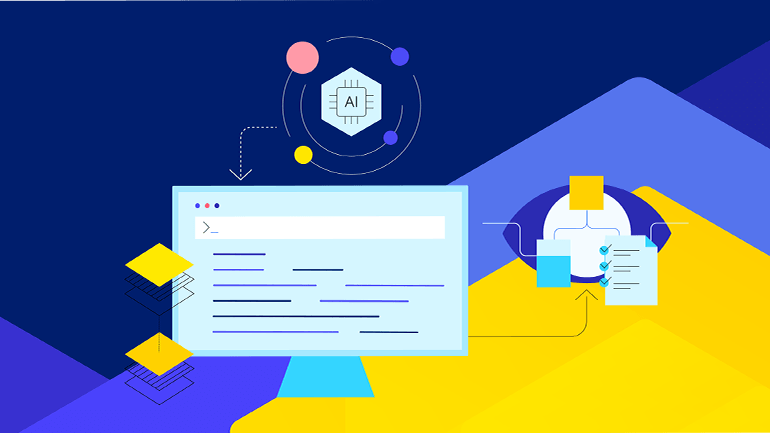
As organizations move from experimenting with AI to operationalizing it, the challenge shifts from model performance to process governance. AI can extract information, classify content and generate recommendations, but enterprise processes still require validation, business rules, approvals, and accountability.
This is where AI workflow orchestration becomes essential. Rather than treating AI as a standalone tool, organizations embed AI into governed workflows that connect systems, apply controls and ensure people remain involved when appropriate.
AI Models vs. AI Agents
An AI model performs a specific task, such as summarizing a document, extracting information, or generating content. An AI agent goes a step further by using one or more models to complete tasks, interact with applications and trigger actions within a workflow.
In practice, AI rarely operates alone. A workflow may invoke an AI model to extract information from a document, apply business rules to validate the results, route exceptions for review and then update downstream systems. Some steps occur sequentially, while others run in parallel across multiple systems or services.
The orchestration layer coordinates these activities and provides visibility into how decisions are being made.
A Governed AI Workflow Example
Consider an invoice-processing workflow:
A supplier invoice is uploaded.
An AI service extracts invoice details, including vendor information, invoice number and payment amount.
The workflow validates extracted values against predefined business rules, such as approved vendor lists, required fields and spending thresholds.
Any missing information, confidence issues or validation failures are routed to a finance reviewer for exception handling.
Once approved, the workflow updates the ERP or financial system through an authorized integration.
All actions, approvals and system updates are logged for audit purposes.
In this example, AI accelerates data extraction, but deterministic business rules, human review and authorized system access remain responsible for final outcomes.
Governance Requirements for AI Workflows
AI outputs are probabilistic, while business processes typically require predictable outcomes. For that reason, organizations should implement guardrails that ensure AI recommendations are reviewed and validated before critical actions occur.
Key governance controls include:
· Output validation before downstream actions are executed
· Deterministic business rules that operate independently of AI recommendations
· Human approval for financial, customer-facing or high-risk decisions
· Role-based authorization for system updates and sensitive data access
· Monitoring and audit trails for workflow activity and AI outputs
· Failure recovery paths that route errors, exceptions or low-confidence results for review
These controls help organizations maintain compliance and transparency while still benefiting from AI-driven automation.
Evaluating AI Workflow Platforms
As AI adoption expands, workflow platform evaluation should focus on governance and orchestration capabilities rather than AI features alone.
Organizations should look for platforms that can:
· Orchestrate AI services alongside business applications and data sources
· Support sequential and parallel workflow execution
· Apply business rules and validation logic independently of AI outputs
· Enable human-in-the-loop approval processes
· Monitor workflow performance and AI outcomes
· Provide auditing, security controls and role-based access management
· Support exception handling and failure recovery
The goal is not simply to automate decisions but to create repeatable, governed processes that can safely incorporate AI into enterprise operations.
Product Availability Note: Before referencing specific AI agent functionality, workflow templates or AI orchestration capabilities, verify current product availability and any Early Access Program (EAP) status with the official product documentation and product management team to ensure claims reflect the latest release status.
Conclusion
Successful AI adoption depends on more than deploying models. Organizations need orchestration, governance and human oversight to ensure AI operates within defined business controls.
By combining AI services with deterministic business rules, validation, approvals and monitoring, organizations can build workflows that are both intelligent and accountable. The result is a practical framework for scaling AI across enterprise operations while maintaining the visibility and control required for business-critical processes.
New to workflow automation? Read Part 1 for foundational concepts and workflow evaluation guidance. Looking for broader business examples? See Part 2 for onboarding, customer service, IT and document workflow scenarios. For product-specific capabilities and current availability, visit the official product page.
Enjoyed this article?
Add Progress as a preferred source to see more of our content in Google search.
Add Progress as a preferred source on Google